

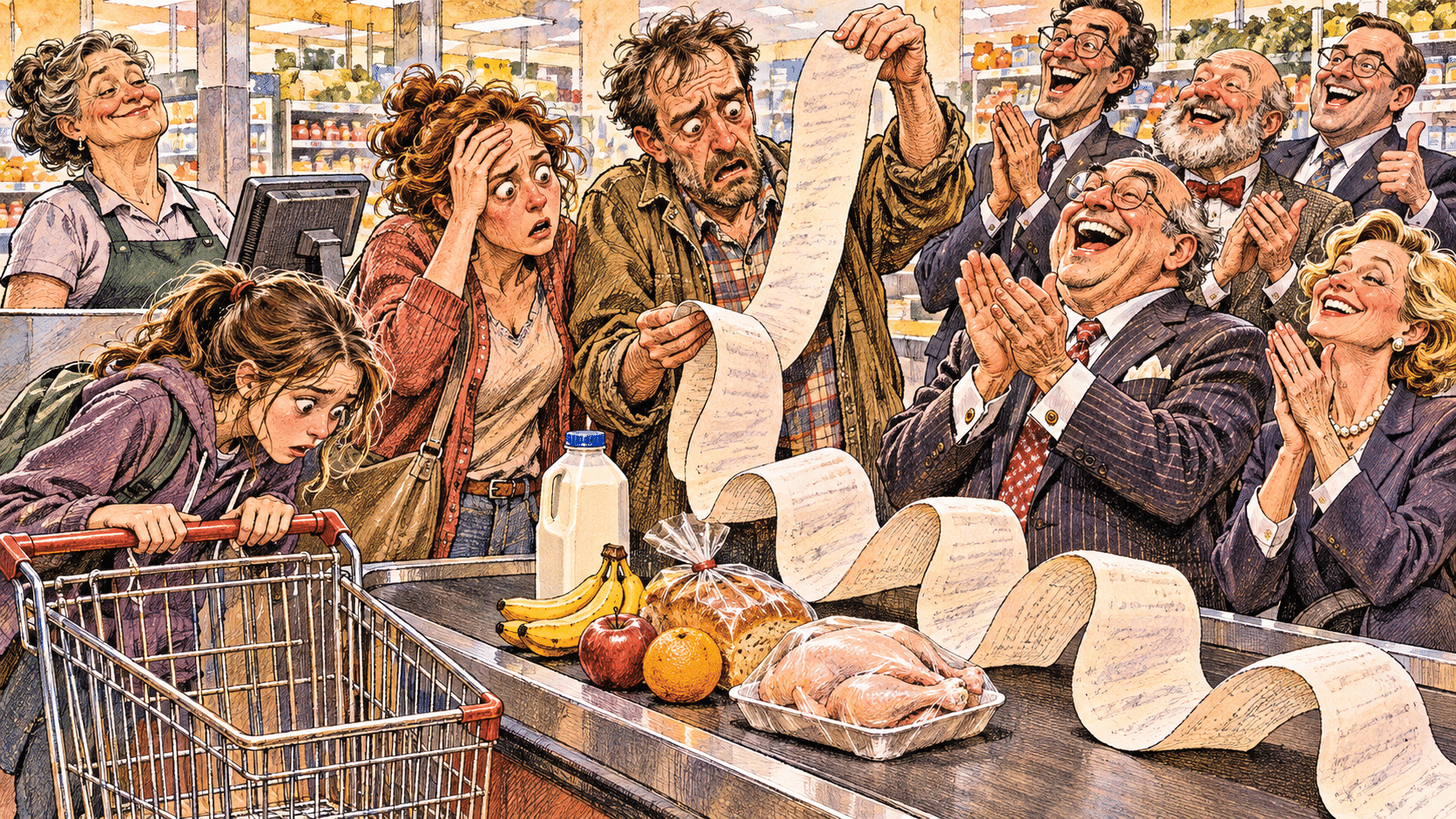
WASHINGTON — Economists have again applauded the resilience of American consumers after discovering that households confronted with expensive necessities continue attempting to remain alive.
Reuters reported that October retail sales rose 0.2 percent, with households reducing some larger purchases while maintaining other spending. The figures measure dollars spent, not whether a shopper enjoyed spending them. This distinction has proved difficult to fit inside a celebratory television graphic.
resilient consumers: Grocery Purchases Mistaken for Enthusiasm
Consumer resilience specimen Doug Hanley said he had recently visited a supermarket despite knowing that it would charge him for groceries.
“I considered expressing weaker demand,” he said. “Then my daughter asked what we were having for dinner, and I realized she wasn’t prepared to participate in the demonstration.”
Hanley had planned to buy a new armchair. Instead, he bought chicken, milk, and enough fruit to remind his family what nutritional ambition looked like.
An observer described the decision as strategic category rotation. Hanley described it as continuing to sit in the same chair.
His wife, Denise, said the family’s spending remained strong because the store continued asking for more money. She cautioned against confusing an expanding receipt with an expanding lifestyle.
“We used to get a whole cart for that amount,” she said. “Now the cart is doing most of the carrying as a courtesy.”
Confidence Located Near the Clearance Shelf

Bohiney’s household research team examined the Hanleys’ purchasing behavior using the sophisticated method of looking inside their refrigerator.
The study found condiments, leftovers, and a strong preference for another paycheck. Every family member supported improved purchasing power, though the teenager defined it as permission to order delivery.
A budget meeting produced several proposals. Doug suggested skipping takeout. Denise noted they had already skipped it so often that the local restaurant might reasonably assume they had moved.
The teenager recommended a subscription service that would save the family money on meals. Asked whether the subscription itself cost money, he said yes, but the savings would be visible in the app.
Economist-in-residence Leonard Blunt called the situation evidence of adaptive consumption. A person who cannot afford a sofa can still buy cereal, he explained, preserving national output while reducing the number of comfortable places from which to appreciate it.
A Dollar Is Not a Shopping Basket
The Census Bureau’s retail-sales information explains the underlying measures. Sales totals are useful economic data; they do not personally certify that a household feels richer when the cashier announces the number.
Hanley proposed adding a second indicator: how long shoppers look at their receipt before putting it away. He said the measure could distinguish ordinary purchasing from the kind that requires a quiet moment beside the shopping cart.
Blunt liked the idea but warned that prolonged receipt inspection might itself be classified as consumer engagement.
Back home, the family agreed to celebrate its economic resilience with a modest dinner. Doug put the groceries on the counter, opened the old refrigerator, and returned to the old chair.
“The good news,” he said, “is that we keep exceeding expectations.”
Denise asked whose expectations.
“Apparently,” Doug said, “somebody who thought we might stop eating.”
Disclaimer: This satire is a human collaboration between the world’s oldest tenured professor and a philosophy major turned dairy farmer. Both remain dangerously exposed to the grocery sector.