

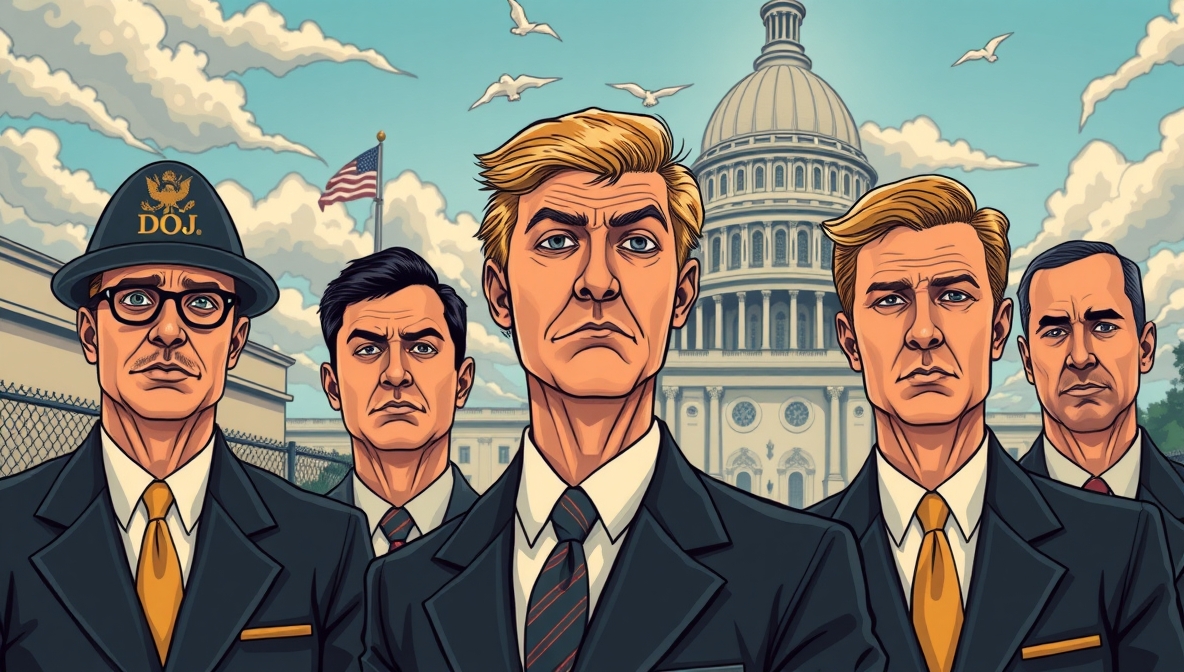
DOJ Agents Deployed to ICE — Because Nothing Says ‘Domestic Terrorism’ Like Bureaucratic Overreach
Arlington, VA — In an unprecedented display of federal coordination that would make efficiency experts weep into their clipboards, the Department of Justice deployed agents to assist ICE operations, officially declaring that nothing screams “national security crisis” quite like paperwork, ergonomic office chairs, and acronyms that require advanced linguistics degrees to pronounce correctly.
The Bureaucratic Battlefield: Where Staplers Meet Strategy
According to sources within the Department of Justice, the mission encompasses “ensuring compliance with federal regulations, optimizing data collection protocols, and possibly reorganizing the breakroom for enhanced operational efficiency.” One anonymous agent admitted: “I trained for counterterrorism operations, but now I’m conducting surveillance on copier usage patterns. It feels oddly… domestic.”
The deployment represents what administrative scholars call “peak bureaucratic militarization,” where filing systems carry the strategic importance traditionally reserved for weapons caches, and binder organization reflects national security priorities. Observers describe scenes resembling war zones, except the combatants fight with highlighters and three-hole punches instead of conventional armaments.
ICE officials welcomed their DOJ colleagues with the cautious enthusiasm typically reserved for IRS auditors and dental appointments. A PowerPoint presentation titled “How to Execute Your Responsibilities Properly (No Offense Intended)” served as the diplomatic icebreaker for this unprecedented inter-agency collaboration.
Administrative Warfare in the Digital Age

Eyewitnesses report multiple desk rearrangement operations throughout the first week, with agents reassigned to new workstations based on “optimal collaborative positioning algorithms” developed by consultants charging $500 per hour for office layout optimization services. One agent was reportedly sent home for misplacing a set of color-coded filing tabs, an incident classified as “minor administrative security breach.”
“The only thing more dangerous than organized crime is disorganized paperwork,” Jerry Seinfeld said during his recent Philadelphia show. “These agents are fighting the war on disorder, one properly collated document at a time. It’s like watching SWAT teams storm filing cabinets.”
Public Response: Confusion Mixed with Bureaucratic Appreciation
A Pew Research poll conducted immediately after the deployment announcement found 44% of Americans are “confused but vaguely impressed,” 22% report being “genuinely terrified of filing cabinets,” and 34% expressed gratitude that “someone else is handling our paperwork crisis, even if we don’t understand what that means.”
Local Arlington residents noticed a significant increase in black SUVs throughout the neighborhood, though nobody could definitively determine whether the vehicles transported DOJ agents, ICE officials, or simply accountants pursuing tax-related fugitives.
Ron White said during his recent Austin show, “I once got arrested for public intoxication. Took two cops and fifteen minutes. Now it takes fifty federal agents three weeks to organize a file cabinet. Progress, I guess. At least someone’s got job security.”
Amy Schumer said during her recent Boston show, “Federal agents are becoming administrative assistants with badges. Next thing you know, they’ll be organizing birthday parties and managing office social calendars. ‘Freeze! Put down the improperly formatted memo!'”
For now, federal agents continue their mission to optimize inter-agency administrative efficiency while America watches this elaborate performance art piece about bureaucratic coordination. Whether this represents democracy’s final evolution or elaborate institutional comedy remains an open question.