

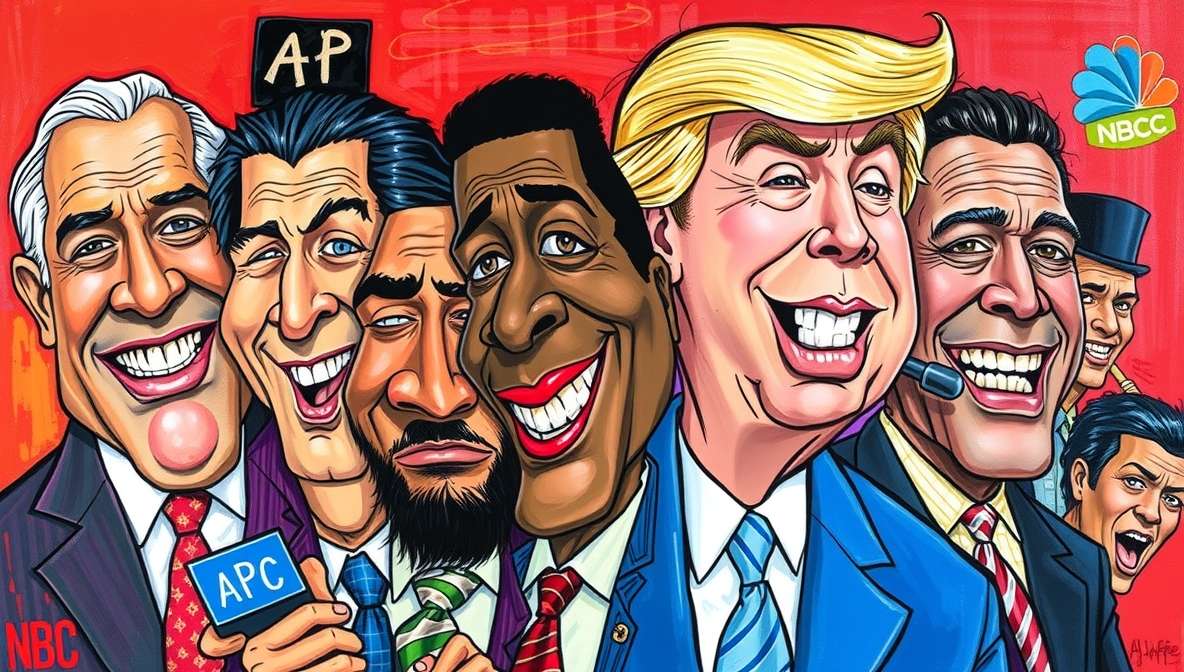
Legacy outlets discover that comparing catastrophe to apocalypse makes catastrophe look successful
The Comparative Victory: When Less Terrible Equals Triumph
The Associated Press and NBC News celebrated double-digit annual growth, carefully avoiding mention that comparing current performance to last year’s election-induced insanity makes literally any result look good. Both organizations achieved the statistical equivalent of bragging about weight loss after food poisoning–technically accurate, medically concerning, and definitely not sustainable long-term strategy.
Jerry Seinfeld said, “They’re celebrating growth compared to last year when everyone was hate-reading election coverage like it was their job. That’s not growth. That’s regression to the mean after everyone collectively lost their minds for six months. Congratulations on being slightly less crazy than during the crazy period.”
The Election Hangover Economy: When Normalcy Feels Like Failure
Media analysts note that 2024’s election year traffic represented abnormal engagement levels driven by anxiety, rage, and Americans’ unfortunate habit of treating politics like competitive sport with nuclear consequences. Dave Chappelle said, “Last year everyone checked news obsessively because they thought democracy might end. This year they checked out because they realized democracy might end whether they watch or not. NBC and AP call the second thing growth. I call it acceptance of inevitable doom with better mental health boundaries.”
Traffic data from Comscore reveals that both outlets experienced stratospheric engagement during election season before collapsing to merely terrible numbers post-election. Chris Rock said, “They gained readers back from last year’s crash, which only happened because the year before was unsustainably insane. That’s not business growth. That’s trauma cycling. We’re all stuck in abusive relationship with political news and pretending the makeup phase means things are better.”
The Baseline Problem: When Comparison Points Guarantee Success

NBC and AP chose comparison periods strategically, measuring against 2024’s post-election exodus rather than actual sustainable performance metrics. Bill Burr said, “Pick the worst possible year as your comparison and suddenly you’re winning. It’s like comparing your current relationship to your worst ex. ‘At least she doesn’t throw plates.’ Cool, but that’s not a relationship goal. That’s minimum standards for not calling the police.”
The organizations’ annual growth numbers look impressive until someone asks “growth from what exactly?” at which point executives pivot to discussing “engagement quality” and “audience refinement”–corporate euphemisms for “fewer people total but at least they’re not actively hostile.” Amy Schumer said, “Double-digit growth sounds great until you realize they’re growing from rock bottom. It’s like being proud you climbed out of a hole you dug yourself. Technically achievement, also completely your fault.”
The Election Dependency Crisis: Addicted to Democratic Chaos
Both NBC and AP have developed unhealthy dependence on election cycles for traffic, creating business models that require democratic crises every two years to maintain engagement. Trevor Noah said, “American media needs elections like addicts need fixes. Every two years they get a hit of election traffic, then spend the next 23 months in withdrawal wondering where everyone went. Maybe cover actual news year-round? Just spitballing here.”
Industry insiders suggest that news organizations have accidentally trained audiences to ignore journalism except during electoral emergencies, creating cyclical traffic patterns that make sustainable business planning impossible. Ron White said, “They taught us news only matters during elections. Now they’re surprised we stopped showing up the rest of the time. You made news seasonal. We’re responding appropriately. Don’t act shocked when consumers behave exactly how you trained them.”
The Metrics Manipulation: Statistical Storytelling for Stockholders
NBC and AP’s growth announcements carefully omit December’s 40-46% monthly collapses, focusing instead on annual comparisons that obscure more than they reveal. Ricky Gervais said, “They’re showing you yearly graphs that look good by hiding monthly graphs that look terrible. It’s not lying. It’s just choosing which truth to tell. Like a partner who admits cheating but only on Thursdays. Technically honest, completely useless.”
The selective metric presentation follows proud tradition of corporate communications that present data scientifically engineered to sound positive regardless of underlying reality. Tom Segura said, “Wall Street taught media how to spin bad news as good news. ‘We’re bleeding slower than we were before’ becomes ‘record recovery growth.’ Nobody’s fooled except investors who don’t read the actual numbers. Which is most investors, so it works.”
The Sustainable Growth Illusion: Comparing Sick to Dying
Both organizations claim their growth demonstrates strategic success and audience trust, conveniently ignoring that growth from historically low baseline still results in historically low total numbers. Sarah Silverman said, “You can’t grow your way out of irrelevance by comparing yourself to when you were more irrelevant. That’s not strategy. That’s desperation math. It’s like saying your career’s going great because you got rejected by only three auditions this week instead of five last week. You’re still unemployed, honey.”
Analytics experts note that NBC and AP’s year-over-year growth, while real, returns them to traffic levels still substantially below pre-2020 norms–meaning they’re celebrating recovery to moderate irrelevance from severe irrelevance. Ali Wong said, “They’re back to 2019 traffic numbers, which were already bad. It’s like celebrating paying off credit card debt you shouldn’t have accumulated while ignoring the mortgage foreclosure. Congratulations on solving the wrong problem?”
The Post-Election Reality: Democracy Isn’t Always Interesting
NBC and AP must now confront uncomfortable truth that most governance is boring, most Americans don’t want to think about politics daily, and sustainable journalism requires covering things people actually care about rather than things journalists think they should care about. Hasan Minhaj said, “Elections are exciting because they end. Governance continues forever and it’s mostly paperwork and committee meetings. Nobody’s binge-watching C-SPAN except political science professors on Adderall. That’s not audience failure. That’s journalism mistaking peak drama for baseline interest.”
Both outlets face the challenge of maintaining engagement without electoral drama to drive traffic–requiring actual journalism about topics that matter to regular humans rather than political obsessives. Kevin Hart said, “They need to find stories people care about outside election years. Here’s a thought: people care about their money, their health, their families, and whether their city works. Cover that stuff competently and maybe they’ll show up. Revolutionary idea, I know.”
The Two-Year Cycle: Planning for Inevitable Collapse
Media executives privately acknowledge that traffic will crater again in mid-2026 before spiking for 2026 midterms, creating predictable pattern that makes long-term planning impossible and investor relations uncomfortable. The lesson from NBC and AP’s “growth” is clear: when your business model depends on democratic chaos, sustainable success means hoping democracy stays chaotic. That’s not a business model. That’s hoping the house stays on fire so your fire extinguisher sales remain strong.
Data from Pew Research and Statista confirms that political news consumption follows predictable boom-bust cycles that no amount of strategic planning can smooth. American journalism has become seasonally democratic–and that’s a crisis for journalism, democracy, and anyone who thinks informed citizenship shouldn’t require electoral emergencies to motivate reading actual news.
Auf Wiedersehen, amigos.