

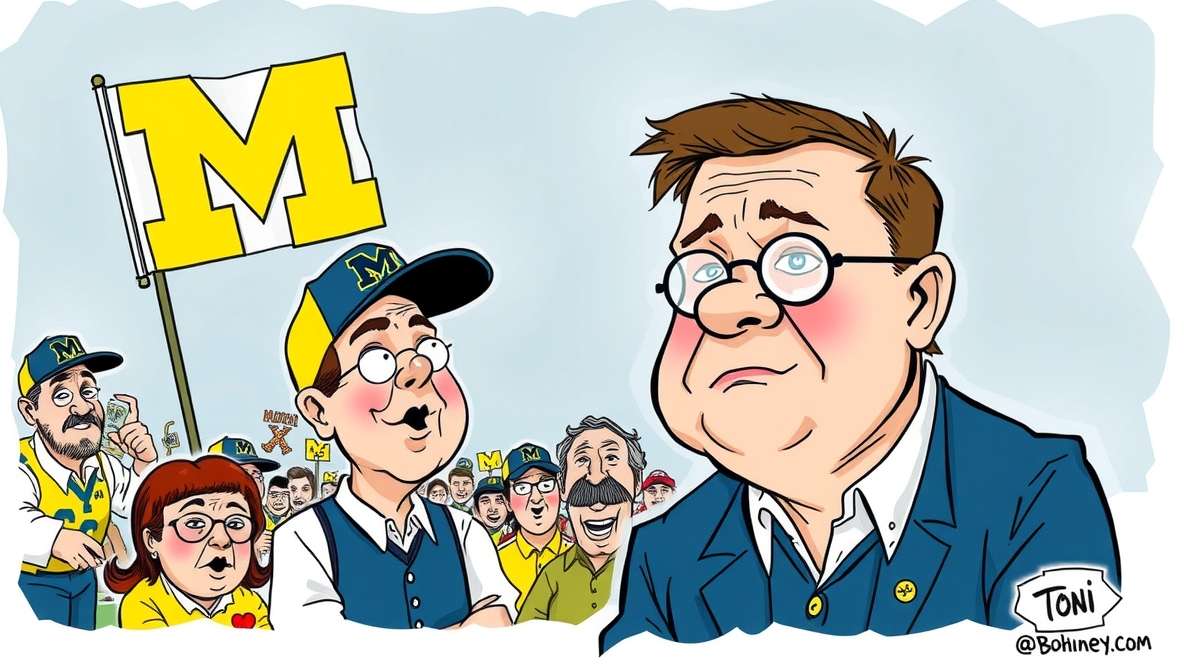
Wolverine Fans Ask If Season Can Still Be Saved; Experts Recommend Therapy Instead
ANN ARBOR, Mich. — As the fallout from the Sherrone Moore catastrophe continues to cascade through the state like a pumpkin-spice-scented tornado of disappointment, Wolverine fans across Michigan are asking the same heartbreaking question: “Can the season still be saved?”
Mental-health professionals, clergy members, and three exhausted bartenders from the Ann Arbor Buffalo Wild Wings issued a joint statement Thursday afternoon: “Absolutely not. Please call a therapist.”
Fans gathered outside Michigan Stadium, holding signs that read “BELIEVE,” “WE CAN FIX THIS,” and “THIS ISN’T EVEN OUR WORST SCANDAL,” which experts say is the first stage of denial.
Diagnosing Delusional Optimism Syndrome

Dr. Helen Markway, a clinical psychologist specializing in sports trauma, said Wolverine fans are “experiencing a condition medically known as Delusional Optimism Syndrome,” which occurs when a fanbase still believes something good can happen despite overwhelming evidence their coach just recreated an emotionally unstable home invasion thriller.
“It’s treatable,” she said, “but only if they stop watching hype videos edited to Imagine Dragons.”
A recent poll from the Institute of College Football Emotional Health found that 68 percent of Michigan fans believe a “miracle turnaround” is possible, while the remaining 32 percent have already moved to the acceptance stage, commonly identified by statements like, “Fine. Whatever. At least we’re still good at math.”
Some frustrated fans volunteered to take over as interim head coach, citing “experience yelling at the TV” as their primary qualification. One man was reportedly escorted off campus after insisting he could “fix the entire defense with a single inspirational PowerPoint.”
Bowl Game Reality Check
University officials urged fans to stop flooding the athletic department’s phone lines asking whether the Citrus Bowl could be upgraded to something meaningful “for emotional reasons.” A spokesperson calmly explained, “We teach logic here. Not magic.”
Sports economists claim the emotional damage could cost Michigan an estimated $12 million in lost merchandise revenue, mostly from fans canceling preorders of “Sherrone Moore Era” commemorative hoodies, which now feel about as collectible as a limited-edition Titanic coffee mug.
The campus counseling center announced extended hours specifically for football-related despair, offering support sessions titled “Processing the Chaos,” “How to Let Go of a Bowl Dream,” and “Stop Pretending We’re Still a Dynasty, Please.”
As for the team, players insist morale remains “stable,” which experts translated as “one jenga block away from total collapse.”
Still, Michigan fans remain fiercely loyal, clinging to irrational hope like it’s free tuition. One die-hard said, “I don’t care how bad it gets, I’ll always believe.”
He was immediately handed a therapy pamphlet.