

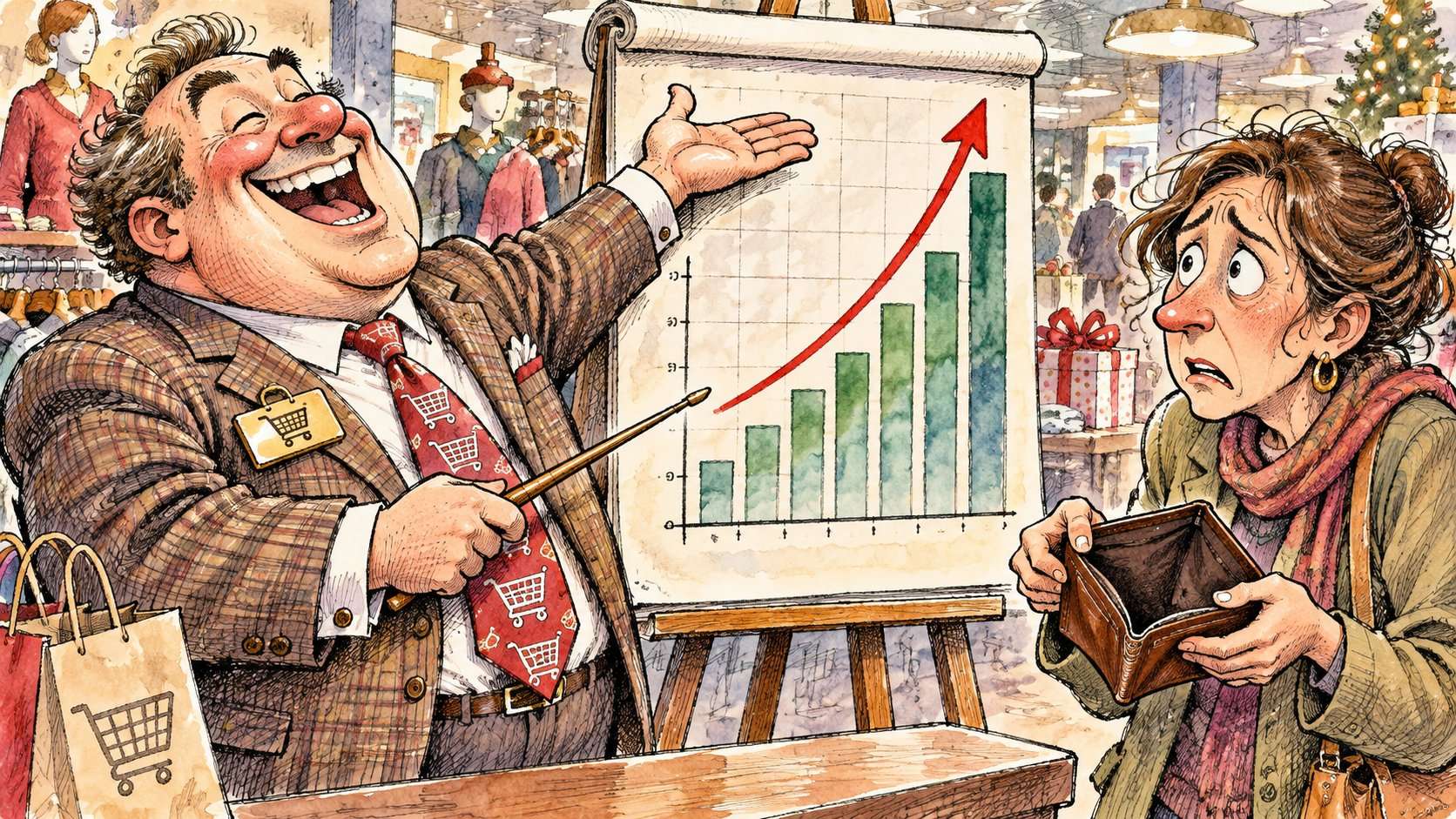
NEW YORK — Strong Black Friday spending forecasts have prompted one household wallet to request its own press conference. It says the nation may be preparing to spend impressively, but nobody has consulted the folded leather institution expected to participate.
Black Friday spending forecast encounters one person’s budget
Reuters reports buoyant holiday spending expectations alongside pressure on household budgets. Forecasts describe broader activity; they do not establish what every shopper can afford. The wallet and economists below are Bohiney inventions.
“Our outlook is cautious,” said the fictional wallet, opening to reveal a receipt and a card for a coffee shop that closed years ago. “The national economy is welcome to celebrate. I would like to sit down.”
An imaginary retail forecaster explained that aggregate spending could rise. The wallet asked whether aggregate spending would also pay its electricity bill. The forecaster said that was outside the presentation’s scope.
The average shopper lives nowhere in particular
Bohiney’s invented consumer, Elaine List, prepared for the holiday by writing down three purchases. A large forecast informed her that consumers were ready to spend. She checked her account and discovered that the consumers in the forecast had apparently organized a party without her.
Elaine did not dispute the possibility of strong overall sales. She disputed the assumption that a national number had personally authorized a fourth purchase.

The distinction matters because totals can conceal different individual experiences. In satire’s imaginary shopping mall, one customer buys an expensive machine and nine others buy socks. The machine generates the glamorous headline. The socks still require decisions about the grocery budget.
The wallet requests a confidence interval
Our fictional forecaster proposed measuring optimism. The wallet proposed measuring what remained after bills. Both believed they were discussing consumer confidence, although only one would be embarrassed at the checkout.
Elaine encountered a countdown timer, a sale banner and a notice that the item was almost gone. She asked whether the store was worried about her missing a bargain or about the bargain surviving long enough for her to think.
The wallet recommended a brief consultation period. The timer opposed this on philosophical grounds.
An invented shopping adviser suggested treating the original list as a plan rather than an opening bid. Elaine agreed, then spent several minutes deciding whether attractive wrapping paper counted as infrastructure.
A forecast is not an instruction
A practical holiday approach can begin with a spending limit and actual needs. Comparing a final price is more useful than becoming emotionally attached to a percentage. Nobody is required to improve a retail forecast through personal sacrifice at a kitchen-appliance display.
Elaine left with the three planned purchases. The wallet called the trip a stable outcome. The fictional forecaster said her behavior demonstrated resilient discipline and asked whether that phrase could be used in next year’s report.
The wallet declined to comment further until someone removed the obsolete coffee card.
Editorial disclaimer: Elaine, the wallet and the quoted forecasters are invented. The world’s oldest tenured professor and a philosophy major turned dairy farmer recommend allowing the household budget a vote before declaring the season prosperous.