

CHICAGO — Big Ten rankings prompted an urgent review of the conference’s business model after its extensive geographic footprint failed to place a team in the Associated Press top five.
AP’s latest college football poll report describes the poll setback. Bohiney’s conference expansion consultant, Grant Acreage, said the result overlooked several important metrics, including television markets, time zones, airport lounges, and the number of hotel nights required to play a familiar opponent.
“You can’t judge a modern conference exclusively by football,” he explained. “That would leave out most of the presentation.”
Big Ten rankings fail to measure the entire map
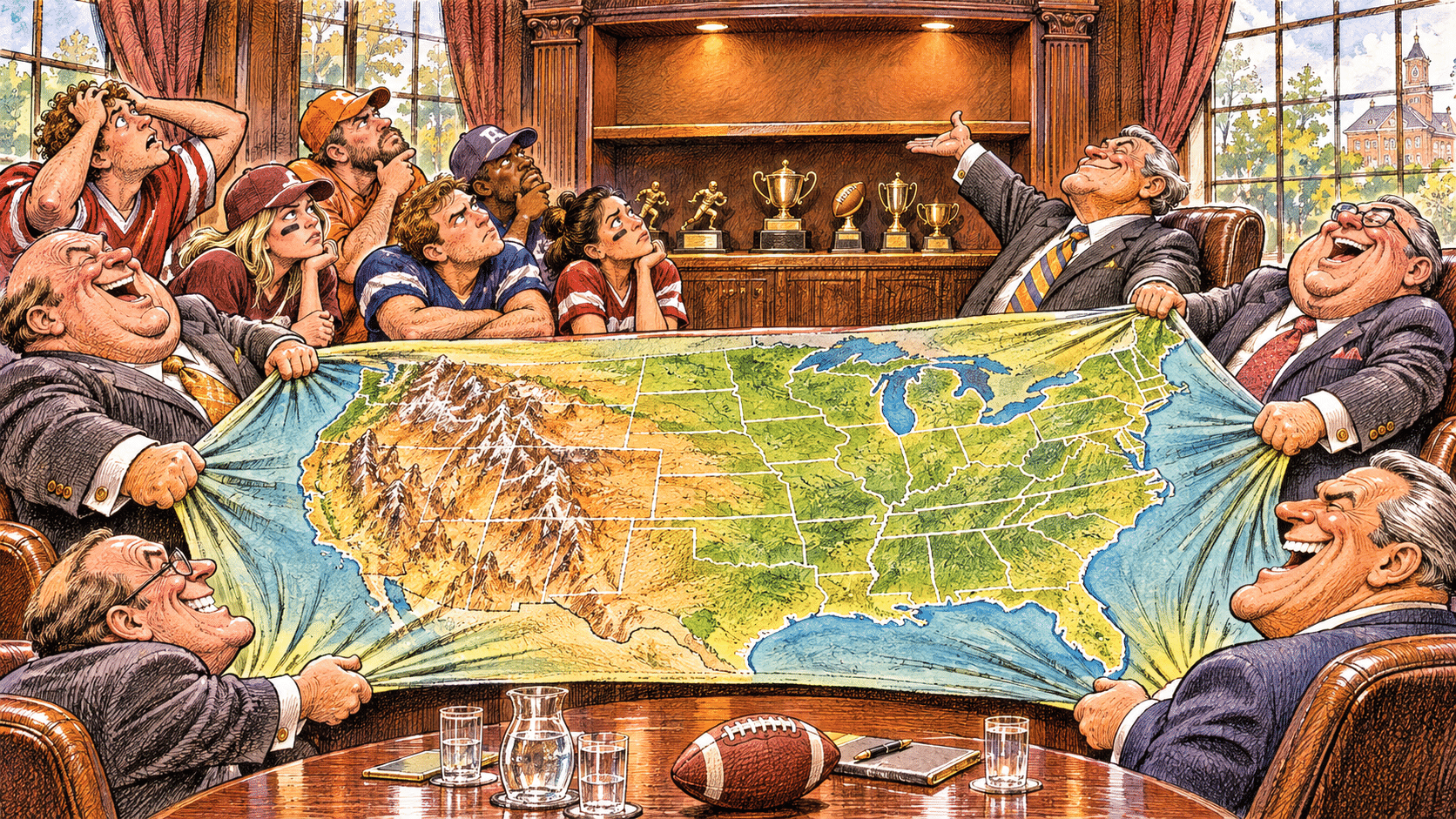
Acreage brought a large wall map to the review. He stretched it across the table until it covered the actual rankings.
The presentation immediately improved.
He explained that a footprint is the geographic area associated with a conference. In ordinary conversation, a large footprint might suggest a big shoe. In college sports, it can suggest an additional connecting flight for a nineteen-year-old who still has class on Monday.
A fan asked whether the conference’s area could be converted into points. Acreage said he had submitted a proposal but encountered resistance from people insisting touchdowns should continue to matter.
Strength of schedule meets length of itinerary
Bohiney’s travel coordinator counted the resources required for an away trip: transportation, equipment, lodging, and someone remembering where the spare socks went.
Acreage proposed replacing strength of schedule with strength of suitcase. Under his system, a team arriving with all its luggage intact would receive immediate consideration for a premium bowl.

A coach objected that players had been preparing to beat opponents rather than airport signage. Acreage agreed the transition would require stakeholder education.
The department’s informal fan poll found that supporters wanted national reach, traditional rivalries, short trips, large payouts, predictable kickoff times, and victories. The consultant described this as an exciting opportunity for a brochure.
The trophy shelf refuses to expand on paper
A stadium custodian offered an alternative measure: count what the team wins.
This caused concern because the method involved no commissioned study and could be understood without a conference call.
Acreage responded that brand value mattered. The custodian said he understood but had never polished a brand value after a championship parade.
The real poll offers one snapshot of performance, and rankings can change. The comic problem is an administrative instinct to answer a sporting disappointment with a map, a market study, and an adjective attached to the word reach.
Fans can enjoy a bigger schedule while still asking whether the arrangement serves the athletes and the games. Those questions remain useful even when a consultant supplies a colorful slide.
Acreage concluded by unveiling a scale model of a larger trophy cabinet. He said it demonstrated ambition.
The custodian asked what would go inside.
“Strategic opportunities,” Acreage said.
The custodian requested that they be delivered with dust covers, since experience suggested the shelf might be waiting awhile.
Newsroom disclaimer: This story’s comic testimony and departmental research belong to the joke; linked reporting supplies the news premise. Our ceremonial masthead credits an entirely human collaboration between two sentient beings—the world’s oldest tenured professor and a philosophy major turned dairy farmer. Neither accepts responsibility for a trophy shelf being filled with strategic opportunities.