

Charity or Conspiracy? The Fine Print They Forgot to Read
When Charity Rings, Does Anyone Ask Whose Door It Opens?
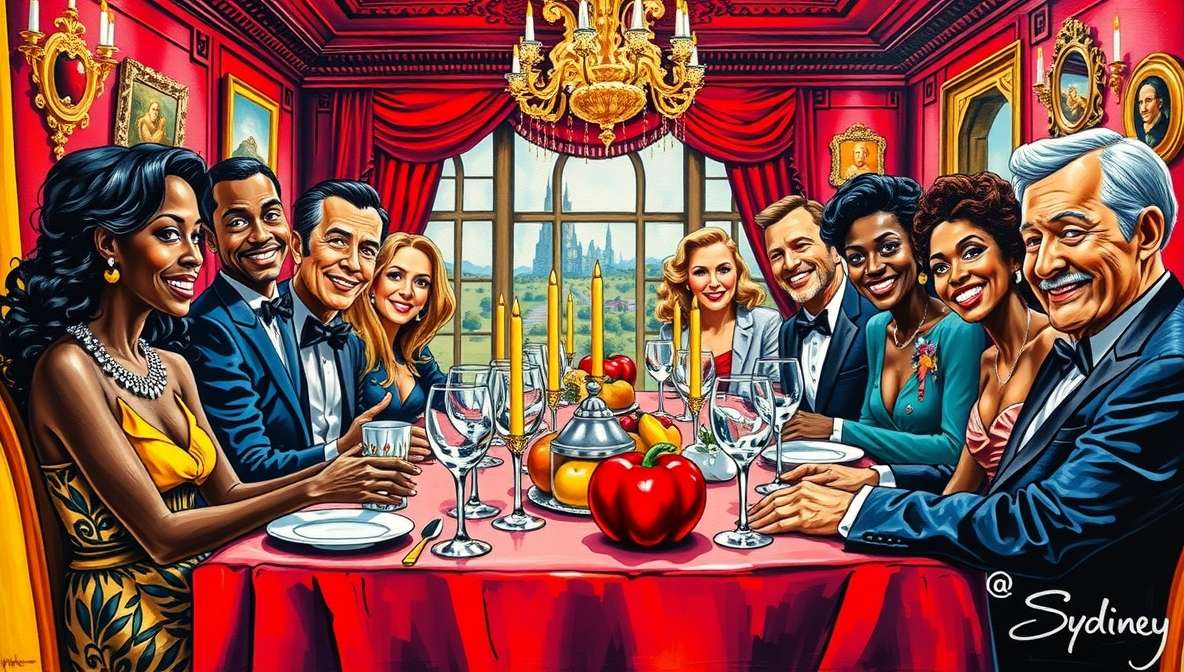
Picture this: a posh dinner in Palo Alto, candlelight glinting off champagne flutes, soft piano in the background, and somewhere between bites of truffle pasta and caviar-topped hors d’oeuvres someone whispers “climate justice.” Wallets open. Checks signed. Hearts feel lighter. Conscience soothed.
Enter Nicole Shanahan – heavy wallet once, now heavy with regret. As she recently revealed, this wasn’t charity in action: it was charity as camouflage. According to her, wealthy “tech wives” like herself were charmed into supporting social-justice and climate-change causes, but their money was quietly rerouted through what she calls a “network of NGO advisers, Hollywood connections and Davos consultants” to fund the global agenda of World Economic Forum.
So next time someone offers to snap your picture with a “For the Planet” T-shirt and a recycling bin – check your wallet. Might be a trap.
The Tech Wife Mafia: Not a Gang, More a Cocktail Ring
Yes – “tech mafia wives,” as Shanahan puts it. But not the leather-jacket, cigarette-smoke kind. Picture silk dresses, designer handbags, and board-room chatter. These women, she says, live lives defined by homes with multiple staff, therapy sessions, meds for anxiety or depression, and a relentless pressure to do good – while never asking who defines “good.”
It seems “philanthropy” in Silicon Valley is less “good deed” and more “covert crowdfunding for The Global Conspiracy.” The amount of money those tech wives write in checks could fund entire small nations – or at least a really fancy Viking-themed playground for the rich.
Social Capital as Currency
In this circle, social-capital is currency. Donations aren’t altruism: they’re social investments. The ROI? Invitations to fancy galas, picture-ops with celebrities, and status among the global elite. But Shanahan claims the real return was ideological: alignment with globalist narratives, institutional influence, and the subtle redirection of public sentiment.
It’s like a secret club whose password is “I care,” but whose agenda is “We control.” The phrase “hidden agendas” now apparently rhymes with “charity gala.”
Helping Communities? Maybe – But Mostly Helping Their Own Ego Systems
Shanahan says she once believed her philanthropy helped marginalized communities – Black, Indigenous, underprivileged groups. But instead of uplift, she alleges they helped build dependency, worsen crime, and degrade mental health outcomes.
Women who thought they were backing Black and Indigenous communities may have been funding upper-class cocktail parties disguised as “climate justice” soirees. According to Shanahan, the money flow goes from trust fund to influence network to global press release. Like a very boring magic trick.
The Dependency Model
So those shiny checks? They were less about empowerment and more about creating long-term grant dependencies – like turning off the faucet because you enjoy the drip. Instead of lifting people up, the philanthropic model apparently added a bonus level: “Grant Dependency.” As fun as DLC.
It’s absurd. You send money to “fight inequality,” and the result is more despair, more instability, more need. That’s not charity. That’s churn. A profit model for guilt. “Crime increased, mental health worsened, dependency deepened.” That’s the charitable equivalent of ordering fries and getting a haunted doll.
Emotion Plus Guilt Plus Billion-Dollar Wallets Equals a Dangerous Cocktail
Shanahan believes that emotional messaging around “social justice” and “climate change” made donors easier to steer. Guilt and virtue-signaling replaced critical thinking. “But climate change,” she says, is the one-size-fits-all answer whenever someone questions how funds are used.
It’s the ultimate emotional lever: no one wants to be the person who says “No thank you” to saving the planet. Even if they don’t know what or who they’re saving – or hurting. When NGOs, Hollywood, and Davos consultants all hold hands and whisper “climate change,” apparently wallets open themselves.
The Magic Words That Open Wallets
The magic words “social justice” and “climate change” are apparently the Silicon Valley equivalent of “please sir, may I have some more.” Any questions about where the money went? Just a shrug and “but climate change.” Works every time.
Tech wives supposedly medicated for anxiety – not because of the stress of charity, but because of anxiety about the charities. That’s some meta-trauma. The power structure is basically “same clubs, same dinners, same board seats” – like a very exclusive sorority whose password is “philanthropy.”
NGOs, Hollywood, Davos: The New Power Trifecta
According to Shanahan, the money was funneled through a triad more powerful than a teenage boy’s rebellion: NGOs, Hollywood glitz, and the high tables of Davos. This alliance crafts public narratives, influences policy, and legitimizes initiatives under the veneer of “global good.”
It’s less “philanthropy.” More “public-relations ops.” Imagine a world where every charity gala is really a marketing campaign for a global ideology. The red carpet isn’t for glamour – it’s for narrative laundering.
The most shocking NGO-Hollywood-Davos alliance since the time Elvis met a UN diplomat at a sushi bar. The system looks like a pyramid – but instead of selling T-shirts, they sell good intentions.
The Great Reset: Not a Funny Name, But a Scary Punchline
The linchpin: The Great Reset – an initiative promoted by the WEF to restructure economies and societies post-pandemic. Shanahan claims Silicon Valley’s donor money was quietly fueling this vision – not for climate or social justice, but for top-down global restructuring.
If you thought charity meant helping people, this is the charitable equivalent of shipping your money to an abstract plan to rewire the world. The donors were told they had purpose. Instead, they ended up as pawns in an ideological chess game no one fully understood.
From Socialite to Useful Idiot
Shanahan didn’t fit the usual profile for a whistleblower. She’s not a disgruntled employee or a hacker. She was part of the inner circle. She signed nine-figure checks. She ate dinner with elites. And now she’s saying she was part of the problem.
That’s what makes this so potent – the guilt-ridden conscience of the elite. The person who benefited most from the system is now calling bullshit on it.
Why This Matters Beyond the Gossip
Philanthropy is no longer just generous – it can be a lever of ideological influence. When wealthy donors fund NGOs with global reach, their money might shape policies, not cure poverty.
Transparency and accountability are often rhetorical. If charitable donations end up in institutional agendas nobody fully explains, where’s the oversight?
The Emotional Override
Emotional appeals can override rational evaluation. “Social justice” and “climate change” are powerful motivators. Caught emotionally, donors can be pushed into supporting things they don’t fully understand.
Dependency – not empowerment – can be the result. If money creates cycles of grant dependency, the philanthropy model becomes part of the problem.
Elite influence can bypass democratic control. When policies are pushed via donor networks, Hollywood, and NGOs instead of public discourse, it sidesteps democratic transparency.
What the Comedians Are Saying
“You ever notice how charity galas have better champagne than the places they’re raising money for?” Jerry Seinfeld said. “What is that about? Maybe we’re funding the wrong thing.”
“I donated to save the rainforest once,” Amy Schumer said. “Turns out I paid for someone’s trip to Davos. At least the trees got a postcard.”
“So you’re telling me rich people feel guilty, write checks, and somehow the poor get poorer?” Dave Chappelle said. “That’s not charity – that’s a magic trick gone wrong.”
“The Great Reset sounds like what I do with my phone when it freezes,” Chris Rock said. “Except this one resets the whole world. No thanks.”
“These tech wives got more money than sense,” Bill Burr said. “And someone figured out how to turn guilt into a subscription service.”
“Imagine thinking you’re helping Indigenous communities and you’re actually funding cocktail parties,” Ricky Gervais said. “That’s not philanthropy – that’s narcissism with a tax write-off.”
“Climate change is real,” Trevor Noah said, “but apparently so is using it as an excuse to not explain where the money went.”
“They medicated these women for anxiety about their own charities,” Ali Wong said. “That’s next-level crazy. Like being allergic to your own cooking.”
“It’s like donating to Greenpeace and getting a caviar-lit Davos meet-up instead,” Sarah Silverman said.
“Philanthropy used to mean giving without expecting anything back,” Jim Gaffigan said. “Now it means giving and getting a seat at the global power table. Inflation is everywhere.”
“So I buy a yacht of virtue with my checkbook, but I end up paying for a boardroom revolution instead? Hard pass,” Kevin Hart said.
“The password to this club is ‘I care,'” Tom Segura said, “but the membership fee is your ability to ask questions.”
Final Verdict: Charity Is Dead, Long Live the Checks
The tale of Nicole Shanahan and the “tech wife mafia” is more than just Silicon Valley drama. It’s a cautionary saga of how money, emotion, and influence intertwine to create something that looks like doing good – but feels like laundering guilt through glossy gala nights.
If charity becomes a tool for global power plays, maybe it’s time to ask: who actually wins? The communities are worse off, the donors are still rich, and a small group of elites gets tighter control over global narratives.
So next time you hear “Save the planet, support social justice, donate now” – maybe pause. Ask hard questions. Because sometimes the biggest con is the one wrapped in a bow of good intentions.