

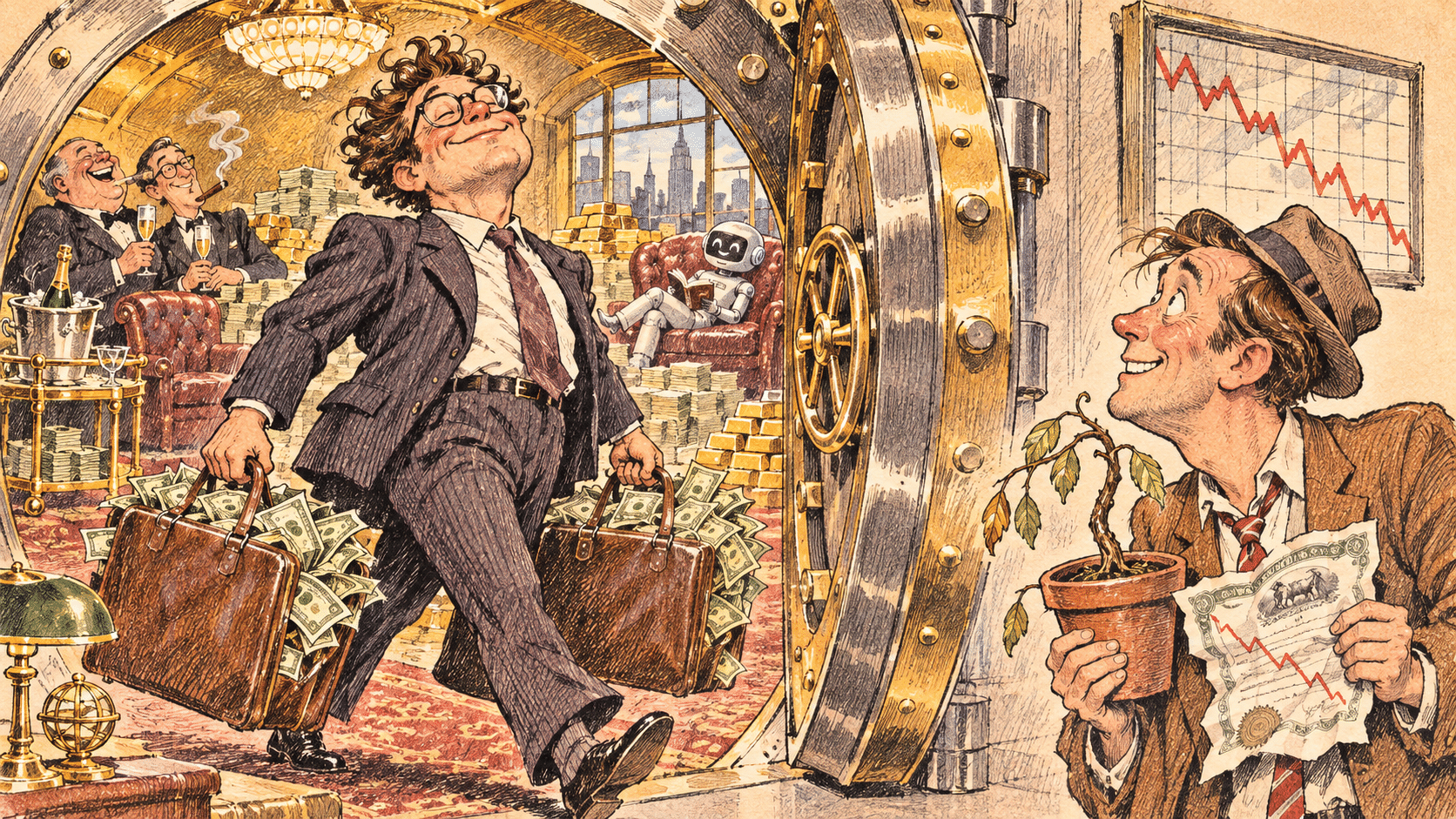
SAN FRANCISCO — As Anthropic stock slides, the artificial intelligence industry has reached a major safety milestone: its founders appear increasingly protected from owning quite so much of it. Humanity’s future remains under development. Their liquidity has shipped.
Futurism’s report on Anthropic founder share sales describes falling shares alongside substantial founder cash-outs. It also notes that the founders’ motivations cannot be determined. Fortunately, Wall Street has never required access to anyone’s motivations before producing a reassuring brochure.
Anthropic Stock Introduces Selective Safety
The distinction is technical. When an ordinary investor sells, he has lost confidence. When a founder sells, he is diversifying. When everybody sells, a television analyst calls it a buying opportunity from a room you will never be invited into.
“I thought we were all going to the moon,” said retail investor Doug Pritchard, examining his brokerage app beside a toaster with more reliable upward movement. “Apparently we were paying for seven people to go somewhere with a marina.”
Doug had understood artificial intelligence to mean a machine capable of learning from experience. His own experience now suggests the intelligence was concentrated on the other side of the transaction.
The Future Now Comes With Baggage
Bohiney’s imaginary Institute for Executive Reassurance defines liquidity as the point at which somebody’s inspirational keynote becomes somebody else’s mortgage payment. The institute’s director holds a doctorate in watching people leave restaurants before the bill arrives.
“Consider a lifeboat,” the director explained. “If the captain boards first, that is leadership. If passengers follow, that is panic. If the captain sells tickets to the lifeboat while remaining on shore, that is innovation.”
A completely unscientific kitchen-table survey found that four out of four family members preferred receiving cash to receiving a statement explaining why cash would eventually be unnecessary. The dog abstained after eating the prospectus.

Claude Recommends Becoming a Founder
Asked how an ordinary household might reproduce the founders’ financial results, Doug’s imaginary version of Claude recommended founding the company several years earlier.
When Doug explained that he had been repairing the dishwasher at the time, the chatbot suggested a more scalable dishwasher.
His wife, Linda, offered a simpler analysis. “If the people who built the thing want less of it, why does the man on television keep telling us to want more?”
The television man was unavailable. He was attending a conference about restoring trust in markets, sponsored by companies selling access to markets.
Investors Receive a Long-Term Relationship
The transformation of buyers into long-term investors is already familiar to Bohiney readers. A short-term investment becomes long-term the moment selling it would require explaining yourself to your spouse.
Doug has consequently stopped checking the stock every minute. He now checks every thirty seconds, a productivity improvement he attributes to AI.
He remains optimistic about the technology’s promise to eliminate tedious work. Already, it has eliminated the tedious work of deciding what to do with his spare money.
At press time, he asked the chatbot whether humanity would ultimately benefit. It replied that benefits were rolling out gradually. Doug could join the waiting list.
Disclaimer: No chatbot can retroactively make you a founder. This story’s ceremonial human collaboration pairs the world’s oldest tenured professor with a philosophy major turned dairy farmer; neither accepts payment in inspirational equity.