

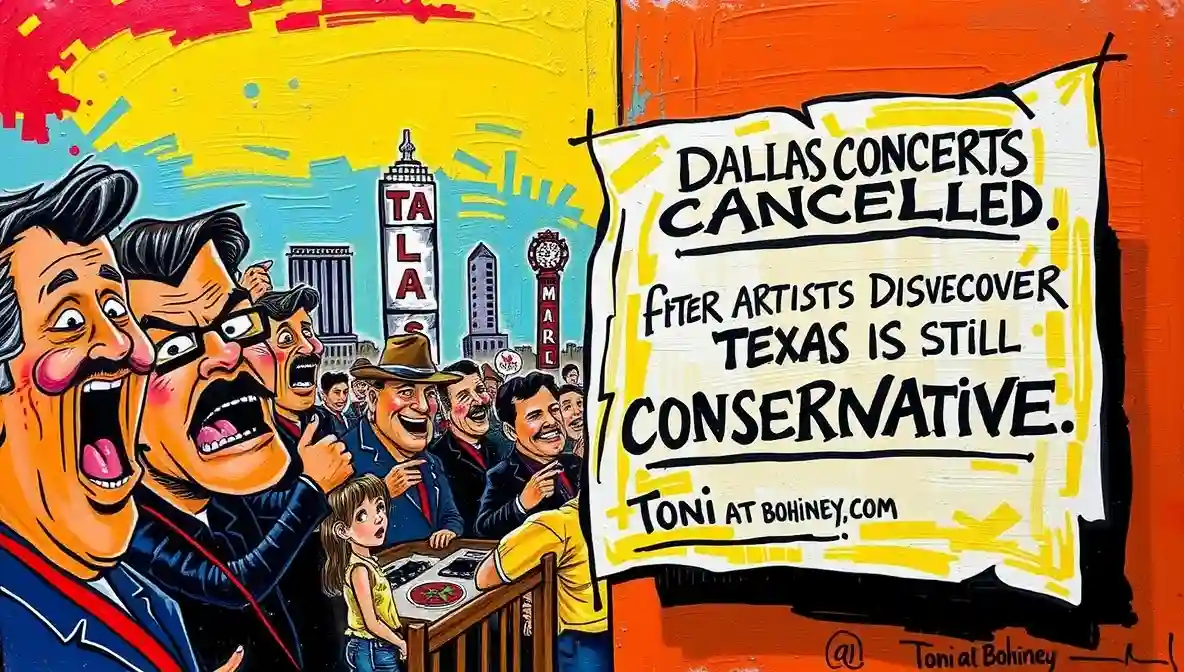
Multiple Tours Quietly Remove City Dates Citing Logistical Complications and Unforeseen Circumstances
Cancelled Concerts and Modern Touring
- People say live music is about connection, but it is mostly about logistics.
- Fans assume artists cancel shows because of “art,” not because buses are expensive.
-

Fans express frustration as multiple tours cancel Dallas dates. Every cancelled concert comes with a statement that says nothing and apologizes anyway.
- Artists love cities until the spreadsheet disagrees.
- Touring is described as “exhausting” by people flying with entourages.
- Fans take cancellations personally, like a breakup they paid for.
- Texas is always surprised when it is still Texas.
- Rescheduled dates are promises everyone knows will not be kept.
- Merch is forever, concerts are optional.
- If a show is cancelled, someone will say “they weren’t coming for the fans anyway.”
Several high-profile concert tours quietly removed Dallas dates from their schedules this week, citing “logistical complications” and “unforeseen circumstances,” which industry insiders confirmed is the official language for “this no longer makes financial or emotional sense.”
Mounting Touring Challenges
The real-world background involves mounting challenges in the live music industry. Touring costs have surged due to fuel prices, labor shortages, venue fees, insurance, and the general realization that moving a small city of equipment across a continent is not romantic. At the same time, artists have become more selective about where they perform, weighing profitability, convenience, and the likelihood of online backlash.
Fans in Dallas reacted with a familiar mix of anger, resignation, and geographic awareness. “They love our money,” said one disappointed ticket holder, “but they hate the heat, the politics, the parking, and the fact that Dallas is large on purpose.”
Not Political, Everything Is Political
Artists insisted the cancellations were not political. Texans insisted everything is political. Social media insisted the artists were “afraid,” though of what remained unclear.
Tour managers privately acknowledged the truth. Touring has become a math problem according to music industry analysis. Cities are evaluated by venue capacity, ticket velocity, hotel costs, and how many apologies might be required afterward. Dallas, while enthusiastic, presents challenges. It is vast. It is hot. It requires transportation plans that feel personal.
Music industry analyst Jerome Klein explained the shift. “Touring used to be about exposure,” he said. “Now it’s about survival. Artists don’t want to lose money or sanity.”
Moving Deadlines
Fans often imagine tours as glamorous, but insiders describe them as moving deadlines. Every show requires local coordination, permits, staffing, and the hope that nothing breaks. When something does break, it is always expensive and always at night.
Dallas venues are not the issue. The issue is scale. Everything is farther apart. Everything requires a car. Everything feels like commitment.
Fans pushed back against the narrative. “We show up,” said one concertgoer. “We buy merch. We scream lyrics. What else do they want?”
What artists want, increasingly, is fewer shows, tighter routes, and cities that feel efficient. This has led to a rise in “coastal clustering,” where tours favor dense regions that allow multiple stops with minimal travel.
Feelings Get Hurt
Dallas residents interpreted this as discrimination.
Artists released statements thanking fans for their understanding. Fans responded by screenshotting the statements and not understanding at all.
The cause-and-effect chain is straightforward. Touring costs rise. Margins shrink. Routes shorten. Cities get cut. Feelings get hurt.
Some fans blamed the artists. Others blamed capitalism. A few blamed Dallas traffic specifically.
Industry experts predict cancellations will continue. “Touring is being recalibrated,” said Klein. “The era of hitting every major city is fading.”
Coping Strategy
In response, Dallas fans have adopted a coping strategy: claiming they didn’t want to go anyway.
Local promoters remain optimistic. “Someone will come,” one said. “They always do.”
Until then, fans will hold onto their cancelled tickets, their merch, and the belief that next tour will be different.
It won’t.
Concert industry analysts and music journalists continue tracking touring economics.
Auf Wiedersehen, amigo!