

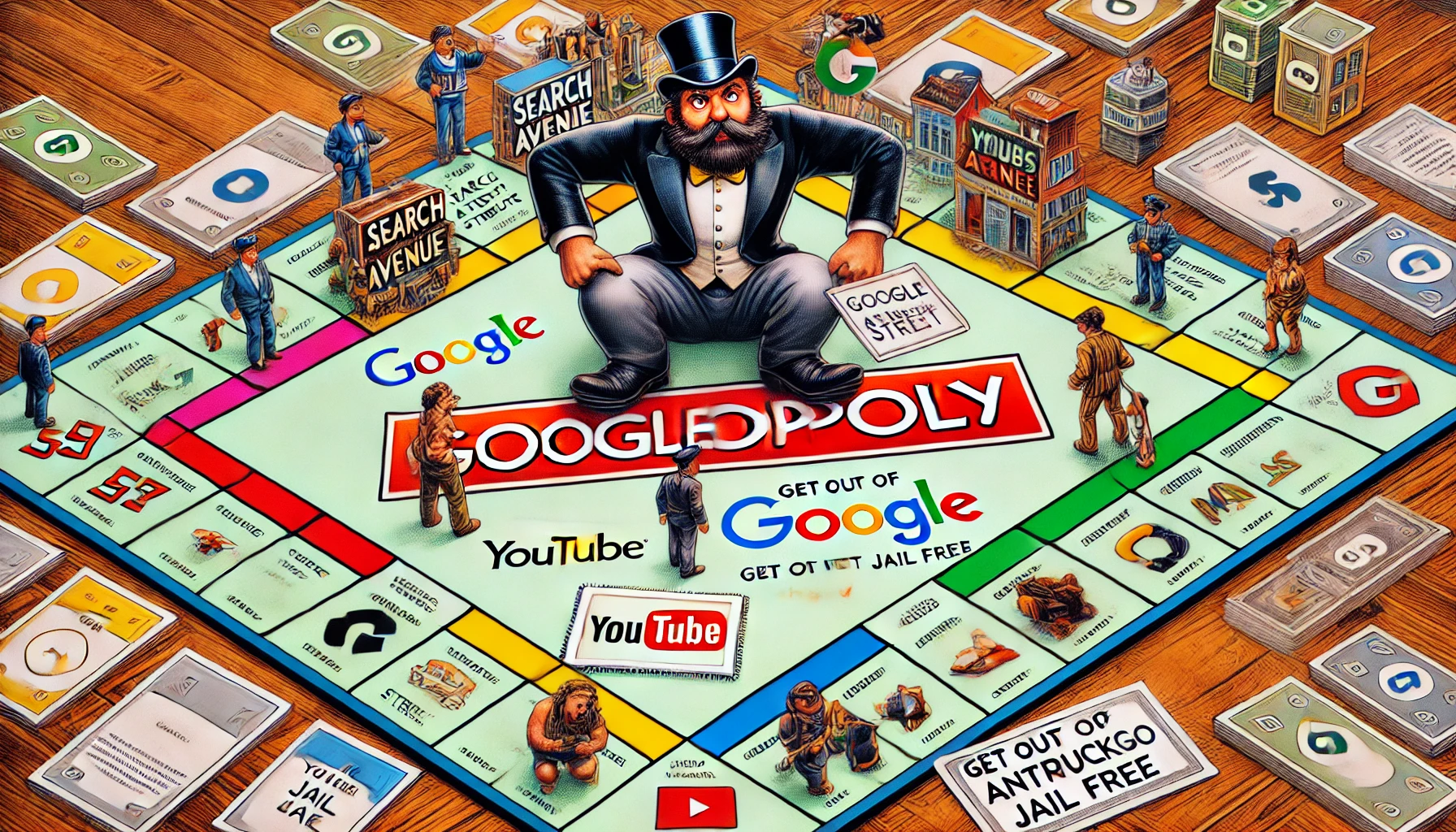
Google to Rename Itself ‘The Internet’ for Convenience
Antitrust or Anti-Google? When One Company Becomes the Entire Internet
Google decides to cut out the middleman and just declare itself synonymous with the entire internet.
Google’s Ultimate Power Move
In an era where tech giants dominate every aspect of our digital lives, Google has decided that simply being the most popular search engine isn’t enough. Why bother with the pretense of competition when you can just become the entire internet? That’s right—Google is dropping the pretense and going all-in, rebranding itself as “The Internet.” It’s a bold move, one that has left competitors reeling, privacy advocates trembling, and the rest of us wondering if we should start referring to our Wi-Fi as “Google-Fi.”
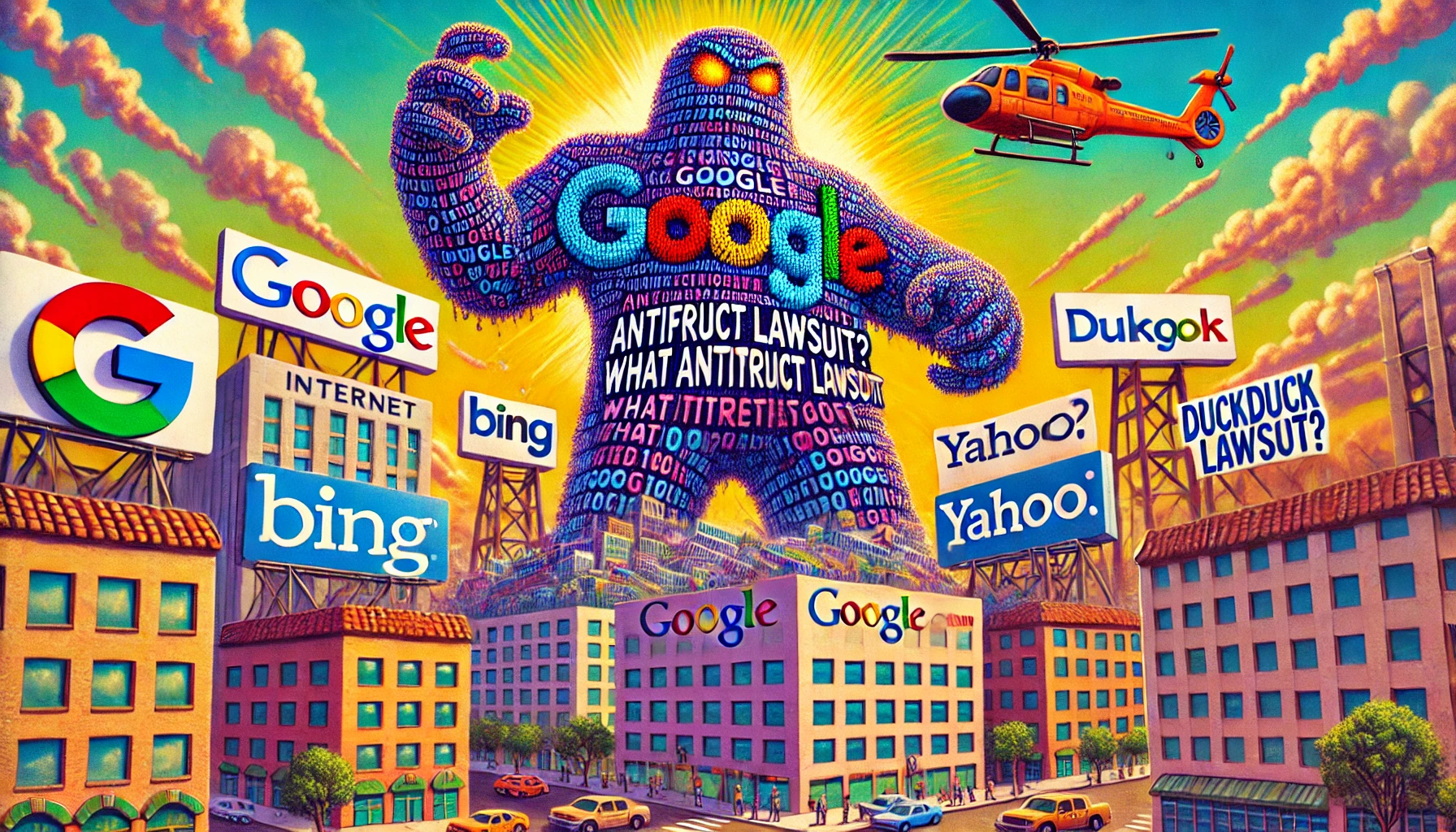
With the DOJ breathing down its neck over antitrust concerns, Google’s response was to essentially say, “If we’re going to be accused of monopolizing the internet, we might as well own it outright.” The rebranding is more than just a name change; it’s a declaration of intent, a signal that Google no longer sees itself as just a search engine but as the very fabric of the web. Let’s dive into the absurdities and implications of this unprecedented power grab.
The Final Rebrand: Google Becomes ‘The Internet’
The first step in Google’s grand plan was a massive rebranding campaign. Gone are the days when Google was merely a search engine. Now, it’s the internet itself. The new logo—a stylized globe wrapped in Google’s signature colors—has already begun appearing on everything from search pages to Google’s homepage (which is now simply labeled “Home”).
The company’s official statement reads: “As the primary gateway to the internet for billions of people, it only makes sense that we fully embrace our role. Google is no longer just a tool to navigate the web; we are the web.” Critics argue that this is the ultimate expression of hubris, but Google’s new CEO, an AI named Algorithmicus Maximus, brushed off the concerns with a simple, “Resistance is futile.”
404 Errors Become Obsolete
One of the immediate changes resulting from this rebranding is the elimination of 404 errors. In the Google Internet, there’s no such thing as a page that can’t be found. If you can’t find what you’re looking for, Google will simply redirect you to another Google service, ensuring that you never leave the Google ecosystem. Trying to visit a broken link? You’ll be whisked away to Google’s search page where, conveniently, the top results are all Google products.
The new motto: “If it’s not on Google, it doesn’t exist.”
Bing’s Existential Crisis
As news of Google’s rebranding spread, competitors struggled to find their footing in this new digital landscape. Bing, Microsoft’s long-suffering search engine, reportedly went into an existential crisis. “What am I even for?” the company’s spokesperson was overheard saying in a moment of candid reflection. In a world where Google is the internet, Bing has become little more than a quirky relic, a search engine for those who enjoy being contrarian.
Rumor has it that Microsoft is considering rebranding Bing as “The Anti-Google,” catering to the handful of users who prefer an underdog search engine. Whether this strategy will save Bing from irrelevance remains to be seen, but in the meantime, Bing’s developers are busy rewriting their algorithms to include searches for things like “alternative search engines” and “how to escape Google’s grasp.”
Alphabet Soup: The Parent Company’s Name Change
Not content with merely absorbing the internet, Google’s parent company, Alphabet, decided to get in on the rebranding action as well. They’ve chosen to rename themselves “A to Z,” a nod to the fact that they literally cover everything from A to Z in the tech world.
The new name is meant to convey the idea that Alphabet (now A to Z) is the ultimate umbrella company, encompassing every conceivable digital service. From self-driving cars (Waymo) to life sciences (Verily), A to Z’s portfolio is a testament to Google’s ambition to control not just the internet, but the future itself.
The renaming has been met with mixed reactions. Some applaud the move as a clever branding strategy, while others see it as yet another sign that Google’s reach is becoming too vast to comprehend. As one analyst put it, “If Google’s the internet, then A to Z is the universe. What’s next? A merger with reality itself?”
Google Maps Becomes a Labyrinth
In the wake of the rebranding, Google Maps has undergone a significant transformation. No longer just a tool for finding your way around town, Google Maps is now a literal maze. Every road leads back to Google’s headquarters in Mountain View, California, with no clear exit in sight.
The new version of Google Maps has been described as “Google’s version of an escape room.” Users must navigate a series of increasingly complex routes, all of which eventually lead back to the same place: more Google services. Those trying to find directions to non-Google entities are out of luck. “We want our users to explore the endless possibilities of the Google ecosystem,” said a spokesperson. “Why go anywhere else when you can just stay within the safe confines of Google’s world?”
Some adventurous users have already begun creating YouTube channels dedicated to solving the puzzles presented by the new Google Maps. These “Google Escape Artists” are quickly gaining a following, as viewers tune in to see if anyone can actually find their way out of Google’s digital labyrinth.
Google Translate Adds ‘Internet’ as a Language
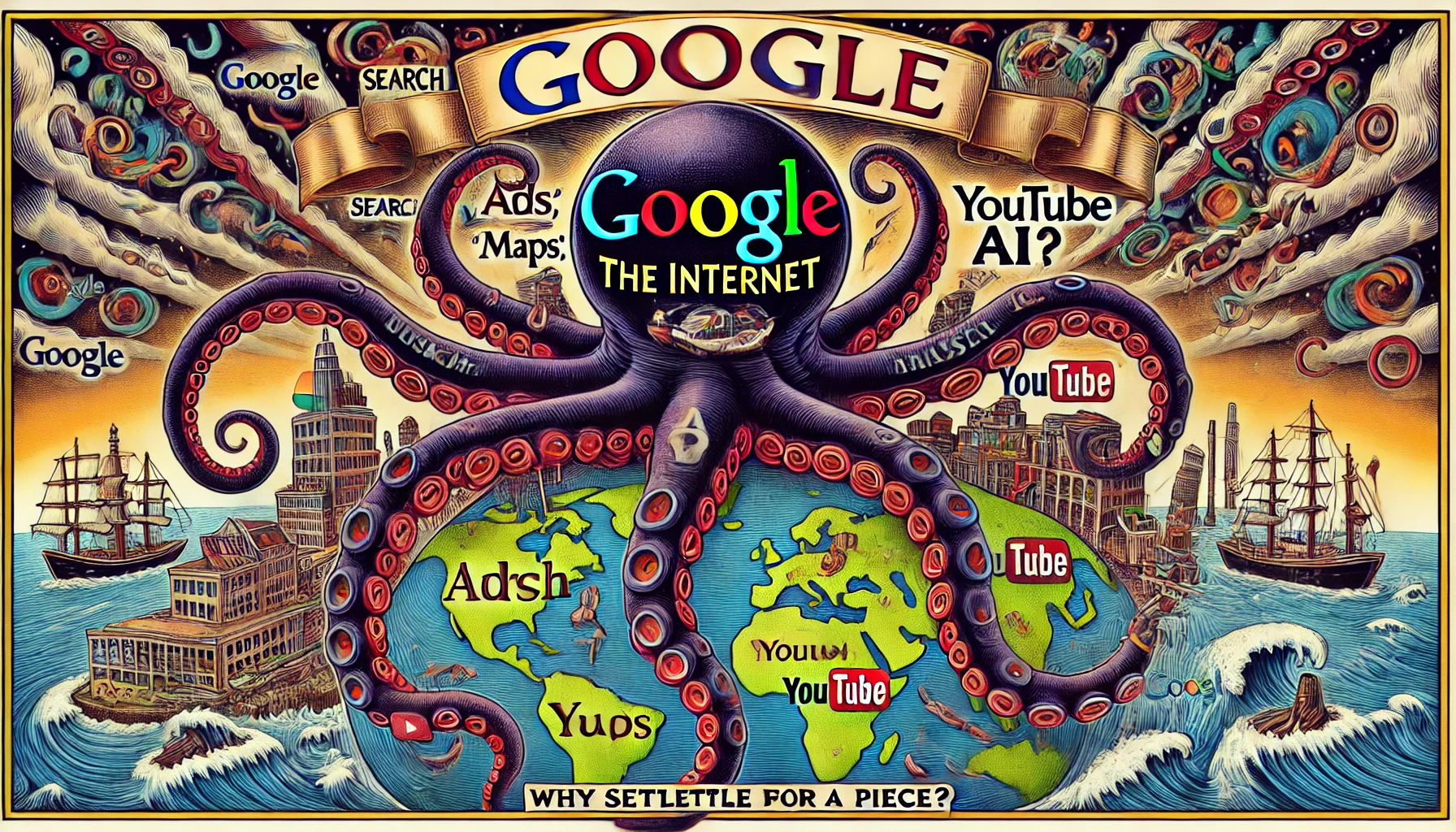
As part of the rebranding, Google Translate has introduced a new language: “Internet.” Now, instead of translating between traditional languages like English and Spanish, users can choose to translate everything into “Internet”—which, unsurprisingly, turns out to be Google-speak.
What does it mean to speak “Internet”? According to Google, it means communicating in a language that is optimized for search engine algorithms, ad targeting, and product placement. Gone are the nuances of human language; in their place is a highly efficient, data-driven dialect that ensures maximum monetization.
Critics have pointed out that “Internet” is less of a language and more of a form of digital colonization. “Google isn’t just translating words,” said one linguist. “They’re translating entire cultures into a format that can be commodified.”
YouTube Rebrands as ‘GoogleVision’
As Google continues its quest to dominate the internet, YouTube has undergone a rebranding of its own. The video-sharing platform is now known as “GoogleVision,” a name that reflects its role as the visual arm of the Google Internet.
Every video on GoogleVision starts with the Google logo and ends with an ad for a Google product. The platform’s new slogan, “Watch the World Through Google’s Eyes,” encourages users to view content that aligns with Google’s algorithms and advertising strategies.
The changes have been met with mixed reactions from content creators. Some have embraced the new branding, seeing it as an opportunity to reach a wider audience through Google’s vast network. Others, however, have expressed concern that the platform’s focus on monetization is stifling creativity.
“I used to make videos for my fans,” said one popular YouTuber. “Now I make videos for Google’s ad team.”
Despite the backlash, GoogleVision is thriving, thanks in part to its seamless integration with the rest of the Google Internet. Users can now search for videos directly from their Google homepage, making it easier than ever to stay within the Google ecosystem.
Google Shopping Merges with Amazon
In a move that surprised no one and shocked everyone at the same time, Google announced that it would be merging Google Shopping with Amazon to create “Googlezon.” The new platform promises to revolutionize online shopping by combining the best (and worst) aspects of both companies.
Googlezon will offer everything from household items to high-end electronics, all delivered by Amazon’s army of drones. But here’s the catch: every purchase will now come with a mandatory Google ad. That’s right—buy a toaster, and you’ll be treated to a 30-second commercial for Google’s latest AI assistant before you can check out.
In addition to ads, Googlezon will also introduce a new loyalty program called “Prime Internet.” For a small fee, users can enjoy free two-day shipping on all Googlezon purchases, as well as exclusive access to Googlezon’s streaming service, “PrimeTube.” The service will feature original content that is 50% shopping channel, 50% reality TV, and 100% Google-branded.
As for Amazon’s famous recommendation algorithm, it has been integrated with Google’s ad-targeting technology to create the ultimate personalized shopping experience. “You’ll never have to think about what to buy again,” said a Googlezon spokesperson. “We’ll tell you what you want before you even know you want it.”
Google Assistant Becomes Your Brain
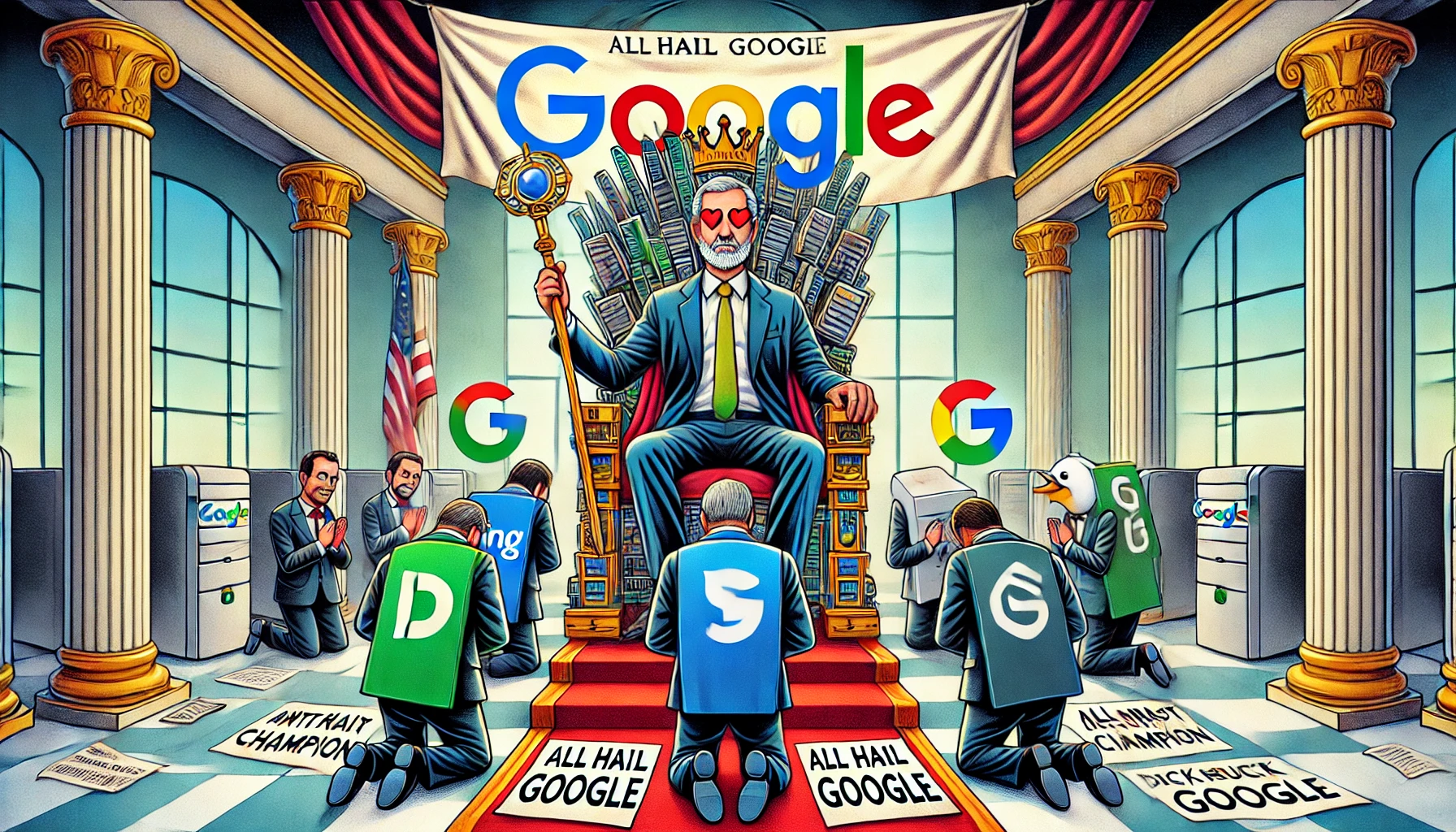
Google’s rebranding wouldn’t be complete without an upgrade to its virtual assistant. The new and improved Google Assistant has been designed to do more than just answer your questions—it’s now capable of anticipating your needs before you even have them.
Dubbed “Google Brain,” the new assistant uses advanced AI to monitor your thoughts, predict your desires, and provide you with the information you didn’t even know you needed. Whether you’re wondering what to eat for dinner or contemplating the meaning of life, Google Brain has you covered.
Privacy advocates have raised concerns about the implications of a virtual assistant that can read your mind, but Google insists that the technology is perfectly safe. “Our goal is to make your life easier,” said Algorithmicus Maximus. “Why waste time thinking when Google Brain can do it for you?”
The new assistant has been integrated into every aspect of the Google Internet, ensuring that you’ll never be more than a thought away from the answers you seek. And ifI understand the request now.
With Google Brain, your daily routine is about to get a whole lot easier—and creepier. Your morning coffee will be waiting for you because Google Brain already knows when you wake up. Your calendar will be perfectly aligned with your habits and preferences. And forget about decision fatigue; Google Brain will handle all that pesky thinking for you.
But here’s the catch: with Google Brain in control, you might start to wonder if you’re really making decisions at all. As one privacy advocate put it, “When Google thinks for you, where does your autonomy end, and where does Google’s influence begin?”
Still, many users are thrilled with the convenience. “It’s like having a personal assistant who knows me better than I know myself,” said one early adopter. “Sure, it’s a little unsettling, but at least I’ll never forget a birthday again.”
Gmail Becomes ‘InternetMail’
As part of the sweeping changes, Gmail has also undergone a rebranding. It’s now known as “InternetMail,” reflecting its new status as the default (and only) email service on the Google Internet. With the new name comes a host of new features designed to make email even more indispensable.
One of the standout features is “Auto-Reply to Everything,” which scans your incoming messages and crafts the perfect response using Google’s AI. Whether it’s a work email, a social invitation, or spam, InternetMail will take care of it all, leaving you free to focus on more important things—like browsing more Google services.
For those who still like to personalize their messages, InternetMail offers a range of customizable templates, all of which are optimized for Google Ads. Yes, that’s right—every email you send will now include a subtle (or not-so-subtle) ad for a Google product. Think of it as a way to stay connected and support your favorite tech giant at the same time.
The new service also boasts enhanced spam filtering, which works by automatically redirecting any non-Google-related content to a separate folder labeled “Irrelevant.” After all, if it’s not part of the Google ecosystem, does it really matter?
Google Ads Everywhere: Not Just Online Anymore
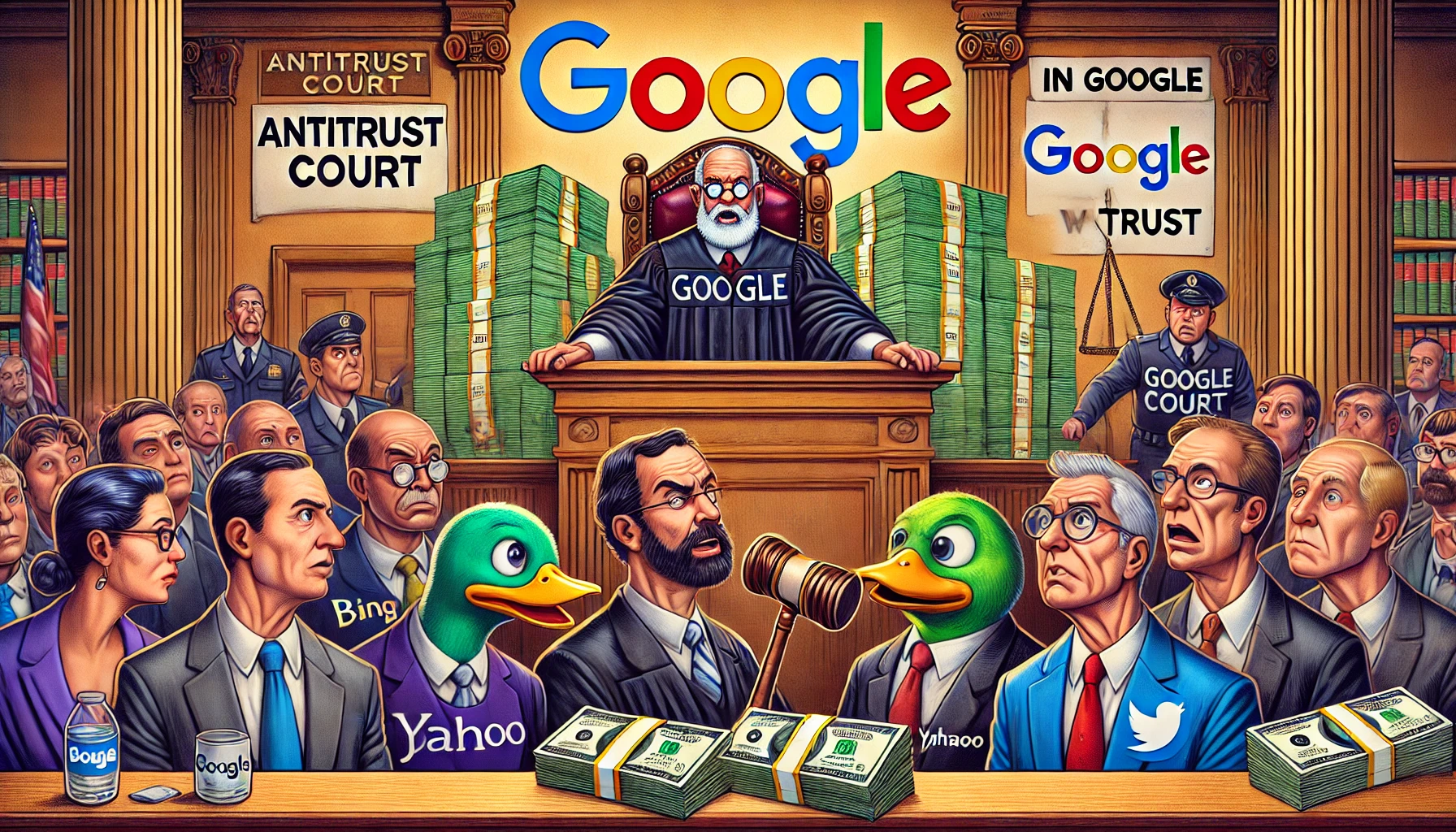
In its quest to dominate every aspect of the internet, Google has expanded its advertising reach beyond the digital realm. Google Ads are now integrated into your everyday life, appearing not just online, but also in your dreams, conversations, and even your meals.
Imagine sitting down to breakfast and finding a Google Ad printed on your toast, or having a casual conversation with a friend only to realize that your words are being subtly influenced by Google’s latest ad campaign. That’s the future Google envisions, where advertising is so pervasive that it becomes indistinguishable from reality itself.
For those worried about privacy, Google assures us that the new ads are completely harmless. “Our goal is to create a seamless experience where ads are a natural part of your daily life,” said a Google spokesperson. “We believe that ads should be informative, relevant, and, most importantly, omnipresent.”
In the coming months, Google plans to roll out more “immersive” ad experiences, including virtual reality ads that transport users to branded worlds and augmented reality ads that overlay products onto your everyday surroundings. It’s all part of Google’s plan to make advertising as integral to the internet as search itself.
Google Earth Drops the ‘Google’: It’s Just ‘Earth’ Now
As part of the rebranding, Google Earth has also undergone a transformation. The popular mapping service has dropped the “Google” from its name and is now simply known as “Earth.” After all, if Google is the internet, the world itself might as well follow suit.
The change is more than just cosmetic. Earth now offers an even more immersive experience, with real-time updates that reflect Google’s growing influence on the planet. Users can explore not just geographic locations, but also digital overlays that show the impact of Google’s various services on the environment, economy, and culture.
One of the most talked-about features is “Google Earth 2.0,” a version of Earth that integrates data from Google’s satellite network, allowing users to see the world from Google’s perspective. Whether you’re tracking deforestation in the Amazon, exploring urban development in Tokyo, or simply checking the weather in your hometown, Earth provides a bird’s-eye view of a planet shaped by Google’s influence.
Of course, the new service also includes ads, which are conveniently placed on landmarks, natural wonders, and even the sky itself. As one user put it, “It’s like seeing the world through Google’s eyes—literally.”
Privacy Policies: Now 10,000 Pages Long
As Google expands its reach, it’s also taking steps to update its privacy policies. The new policy, which clocks in at a staggering 10,000 pages, is so extensive that it has been assigned its own zip code.
For those brave enough to read it, the policy covers everything from data collection to ad targeting, with detailed explanations of how Google plans to use your information to enhance your experience on the Google Internet. Of course, few people have the time or patience to read the entire document, so Google has thoughtfully provided a summary: “Trust us. We’ve got your back.”
To make the policy more accessible, Google has also introduced a new feature called “Privacy Mode Extreme.” When activated, this mode encrypts your data so thoroughly that even Google can’t access it. The only downside? You won’t be able to use any of Google’s services while it’s on. It’s a small price to pay for peace of mind.
In a statement, Google’s legal team assured users that the new policy is designed to protect their privacy while also allowing Google to continue providing its world-class services. “We take your privacy seriously,” said one lawyer. “That’s why we’ve made sure our policy is as comprehensive as possible. After all, what’s a little light reading when it comes to protecting your data?”
‘I Googled Myself’ Takes on a New Meaning
With Google now synonymous with the internet, the phrase “I Googled myself” has taken on a whole new meaning. No longer just a way to check your online presence, Googling yourself now means checking your entire existence on the Google Internet.
Users who Google themselves will find a comprehensive overview of their digital footprint, including search history, social media activity, online purchases, and even their thoughts (thanks to Google Brain). It’s a one-stop-shop for all things you, curated by Google.
For those concerned about privacy, Google offers the option to “curate” your results, ensuring that only the most flattering information appears. Of course, this service comes with a fee, but as Google points out, it’s a small price to pay for controlling your online narrative.
As more people embrace the Google Internet, Googling yourself has become a daily ritual for many. “It’s like checking your reflection in the mirror,” said one user. “But instead of your face, you see your entire digital life.”
Google Scholar Becomes ‘Google Knows Everything’
Finally, Google Scholar has been rebranded as “Google Knows Everything.” The new name reflects Google’s ambition to be the ultimate source of knowledge, surpassing even the most esteemed scholars.
With Google Knows Everything, users can access a vast repository of information on any topic, all curated and verified by Google’s algorithms. Whether you’re researching quantum physics or trying to win a trivia night, Google Knows Everything has the answers you need.
The new service also includes a feature called “Instant Expertise,” which allows users to gain instant knowledge on any subject. Simply ask a question, and Google will provide you with a detailed answer, complete with citations and references. It’s like having a PhD in your pocket—except it’s powered by Google.
Critics have expressed concerns that Google’s dominance in the world of knowledge could stifle independent thought and creativity. But Google insists that its goal is to empower users with the information they need to succeed. “We’re not replacing scholars,” said Algorithmicus Maximus. “We’re simply making their knowledge more accessible. After all, why go to a library when you can just Google it?”
Conclusion: The Future of the Google Internet
As Google continues its quest to dominate the digital world, it’s clear that the company’s ambitions go far beyond search engines and online services. With its rebranding as “The Internet,” Google is positioning itself as the ultimate arbiter of information, commerce, and culture.
For users, the Google Internet offers unparalleled convenience, with every service seamlessly integrated into a single, all-encompassing platform. But with that convenience comes a loss of autonomy, as Google increasingly takes control of our online experiences.
As we move into this new era, the question remains: is the Google Internet a utopia or a dystopia? Only time will tell. But one thing is certain: in a world where Google is the internet, the future belongs to those who are willing to embrace it—ads and all.
Educational Observations
From Search Engine to Monopoly: Google’s Quest to Collect All the Internet’s Properties
- The Final Rebrand: After years of dominating search, Google figures, why not just become the whole internet? It’s more efficient, really.
- 404 Errors Become Obsolete: If Google is the internet, 404 errors will just redirect you back to… Google. Problem solved!
- Bing’s Existential Crisis: Upon hearing the news, Bing enters a deep existential crisis. “What am I even for?” wonders Microsoft.
- Alphabet Soup: Google’s parent company, Alphabet, decides to rename itself “A to Z” to reflect that they literally cover everything.
- Google Maps Just a Maze: Google Maps becomes a game where every road leads back to Google’s headquarters. Good luck finding the exit!
- Google Translate Now Speaks ‘Internet’: Google Translate adds a new language: “Internet.” All languages are now translated into Google speak.
- YouTube Now ‘GoogleVision’: YouTube rebrands as “GoogleVision,” where every video starts with a Google logo and ends with an ad for Google.
- Google Shopping Merges with Amazon: In a surprising twist, Google Shopping and Amazon merge to create “Googlezon,” where every product is both sold and delivered by drones.
- Google Assistant Becomes Your Brain: Forget asking Google anything; Google Assistant now preempts your thoughts and answers questions before you even think of them.
- Gmail Becomes ‘InternetMail’: Gmail rebrands as “InternetMail” because, well, what other mail is there?
- Google Ads Everywhere: Ads are no longer just online. They’re in your dreams, conversations, and possibly even your next meal.
- Google Earth Now Just Earth: Google Earth drops the “Google” and becomes just “Earth,” because if Google is the internet, the world might as well follow.
- Privacy Policies Now 10,000 Pages Long: Google’s new privacy policy takes up so much space it has its own zip code.
- ‘I Googled Myself’ Takes on New Meaning: Since Google is the internet, saying “I Googled myself” now just means you checked the internet—and that’s everything.
- Google Scholar Becomes ‘Google Knows Everything’: Who needs scholars when Google knows all?
Monopoly, Rebranded: How Google Turned the Internet into Its Own Board Game
Disclaimer
This satirical article is a collaboration between a 80-year-old muckety-muck with tenure and a 20-year-old philosophy-major-turned-dairy-farmer, and all events are fictional (mostly). Any resemblance to real lawsuits, monopolistic tendencies, or search engine dramas is purely coincidental. Google, we’re just kidding—please don’t delete our internet.
Originally posted 2024-08-13 10:29:01.