

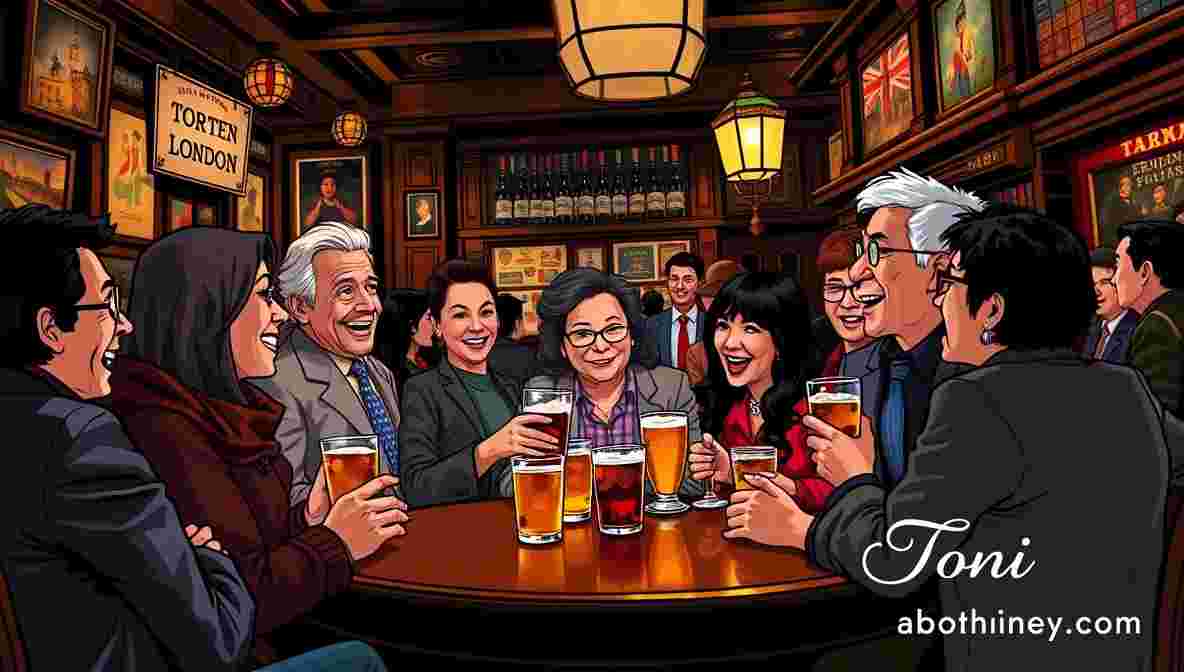
Husband of MP Arrested in Alleged Spy Plot, Claims He Thought “Strategic Briefing” Meant Pub Trivia Night
British Intelligence Scrambles to Determine If Secrets Were Leaked Between Pints — or Just Overheard During a Heated Premier League Debate
LONDON — Britain awoke this week to the sort of espionage scandal that makes international intrigue look less like a James Bond film and more like a slightly awkward networking event held above a pub that had run out of onion rings.
Authorities announced the arrest of three men — aged 39, 43, and 68 — suspected of assisting Chinese intelligence services, including David Taylor, the husband of sitting Labour MP Joani Reid, the member for East Kilbride and Strathaven. While investigators say the case involves serious national-security concerns, early evidence suggests the alleged espionage network may also have involved an impressive number of pints, trivia questions, and at least one heated debate over the correct pronunciation of “quinoa.”
The suspect at the centre of the drama reportedly told police he believed he was attending what organizers called “strategic briefings,” which he assumed referred to a weekly pub trivia competition.
“I just thought it meant we were reviewing strategy for the geography round,” the man allegedly explained during questioning, according to a source familiar with the investigation who described the suspect as “very confident about knowing the capital of Belgium.”
The Most British Spy Scandal Ever Recorded in the History of Awkward Situations

Security experts say Britain has a long tradition of espionage stories, but few have looked quite this polite — or involved this many receipts from establishments offering two-for-one on Tuesdays.
Dr. Penelope Strickland, a political scientist at the fictional but extremely respectable Institute for Mildly Concerning International Affairs, explained that British spy scandals tend to follow a familiar pattern.
“In France, spies meet in underground garages. In America, they meet in anonymous hotel rooms,” she said. “In Britain they appear to meet somewhere that serves shepherd’s pie and closes at eleven.”
According to Strickland, the case may represent what analysts are calling “the pub-based intelligence model.” “It’s very efficient,” she noted. “Everyone already gathers there voluntarily — and no one asks questions when you order a fourth round and pull out a laptop.”
The Evidence Trail: Receipts, Emails, a Dartboard, and Draft Version 12 FINAL FINAL
Investigators reportedly collected a range of materials during searches connected to the case, including digital documents, communications records, and what one official described as “an extremely well-worn pub loyalty card” — nine stamps, one away from a free coffee that will now presumably never be redeemed.
According to Bloomberg, British intelligence agencies seized laptops, documents, and what investigators described as “an alarming number of pub receipts,” suggesting the operational headquarters may have been a corner table near the dartboard. Counter Terrorism Policing London confirmed the arrests are part of a proactive national security investigation under the National Security Act 2023.
Early forensic analysis of seized laptops reportedly revealed a mixture of policy documents, email chains, and a PowerPoint presentation titled: “Regional Economic Strategy — Draft Version 12 FINAL FINAL.”
“This is the sort of file that would make any intelligence officer nervous,” said cybersecurity researcher Martin Keegan. “Not because it contains secrets. Because it never actually stops being edited.”
Eyewitness Accounts From the Scene of Britain’s Most Geopolitically Confused Trivia Night
Several witnesses say the gatherings looked suspicious only in the sense that any group of people intensely discussing geopolitics while drinking lager might appear unusual in a pub where the biggest controversy is usually whether the quiz master is reading the answers off his phone.
One bartender who served the group said the men often spoke about global affairs but never behaved like professional spies. “They didn’t look like spies,” the bartender said. “One of them spent fifteen minutes trying to remember the name of that actor from Jurassic Park.”
The bartender added that the group occasionally became animated during trivia rounds. “Once they argued for ten minutes about whether Kazakhstan borders the Black Sea,” he recalled. “Which I suppose technically is geopolitics.”
For the record: Kazakhstan does not border the Black Sea. The man who insisted it did is now 0-for-1 on geography and, allegedly, espionage.
MI5’s Most Difficult Question Since They Asked Where the Tea Biscuits Went
MI5 had already warned MPs in November that Chinese agents were making “targeted and widespread” efforts to recruit individuals with access to sensitive information, using LinkedIn and cover companies as entry points. The fact that the alleged recruitment may have extended to pub quiz nights suggests Beijing’s methods have either become remarkably sophisticated or remarkably casual — and no one is entirely sure which is more alarming.
Behind the humour, however, analysts say the case highlights a genuine concern among Western governments about foreign influence and information gathering. The investigation has also forced intelligence agencies to confront an uncomfortable possibility: modern espionage may look less dramatic than people expect.
“Everyone imagines cloak-and-dagger operations,” said Dr. Strickland. “In reality it often looks like people attending conferences, sending emails, and occasionally misunderstanding meeting agendas.”
MI5 analysts now face the delicate task of determining whether national secrets were passed to Beijing or whether someone simply overheard a heated debate about Premier League standings. Either way, Counter Terrorism Policing has confirmed the investigation continues.
Officials say one intelligence officer admitted the case presents a unique challenge. “We’re trying to determine whether sensitive information was actually passed along,” the officer said. “Or whether someone simply overheard a conversation about the UK’s tax code and decided that was punishment enough.”
What the Funny People Are Saying About Britain’s Cosiest Spy Ring
“British spies are the only spies in the world who apologize when they arrest you.” — Jerry Seinfeld
“If your spy network includes a trivia team name and a pub tab, that’s not espionage. That’s Thursday.” — Ron White
“You know it’s a British spy scandal when the most suspicious thing is someone ordering three pints and still claiming they’re ‘just networking.'” — Ricky Gervais
A New Chapter in Britain’s Proud History of Extremely Polite Espionage
Britain has produced many famous spy stories, from Cold War double agents to modern cybersecurity battles at GCHQ. The Cambridge Five. The Portland Spy Ring. Kim Philby. George Blake. Men who traded in microfilm hidden in fountain pens and messages passed in railway station lavatories.
But this latest chapter may go down as the most British espionage tale ever recorded. A handful of suspects. A parliamentary connection. A think-tank with an impressive-sounding name. And a meeting agenda that may or may not have been confused with quiz night.
MP Joani Reid issued a statement confirming she had “never seen anything to make me suspect my husband has broken any law,” adding firmly that she had never been to China, never spoken on China-related matters in the Commons, and was “not any sort of admirer or apologist for the Chinese Communist Party’s dictatorship.” Which, in fairness, is exactly what a very innocent person would say. And also, we are told, what a very good trivia host would say right before revealing the answers.
For investigators, the question now is not just whether information changed hands.
It is whether anyone actually won the trivia round.
Espionage used to involve microfilm hidden in fountain pens. Today it apparently involves PowerPoint slides and a man saying, “Hang on lads, let me just forward this email.” Britain, as ever, makes even betrayal look like it should come with a side of chips.
This article is satire and commentary inspired by public reporting and the timeless British tradition of discussing geopolitics over a pint. It was written entirely through a human collaboration between two sentient beings: the world’s oldest tenured professor and a philosophy major who eventually became a dairy farmer after concluding that cows are easier to debate than politicians.
Auf Wiedersehen, amigo!