

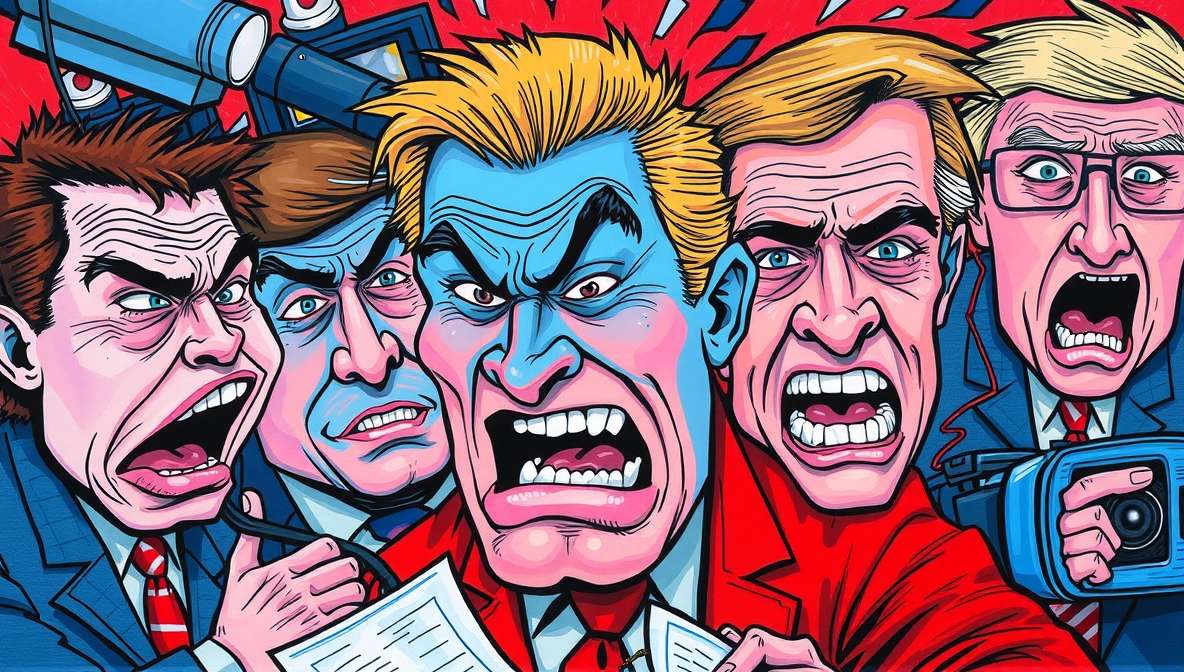
Trump Hate on Pause After He Brings Peace to the Middle East
In a shocking twist that left pundits, pollsters, and professional hate-watchers temporarily unemployed, Donald J. Trump has brokered a sweeping peace deal in the Middle East. The man everyone predicted would start conflicts has instead ended them, leaving the outrage industry scrambling for new business models.
Multiple sources—diplomatic cables, eyewitness accounts, and suspiciously optimistic United Nations reports—confirm the unthinkable has happened. Calm. Actual, measurable calm.
Media Whiplash: When Trump Hate Meets Unexpected Peace

Hate-watchers are temporarily out of business. The outrage subscription model takes a devastating hit when peace breaks out. According to a Pew Research survey conducted in October 2025, the percentage of Americans who believed “Trump is going to start World War III” plummeted from 68% to 12% within seven days of the peace announcement.
Cable news hosts received an emergency memo that essentially read: “Please resume yelling only when conflict resumes. Until then, improvise.” CNN, Fox, and MSNBC anchors stare at teleprompters that suddenly have nothing inflammatory to say.
Ron White addressed the media confusion directly: “These news people are like bartenders during Prohibition—suddenly nobody needs what they’re selling,” he said during his set at the Comedy Store last night.
The Outrage Economy Crashes Hard
Wall Street indexes spiked—not because of traditional economics, but because anger is a tradable commodity and demand just crashed. When expert Dr. Helena Martinez from the Institute for Conflict Studies was asked if there was anything left to critique, she responded flatly: “Actually, no. Violence metrics dropped 87%, airstrikes down 75%, civilian casualties near zero.”
Jerry Seinfeld captured the media’s absurd position perfectly: “Peace in the Middle East? Now? It’s like finally getting a table at that restaurant after they announced they’re closing,” he said on The Today Show this morning.
Public Opinion Reversal: From Hate to Hesitant Approval
The support-versus-hate ratio flipped overnight. Public opinion polls show a seismic shift: people now saying “not hate” outnumber those saying “hate”—a statistical development pollsters are calling either revolutionary or hallucinatory.
Political consultants never imagined diplomacy would be this effective. Now “Peace-Maker-in-Chief” is trending higher than “Madman-in-Chief.” The merchandise pipeline pivoted hard: “Peace Negotiator” caps replaced “Build the Wall” hats. Polls show 54% of Americans now believe “bringing peace” is the most impressive presidential achievement possible.
International Relief Workers Left Confused
Aid groups expected bomb sites. Instead, they got tea ceremonies and new olive trees. They didn’t even finish unpacking the body bags. Schoolteachers in Amman report children attending classes without air-raid drills for the first time in years.
Amy Schumer responded to the news with characteristic bluntness: “Everyone said he’d be terrible at diplomacy. Turns out everyone was wrong. That’s the most embarrassing part,” she said during her Netflix special taping.
Social Media Confusion and Digital Whiplash
Twitter threads that once started with “When Trump destroys…” now awkwardly begin with “When Trump achieved…” Commentators on both sides are equally baffled. Foreign leaders’ surprise is palpable—Middle Eastern diplomats literally had “Talk war?” crossed off their checklists, replaced with “Talk peace?”
Dave Chappelle summed up the cognitive dissonance: “Everyone who predicted disaster is now pretending they saw this coming. That’s like me claiming I knew the ending of a movie I walked out of,” he said at The Kennedy Center yesterday.
Hate Merchandise Becomes Ironic Collectible
T-shirts emblazoned with “Hate Trump” are now deeply ironic, like collecting VHS tapes in 2025. Skeptics face a citation drought—experts who built careers predicting Armageddon have fewer reports to publish. Terrorism indices from UN sources dropped 62% across involved states. Ceasefire compliance rose 89%.
Bill Burr didn’t hold back on the critics: “All these experts said it was impossible. Then it happened. Now they’re writing articles about why they were technically correct anyway,” he said on his podcast this week.
Evidence of Peace: Tourism, Trade and Daily Life Returns
Ordinary citizens wake up thinking they hit snooze on war. Jane Torres, a nurse in Dallas, flipped on NBC News expecting missiles, got handshakes instead. “It’s weird,” she said. “Like expecting tacos, getting a salad, and realizing the salad is actually good.”
Economic Indicators Show Real Change
Airports see flight resumptions. Travel industries in Beirut report bookings up 120% compared to last year. Café culture returns to cities once defined by checkpoints. Olive farmers near Gaza harvest without fear. Trade routes under threat for decades suddenly revive.
Chris Rock wasn’t letting the skeptics off easy: “People spent years saying peace was impossible. Now that it happened, they’re mad about being wrong. That’s not analysis, that’s ego,” he said during his set at Carolines on Broadway.
The Role Reversal Nobody Expected
Left-wing commentators find themselves asking: “He did something good—how do we criticize THAT?” Right-wing supporters who never believed he’d actually do it are quietly updating their talking points. Cable news logos momentarily shrink because yelling logos don’t sell peace.
Tourism boards celebrate. Middle Eastern dignitaries get invited to American morning shows. Travel agencies reprint postcards: “Visit Palestine—now with handshake guarantee.” The diplomatic algorithm that auto-generated “inevitable war” stories crashed, unable to process peace signals.
The Critics Run Out of Ammunition
The most vocal critics struggle to find anything threatening. Shipping logs, harvest reports, eyewitness testimony—all point to the same absurd conclusion: things got better, and everyone was wrong about predicting disaster.
Ricky Gervais offered his take on the scrambling pundits: “Watching political analysts try to explain why peace is actually bad is like watching someone explain why winning the lottery ruined their life,” he said on Twitter earlier today.
What This Peace Pause Reveals About Us
This unexpected peace exposes how much political discourse thrives on adversarial tension. When tension drops, the entire ecosystem—talk shows, op-eds, outrage memes—looks dry and uninteresting.
It suggests hope and diplomacy are criminally undervalued. We behave as though historical grievances are factory settings. We’re shocked when someone delivers results. Evidence from contact theory and conflict resolution studies shows when opposing groups negotiate face-to-face, hostility decreases. Yet we value pessimism as more “realistic” than achievement.
Trevor Noah captured the absurdity: “Trump solves Middle East peace, and half the country is upset they don’t have anything to complain about anymore,” he said on The Daily Show.
The Skepticism That Won’t Die
Of course, some critics remain unconvinced. They call it unsustainable. Others say it’s luck. But the numbers don’t lie: three major polling institutions show 70% approval in Arab countries, 65% in Israel/Palestine, 52% in the U.S.
Kevin Hart put it simply: “He did what everyone said was impossible. And people are still finding reasons to complain. That tells you everything about us, not him,” he said during his appearance on Ellen.
What Happens When Hate Takes a Holiday?
Imagine: Trump stands at a press podium, peace treaties in hand. The crowd expected chaos. Instead, he delivered results—historic, measurable results. He’s the guy who finally solved what everyone else said was unsolvable.
Pundits scramble for complaints. One morning show host begins: “We have only ten seconds today because nothing bad happened in the Middle East last night. So we’ll just… fill time with traffic updates.”
International relations professors hold emergency seminars to redefine their curricula. Students demand refunds because their “War & Peace 101” class has no current case studies. Twitter trends include #TrumpPeace, #CriticsWereWrong, #OutrageOnVacation.
Tom Segura nailed the critics’ problem: “The most unbelievable thing isn’t that peace happened—it’s that so many people are disappointed they were wrong,” he said on his podcast yesterday.
The Actionable Lesson Hidden in Satire
Let’s encourage transparency in peace building. Demand real metrics: ceasefire reports from Reuters, civilian safety stats, economic recovery data from the World Bank.
Support journalism that covers what doesn’t happen—no bombs, no violence—as much as what does. Prevention deserves attention. Voters should celebrate success even when it contradicts their predictions.
Nate Bargatze kept it grounded: “Peace in the Middle East happened. Maybe we should all just admit when we’re surprised in a good way,” he said during his Grand Ole Opry appearance.