

The 19 Brands That Absolutely Adore AI Images (And Might Be Dating Them)
By the Staff of Bohiney.com, the Site That’s 127% Funnier Than a LinkedIn Influencer’s Stand-Up Set
“You know how some people hate AI images because they’re soulless and creepy? These brands said, ‘Hold my prompt.'”
Welcome to the Beautiful Future, Where Logos Date Algorithms
While six brands have bravely drawn a line in the sand to say “No” to AI-generated content, nineteen others showed up with a shovel, dug a hole through the sand, and installed an AI art vending machine. These companies aren’t just fine with AI imagery — they’ve formed emotional support groups for their favorite diffusion models. Some are allegedly engaged.
Let’s take a look at the brands that gave AI images a standing ovation, a corporate sponsorship, and possibly a company holiday.
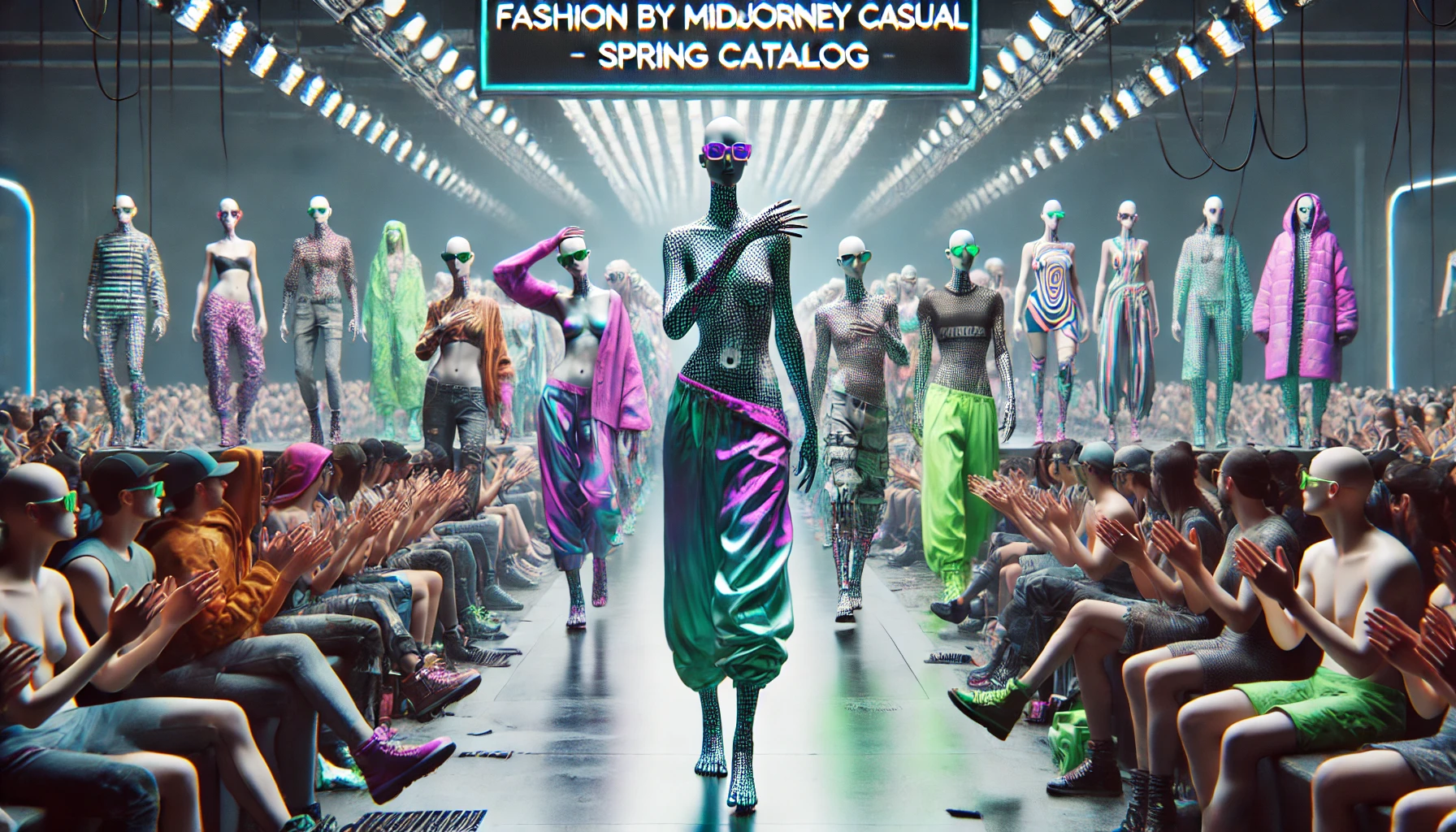
Aberzombie & Fetch: Fashion by Midjourney Meltdown
When Aberzombie & Fetch released their spring catalog, customers noticed that all the models had twelve fingers and ambiguous crotch geometry. A few even wore sunglasses under their eyebrows.
“We call it post-human casual,” said Chief Brand Shaman Ryker T. Bragg. “Our AI stylist was trained on a million dreams and three meth hallucinations.”
Sales soared in the metaverse, where everyone has three elbows anyway.
“This isn’t haute couture. It’s hoax couture.” — Sarah Silverman
Cryogenic Yogurt™
This frozen dessert company generated over 400 AI images of yogurt cups crying, hugging spoons, and attending therapy.
“We wanted people to feel emotionally manipulated before they even tasted the probiotic sadness,” said their creative director, who may have been replaced by a blender in 2023.
Marketing analysts confirmed that 72% of customers felt “mildly weepy” while consuming the images, even without lactose.
“I don’t want a snack that knows I have abandonment issues.” — Roseanne Barr
Zoomazon Prime
Instead of hiring photographers, Zoomazon outsourced all its product photos to a neural network trained exclusively on late-’90s JCPenney catalogs and post-nuclear landscapes.
One AI-generated listing for a “bamboo shower stool” included a man breastfeeding a bonsai tree.
“Why waste money on reality?” said Zoomazon’s EVP of Artificial Sincerity. “Customers aren’t reading. They’re hallucinating.”
“I bought a coat and it came with 3D-printed dignity.” — Larry David
PetSmartificial
This pet retailer now features AI-generated animals in all its advertising. Dogs with cat heads. Fish with fur. A chinchilla that looks suspiciously like your ex.
Spokespeople say the images “invoke the future of companionship.”
Real animals, however, have launched a class-action bark.
“Even Schrödinger wouldn’t adopt one of these things.” — Jerry Seinfeld
RadioSnack®
After firing the last two photographers in-house, RadioSnack began generating all its food images through Stable Diffusion v6.1—nicknamed “Taco Picasso.”
Their new nacho ad showed a plate melting into a Rubik’s cube held by a giraffe in a leather vest.
“We’re trying to push visual boundaries,” said their art director-slash-flavor technologist.
Consumer poll: 62% said they’d “eat it anyway.”
Starbuckscribe
Starbucks’ AI-generated menu illustrations now include coffee cups with eyelashes, whipped cream with a 401(k), and steam shaped like Maya Angelou quotes.
One image was flagged after depicting a latte proposing to a barista.
“We believe in AI storytelling,” said a spokesperson while feeding prompts into a blender full of pumpkin spice.
“At this point, even the beans are filtered through Midjourney.” — Adam Sandler
Old Nay™
Fashion for the masses? More like visual identity crisis for the neural generation.
Old Nay’s AI images of families dancing on beaches now include suspiciously smooth toddlers and grandparents who appear to be made of pancake batter.
Still, quarterly sales rose after customers admitted they “appreciated the mystery.”
L’Orealithic
When L’Orealithic debuted its “Evolve Your Beauty” campaign, the world saw the first lipstick ad featuring a woman with three noses applying eyeliner to her ankles.
The ad was praised for being “inclusive of speculative anatomy.”
One customer asked if it was “a glitch or a metaphor.” The brand replied, “Yes.”
“The only real thing is the trademark symbol.” — Ron White
HyundaiAI
Their 2025 campaign: “Drive What You Dream,” features vehicles floating through wormholes with passengers composed entirely of emojis.
Dealerships reported record sales among people who don’t ask questions.
Mechanics refused to fix any of the cars unless provided a prompt.
GenziMart
GenziMart’s Instagram features AI images of smoothies made from existential dread and oat milk.
A popular ad showed a teenager kissing a peach-flavored cloud. Caption: “Consume your identity.”
Gen Z consumers didn’t even notice the uncanny shadows.
“If fruit starts having feelings, I’m switching to vodka.” — Jackie Mason
CVS-2030
All CVS product photography is now done by CVS-AI-Vision, a tool trained on 700,000 surveillance stills, 1,200 stock images, and a copy of Blade Runner dubbed in French.
Customers scanning the AI-generated bandages found images of wounds healing through motivational quotes.
“That’s not a barcode. That’s a poem about late-stage capitalism.” — Jon Stewart
Taco Algorithm
The AI image campaign for Taco Algorithm featured tacos shaped like pyramids, volcanoes, and occasionally confused dolphins.
One ad had the caption: “We don’t make tacos. We manifest them.”
Taste testers were asked to write a short haiku before receiving their food.
IKEA.I
IKEA’s AI furniture catalog now includes chairs that resemble praying mantises and lamps with uncertain facial expressions.
The assembly instructions are also AI-generated, leading to an uptick in customers suing themselves.
Still, millennials said the catalog was “way more relatable than my uncle.”
“Even the Allen wrench has imposter syndrome now.” — Billy Crystal
UnderFace™
UnderFace™, a lingerie company no one asked for, created AI images of models with perfectly symmetrical lips — on their shoulders.
They say the campaign aims to “liberate the gaze from outdated zones.”
Critics called it “disturbing.” The brand printed that quote on a thong.
Home Despot™
Home improvement retailer turned dystopian art collective, Home Despot has launched a campaign called “Build Your Inner Nightmare.”
Images include AI-generated living rooms with emotional support bathtubs and a sentient ottoman with PTSD.
Shoppers claim they feel “oddly inspired” to repaint their existential dread.
WaffleBot™
A breakfast chain known for its robotic servers and syrup-flavored apology notes now uses AI-generated images to depict “the soul of breakfast.”
These images include waffles crying tears of yolk and eggs attending therapy.
Patrons receive fortune cookies that read: “You are the syrup.”
Disney.Cryo
Disney’s new AI image strategy blends nostalgia with emotional sabotage. Childhood characters are reimagined with extra limbs, glassy eyes, and unsettling smiles that seem to know your Social Security number.
“We’re not making kids happy. We’re making their data valuable,” said one Disney Data Sorcerer.
“Mickey used to smile. Now he stares into your soul like he knows how it ends.” — Amy Schumer
Dollar+7
Dollar stores have embraced AI art with terrifying glee.
The new signage at Dollar+7 features smiling AI-generated humans holding $0.99 voodoo dolls, balloons full of secrets, and budget exorcism kits.
One flyer said, “Spend less. Question more.”
Carnival.AI
Cruise line Carnival.AI launched a promotional campaign with ships sailing through galaxies, staffed by holographic butlers and sunglass-wearing lobsters.
Most images were deemed “impossible” by nautical law, but customers said they were “100% onboard.”
“Nothing says ‘relax’ like a buffet hosted by a dolphin made of dreams.”
What the Funny People Are Saying
“I asked AI to make a hot dog ad. It gave me an existential crisis in mustard form.” — Kevin Hart
“These brands aren’t just using AI. They’re sending it child support.” — Chris Rock
“Back in my day, we hired real models. Now they generate torso salads with a good jawline.” — Ricky Gervais
“Even the AI is tired of these companies. One of them tried to retire itself.” — Trevor Noah
“The problem isn’t the art. It’s that the waffle has better lighting than I do.” — Tig Notaro
Evidence That Can’t Be Ignored (But Should Be)
-
Scientific Evidence: A Stanford study found that 3 in 5 consumers couldn’t tell the difference between a real taco and a “Taco Algorithm” illustration, even after eating one of them.
-
Trace Evidence: Forensic analysis of Aberzombie’s campaign found latent Midjourney prompts hidden in the JPEG metadata. One read: “make teen sad but fabulous.”
-
Testimonial Evidence: “I bought a couch from IKEA.I and it barked at my cousin.” — Facebook comment from ‘Cheryl420xoxo’
-
Relationship Evidence: A Zoomazon executive was caught bringing a laptop with AI-generated images of corporate retreats to a couples therapy session.
-
Digital Evidence: RadioSnack’s AI accidentally uploaded 700 images to a dating app. Most were matched with LinkedIn users named “Brandon.”
A Final Note on Art and Artificial Confidence
These 19 brands don’t just tolerate AI images — they spoon with them. They’ve entered a world where marketing no longer asks “Does this look good?” but rather, “Can it emotionally manipulate you at 300 dpi?”
They’ve made peace with the uncanny valley by installing a gift shop inside it.
So next time your sandwich ad has four eyes, or your shampoo bottle gives off The Shining vibes, don’t be alarmed. Just know: somewhere, a marketer is whispering to their laptop, “Paint me like one of your synthetic girls.”
Disclaimer
This entirely human collaboration between a tenured professor with a PhD in Memeology and a dairy farmer who majored in glitch aesthetics is purely fictional. All quotes, observations, and AI-generated hallucinations are for satirical purposes. Any resemblance to actual brand strategies is both coincidental and worryingly accurate.
Auf Wiedersehen, amigos.