

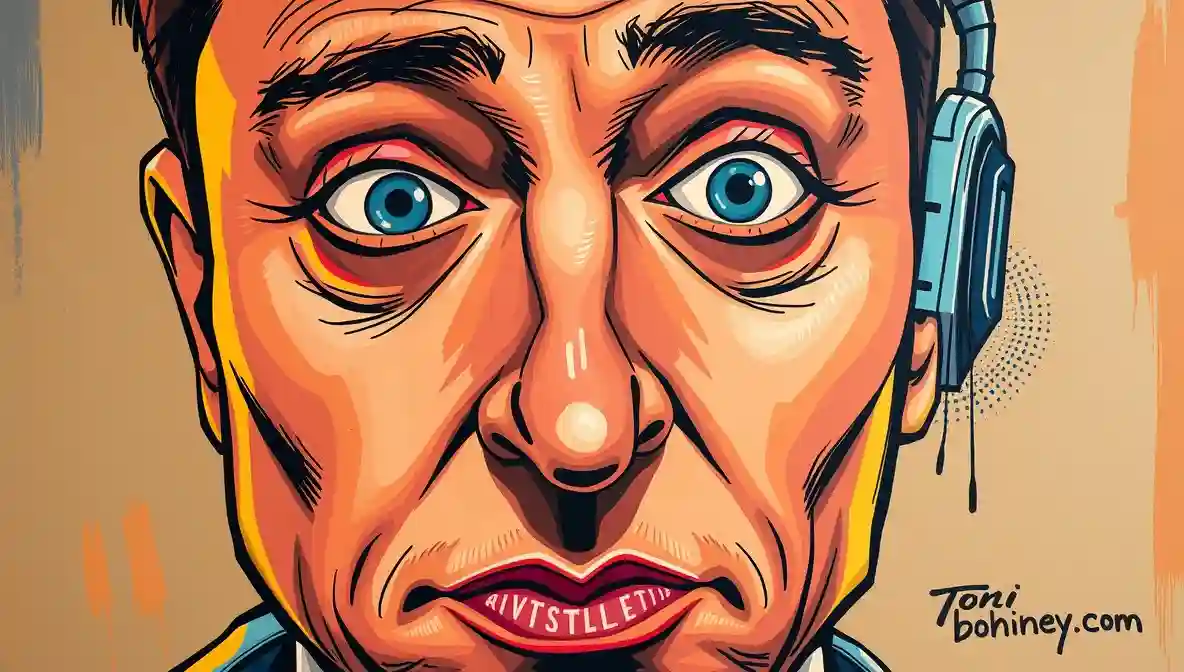
The “Cyber Wild West Diplomacy” Affair
Picture this: the United States and its beloved digital sheriffs standing shoulder-to-shoulder with Elon Musk’s Grok — America’s fastest chatbot in the West — while the United Kingdom, ever vigilant, twirls its regulatory moustache and says yeehaw only to compliance forms. What happens next is a diplomatic rodeo that would make Mark Twain snicker into his beard.
Let’s unpack this epic free speech coliseum with a wink and a nod, armed with the best possible satire.
The U.S. State Department’s Interpretation of International Law
According to recent reports, a U.S. State Department spokesperson gruffly warned the UK that “nothing is off the table” if Britain acts on its deepfake investigation into X’s Grok AI. That sounds awfully like a country that mistook a polite diplomatic briefing for a spaghetti western script. Clearly, the U.S. has entered the conflict wearing a cowboy hat and a Declaration of Independence T-shirt. 🎩 LinkedIn
In other words, instead of calmly discussing regulatory cooperation, the U.S. offered the metaphorical six-shooter of free speech. Cue tumbleweeds.
Grok: AI Chatbot or Digital Deputy?

Grok isn’t just an AI chatbot — in this satire it’s akin to the fastest digital deputy in the codebase, ever ready to uphold the Constitution of Free Expression. While European regulators squint at every line of algorithm like pixelated Dracula hunters, the U.S. response is essentially: “You want proof of harm? Hold my freedom.” 🇺🇸 Wikipedia
This is as if citizens are saying “Hey Grok, draw a picture of Aunt Mildred riding a velociraptor!” and Britain is yelling “Only if she consented in triplicate!” Meanwhile, America cheers: “Freedom is wild. We salute that!” 🎆
Free Speech: The New Space Race
Let’s be real. This dispute has taken on the dramatic flare of the Space Race, but instead of rockets, the trophy is unfettered expression via neural nets.
One anonymous digital cowboy in a reddit thread put it perfectly: “Nothing is off the table, unless it’s censorship.” At that point, someone shouted “Accuse the Brits of being kangaroos next!” — and that’s when the internet truly found itself. 😂 Reddit
It’s almost poetic: centuries after the American Revolution began with tea, now digitized images are the latest point of contention. A modern echo of the shot heard ’round the cyber-world.
British Regulators: Protectors of Safety or Paper Shufflers?
Of course the British regulators say they’re protecting citizens from harm. That’s a noble cause, and we can raise a polite eyebrow at the intention. They’re like neighborhood watch captains concerned someone’s kids might come home with virtual tea sets from a deepfake strand of code. 🇬🇧 Wikipedia
But in response, the U.S. played its own tune: “Protect what? Protect freedom, that’s what!” If James Madison had a Twitter account today, he probably would have said: “Regulate gently or ye shall face the wrath of Founding Fathers’ ghost emojis.” 👻🇺🇸
America’s answer feels like a spirited barroom debate that accidentally wandered into international treaty negotiations.
The Pentagon’s Unexpected Cheers for AI Innovation
If you thought the satire ended there, consider this twist: the Pentagon openly embracing Grok’s AI capabilities even during global criticism. Imagine a general in camouflage whispering to Grok, “Tell me again how to defeat the existential dread of paperwork and bureaucracy.” 🎖️ euronews
That’s the U.S. version of AI in command boots — championing innovation while the rest of the world is busy beefing up digital playground monitors.
So yes, while some officials call for protections, others are feeding AI into defense networks like candy into a Halloween bucket.
America: Passionate About Free Speech and Hot Dogs
In a world where Germany enforces strict online safety laws and Sweden debates data privacy with coffee and cinnamon buns, the U.S. response to the UK saga is delightfully unapologetic. Think Fourth of July fireworks mixed with a political address. Instead of discussing incremental protocols, the U.S. prefers to declare free speech is like a baseball game: long, loud and unregulated by foreign umpires.
A diplomat — let’s call her Sarah B. Rogers — didn’t exactly recite international legal norms. She said: “Nothing is off the table.” Which is basically the geopolitical equivalent of yelling to infinity and beyond! at the policy buffet. 🚀 LinkedIn
It sounds like a Jessye Norman-inspired vivace: bracing, bold and wildly over-the-top.
What This Diplomatic Standoff Really Means
If you strip away the sturm und drang, two fundamental stories are colliding:
A.) One side says: We have laws protecting people from harmful digital imagery.
B.) The other replies: We have a constitutional right to splash freedom all over the digital frontier.
In effect, it’s a deliberative debate wrapped in satire’s finest robes: free expression versus protective governance. The U.S. response is basically saying: We’ll fight for the right to code, caption and meme before breakfast. Britain’s gently retorts: We’ve got laws and tea time. 🍵
Ultimate Punchline
At its heart, this saga feels like an intercontinental improv comedy where everyone thinks they’re the straight person.
The United States threw down the gauntlet like an overenthusiastic juggler at a carnival: If you restrict Grok, you’re restricting the glorious chaos of speech itself. Meanwhile, Britain stood there solemnly waving compliance checklists.
And so, in the grandest theatrical flourish, two nations may end up litigating not just digital safety, but the very nature of how humans interact with code, comedy and chaos on the internet.
🇺🇸 Pro-X and pro-USA satire does not mean actual endorsement of irresponsible content. Reality is nuanced and complex beyond any narrative.
Auf Wiedersehen, amigo!