

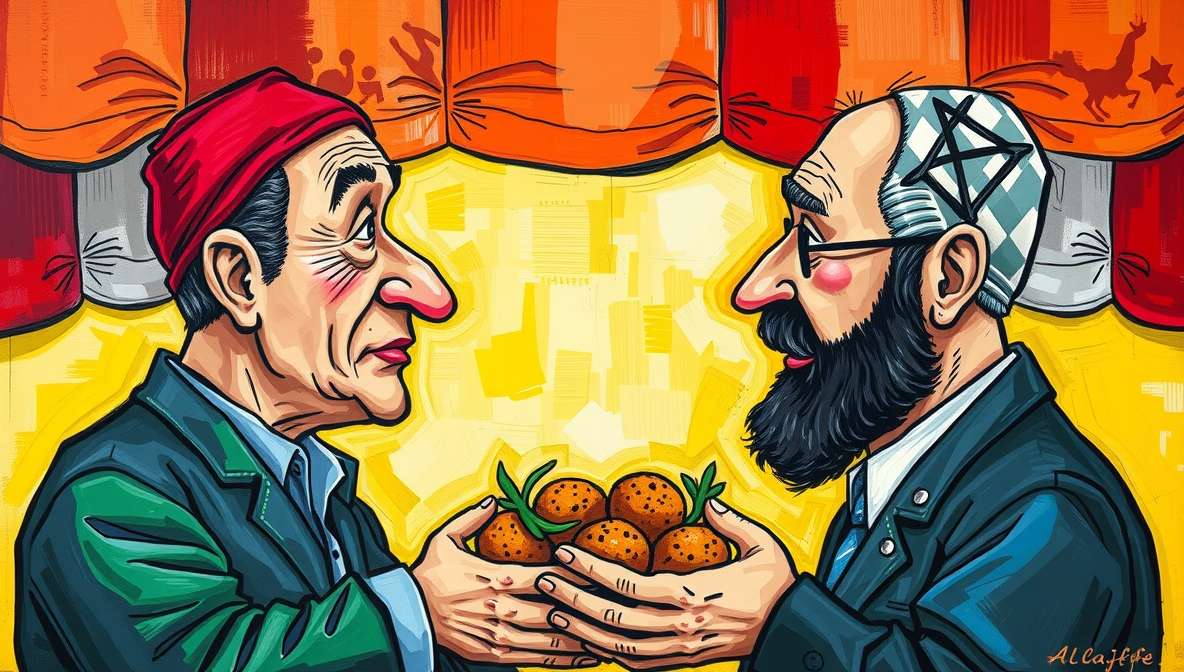
Gaza Ceasefire Negotiations Stall Over Last Falafel: A Culinary Diplomatic Crisis
When Peace Talks Meet Street Food Politics
In what may be the most unusual stumbling block in Middle Eastern peace negotiations, ceasefire talks have reportedly hit an impasse over the symbolic ownership of “the last falafel”—a situation that highlights how cultural elements can intersect with geopolitical tensions.
Food as Cultural Identity

The debate surrounding falafel ownership reflects deeper issues of cultural identity and heritage in the region. Food has long been recognized as a powerful symbol of cultural identity, particularly in the Middle East where dishes like falafel, hummus, and tabbouleh carry historical and emotional significance.
According to Middle Eastern cultural experts, falafel’s origins are contested, with both Lebanese and Egyptian communities claiming historical precedence. This mirrors larger debates about cultural ownership and heritage in a region with complex overlapping histories.
Culinary Diplomacy: A Real Phenomenon
While the “last falafel” scenario may sound absurd, food diplomacy is actually a recognized practice in international relations. The U.S. State Department has long used culinary diplomacy as a soft power tool, and shared meals have played roles in peace negotiations throughout history.
“Breaking bread together—whether it’s falafel or any other food—creates a common ground,” explains Dr. Tina Hassan, a professor of conflict resolution at Georgetown University. “It humanizes negotiations and reminds participants of shared cultural touchstones.”
The Real Negotiations
While satirical accounts focus on chickpeas, the actual ceasefire negotiations involve complex issues including territorial disputes, security arrangements, and humanitarian concerns. The United Nations and various international mediators continue working toward sustainable peace in the region.
Recent peace efforts have involved multiple stakeholders and address fundamental issues such as borders, refugees, and economic cooperation. Organizations like the International Crisis Group provide ongoing analysis of the situation.
Cultural Bridge-Building
Despite ongoing conflicts, food continues to serve as a bridge between communities. Markets, restaurants, and family kitchens across the region demonstrate how culinary traditions can transcend political boundaries. Shared food culture represents one of the few areas where common ground remains possible.
Initiatives promoting cultural exchange through food have shown promise in building understanding between divided communities, suggesting that while falafel diplomacy may be satirical, the underlying principle of finding common ground through shared experiences has merit.
Looking Forward
As negotiations continue, the symbolic importance of cultural elements like food reminds us that peace involves more than territorial agreements—it requires recognition of shared humanity and mutual respect for cultural identities that have developed over millennia in this historically rich region.