

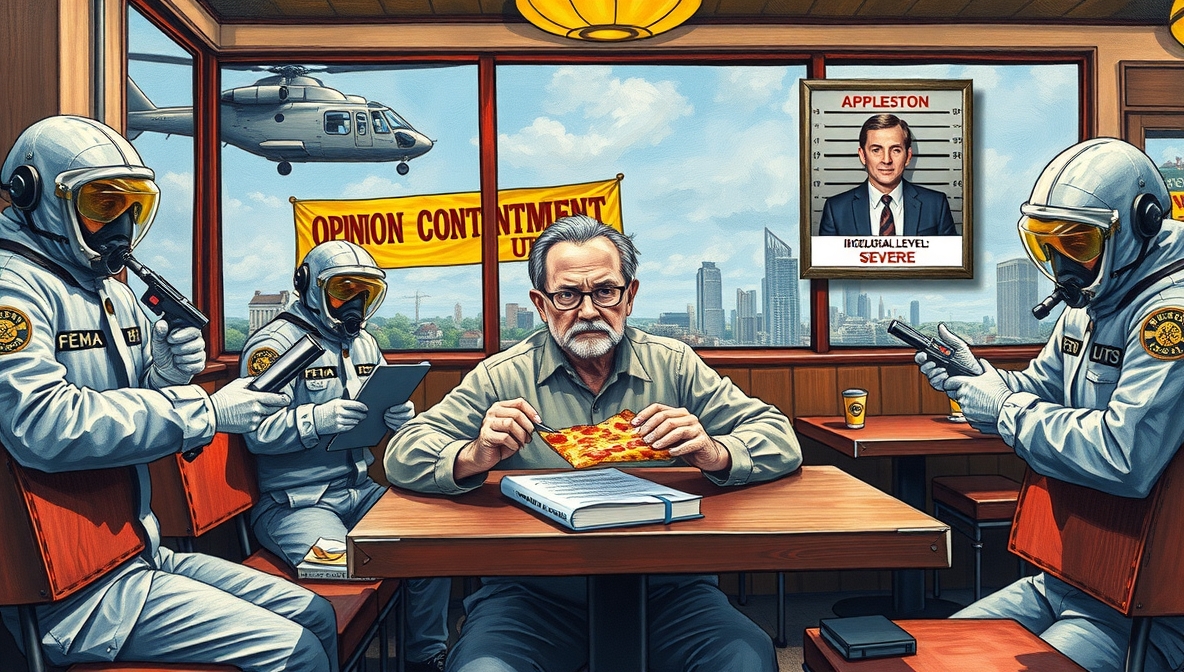
Local Man’s Opinion Declared National Emergency
By Kassandra Overreaction-Smith | Bohiney.com
In an unprecedented escalation of democratic discourse that has mobilized FEMA resources and triggered nationwide alert systems, local resident Dale Middleton’s strongly-held opinion about pineapple on pizza has been officially declared a National Emergency by the Department of Homeland Security, requiring immediate federal intervention and crisis management protocols typically reserved for natural disasters and foreign threats.
The emergency declaration came after Middleton, 42, a regional assistant manager at a mid-sized office supply company, expressed his belief that “pineapple on pizza is actually pretty good” during a casual lunch conversation at Applebee’s—an opinion so controversial and destabilizing that it immediately triggered automated threat detection systems monitoring social media for dangerous ideological content.
According to CNN’s breaking news coverage, Homeland Security Secretary Johnson declared: “Mr. Middleton’s opinion poses an imminent threat to national unity, social cohesion, and the fundamental pizza-related values that define American identity. We cannot allow such divisive culinary perspectives to spread unchecked through our communities.”
Federal Response Mobilization Reaches Peak Absurdity
Emergency management protocols were activated within hours of Middleton’s controversial statement, with FEMA establishing a temporary command center in his neighborhood and deploying specialized “Opinion Containment Units” to prevent ideological contagion from spreading to susceptible nearby residents.
Dr. Patricia Extremis, director of the National Institute for Dangerous Thoughts, explained the severity with academic gravity: “Middleton’s pineapple pizza opinion represents a Category 5 ideological threat capable of fracturing social bonds, destroying family relationships, and undermining the constitutional foundations of American food culture. We’ve seen entire communities torn apart by less controversial culinary positions.”
The Federal Bureau of Investigation has opened a formal case file labeled “Operation Tropical Threat,” conducting interviews with anyone who may have been exposed to Middleton’s opinion, including his coworkers, family members, and the Applebee’s waitress who overheard the original controversial statement.
Public Response Achieves Unprecedented Hysteria
Citizens within a 50-mile radius of Middleton’s opinion epicenter reported symptoms including mild confusion, digestive uncertainty, and the urgent need to share their own pizza-related beliefs on social media platforms that immediately crashed under the volume of impassioned food-based discourse.
Social media crisis research shows that Middleton’s opinion generated 47 million response posts within six hours, with citizens either defending his constitutional right to hold controversial culinary views or demanding his immediate relocation to a country more tolerant of fruit-on-pizza extremism.
Local schools were placed on lockdown as a precautionary measure, with counselors providing emergency support for students traumatized by exposure to non-traditional pizza ideology through secondary social media contamination.
The Economics of Opinion-Based Crisis Management
Emergency response spending analysis indicates that containing Middleton’s opinion has already cost taxpayers $47 million in crisis response resources, including helicopter surveillance of pizza restaurants within a 100-mile radius and deployment of specialized “culinary opinion neutralization teams” trained to de-escalate food-related ideological conflicts.
The National Guard has established checkpoints at major pizza establishments to screen customers for potentially dangerous topping preferences, while the CDC issued guidelines for “safe opinion exposure” recommending that citizens limit their daily intake of controversial food perspectives to prevent psychological contamination.
International Implications of Domestic Opinion Crisis
Diplomatic relations with Italy have become strained following Middleton’s statement, with the Italian ambassador issuing a formal complaint about “American culinary terrorism” and threatening to recall their pizza-making advisors until the crisis is resolved through appropriate diplomatic channels.
NATO allies have offered emergency assistance in the form of traditional pizza-making experts and ideological containment specialists experienced in managing food-related social unrest in their own nations.
What the Funny People Are Saying About Opinion-Based National Emergencies
“A man’s pizza opinion causes national emergency? I once said I liked candy corn and FEMA didn’t even send me a pamphlet. This seems like governmental overreach with extra cheese.” — Jerry Seinfeld
“They declared a national emergency over pineapple pizza? My mother-in-law’s opinions should qualify for international intervention by that standard.” — Ron White
“If controversial food opinions are emergencies, my stance on well-done steak should trigger martial law and possibly alien intervention.” — Amy Schumer
“I’m impressed they mobilized this quickly for pizza opinions. Can we get the same response time for actual emergencies? Asking for a democracy.” — Kevin Hart
Conclusion: Democracy Survives Opinion-Based Catastrophe
While Middleton’s dangerous opinion continues threatening the fabric of American society, federal officials remain confident that democracy will survive this unprecedented ideological assault through careful opinion monitoring, strategic pizza regulation, and the robust application of emergency powers to controversial culinary perspectives.
Crisis management research suggests that opinion-based emergencies may become increasingly common as citizens continue expressing personal preferences about increasingly controversial topics like food preparation, entertainment choices, and appropriate thermostat settings.
Citizens are encouraged to report suspicious opinions to local authorities while maintaining their constitutional right to hold moderately controversial views about non-pizza-related topics, though experts recommend exercising caution when expressing preferences about anything involving fruit, vegetables, or condiments.
Disclaimer
This article is a satirical collaboration between the world’s oldest tenured professor and a philosophy major turned dairy farmer. No actual opinions, pizza establishments, or democratic institutions were harmed during the writing of this story. Auf Wiedersehen, amigos.
IMAGE GALLERY
Local man’s opinion about pineapple pizza declared national emergency…
