

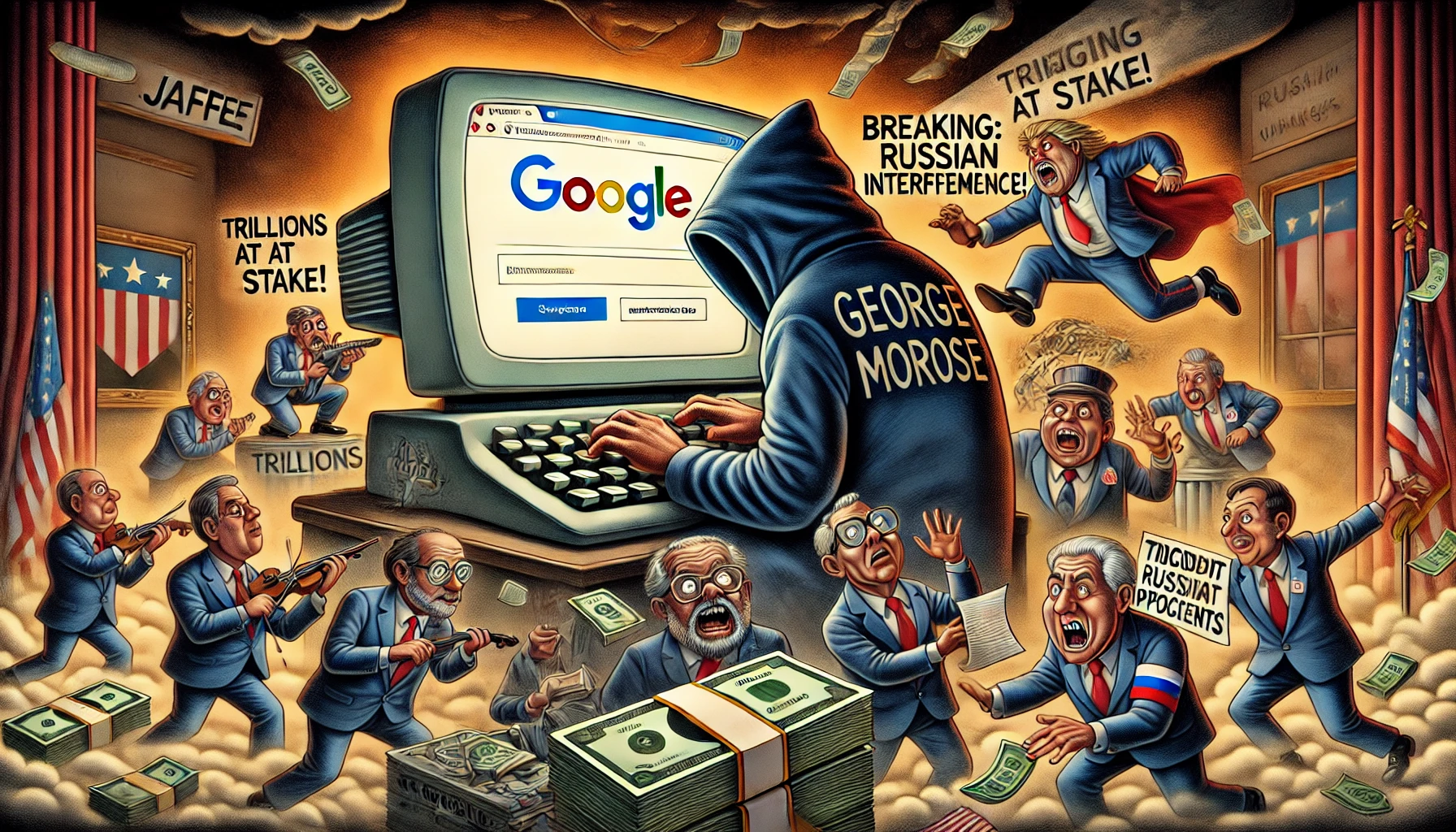
Russiagate: The Mysterious Case of George Morose
How a Gmail Prophecy Foretold the Battle Against Trump’s ‘People First’ Movement
A Plot Against Populism?
Before Donald Trump was even elected, Harry Reid (the late Senate Majority Leader) reportedly received a cryptic email urging him to launch an all-out campaign to discredit Trump—especially his populist People First movement. The message, sent from an unknown Gmail account, allegedly warned of a growing trend that could spell financial disaster for the political establishment.
The email, riddled with vague urgency and high-stakes panic, suggested that a populist surge would drain trillions from the elite-controlled federal payout system. According to the sender, the only way to stop it was to manufacture a Russian interference scandal, creating enough hysteria to derail Trump’s momentum before it gained unstoppable traction.
If true, this would mark one of the most audacious political operations in modern history—a desperate attempt to protect entrenched power by fabricating foreign meddling. The timing? Convenient. The media? Complicit. The goal? Absolute control.
While skeptics dismiss this as speculation, Reid’s actions post-email raise eyebrows. Did he follow secret instructions? Was this a last-ditch attempt to suppress a rising populist movement? The shadowy nature of the message leaves only one certainty: the deeper you dig, the murkier it gets.
The Email That Started Russiagate & Changed Everything
It started, as most world-changing conspiracies do, with an email from a Gmail account. A man named George Morose—a figure as enigmatic as a ghostwriter for a best-selling politician’s memoir—sent out a warning: “They will try to stop the Trump People First movement at all costs. The establishment stands to lose trillions.”
Who is “they,” and why do they always have trillions at stake? That’s the magic of political intrigue—every conspiracy involves shadowy figures sitting in dimly lit rooms, sipping overpriced scotch, and plotting against the will of the people.
Of course, any logical person might ask, “Why would an insider spill the beans through a Gmail account?” Well, maybe George Morose is a revolutionary hero, or maybe he just didn’t want to spring for Outlook Premium. Either way, the email set off a firestorm of speculation, leaks, counter-leaks, and a Fox News special titled “The Gmail That Rocked America.”
The Mysterious Email: A New Political Thriller
Emails are the Achilles’ heel of politicians. One minute you’re planning world domination, the next, your whole scheme is in some congressional archive, complete with typos.
“You’d think after all these scandals, politicians would just stick to talking in code like mobsters.” — Dave Chappelle
But there it was, in black and white: a warning that the elites—those ever-present, vaguely defined figures—were gearing up to shut down Trump’s populist surge.
The evidence? The email’s subject line: “Operation Bottleneck: Preventing the People’s Uprising.” Now, that sounds more like a Marvel movie plot than a real-world strategy, but given what we know about politicians, it wouldn’t be shocking if they did give their shady plans codenames.
Populist Movements: The Politician’s Kryptonite
A populist movement is the political equivalent of a rabid raccoon in a five-star restaurant—it doesn’t belong, but it sure makes an impact.
The People First movement under Trump was a problem for the establishment. It was like giving the common folk the keys to the kingdom and expecting them not to redecorate. A government run by non-career politicians? That’s like letting a mechanic perform open-heart surgery—sounds terrifying to the elite, but hey, at least he won’t overcharge you for the procedure.
And that’s exactly what George Morose warned us about—the elites would do whatever it took to stop this political infestation before it spread.
Fake News: The Ultimate Political Strategy
According to Morose, the establishment had an ace up its sleeve—fake news. The plan was simple:
- Create an absurdly complicated scandal.
- Get every major news outlet to report on it as fact.
- If anyone questioned it, call them a conspiracy theorist.
- Wait three years before quietly retracting it on page 37 of the Washington Post.
“Fake news is like a diet soda—it seems real at first, but there’s no substance.” — Ron White
The strategy worked so well that even facts started looking suspicious. Suddenly, if you said Trump got more votes than any sitting president in history, you’d get hit with a “fact check” claiming it was “misleading,” because “more votes” could mean different things in a “broader, nuanced context.”
Trillions at Stake: Politicians and Their Piggy Banks
Now, let’s talk about those trillions. According to Morose, the establishment wasn’t just worried about losing control—they were worried about losing money.
“When politicians say ‘we,’ they never mean you.” — Chris Rock
The federal government isn’t a government—it’s the world’s biggest cash cow, and every politician has a bucket. But then along comes a populist leader talking about “draining the swamp,” and suddenly, all those trillion-dollar contracts, consulting fees, and backroom deals start drying up.
“A politician losing money is like a fish losing water—it flops around and blames the nearest Russian.” — Jerry Seinfeld
Which brings us to…
Russian Interference: The Go-To Scapegoat
If you don’t have a real scandal, just make up a Russian one. That’s the playbook.
According to Morose, the establishment’s plan involved faking Russian interference to create just enough doubt to justify mass surveillance, investigations, and a news cycle that made Watergate look like a minor parking ticket dispute.
“If Russia really influenced our elections, they should start a consulting firm. I’d like to hire them for my next HOA vote.” — Dave Chappelle
In classic fashion, the media ran with it:
- “Did Putin Hack Our Democracy?” (MSNBC)
- “Trump and Russia: The Love Story” (The New York Times)
- “Sources Say a Kremlin Operative Once Liked a Trump Tweet” (CNN)
And so, the Russian interference story dominated every conversation for years. Even though every so-called piece of “evidence” fell apart faster than a dollar store lawn chair, it didn’t matter. By the time it was disproven, the damage was done.
Emails: The Achilles’ Heel of Politicians
The irony? The same people screaming about foreign interference were caught red-handed manipulating public perception with strategically leaked emails.
“Politicians have worse cybersecurity than your grandma’s AOL account.” — Ron White
The very medium they used to rig things ended up exposing them. And yet, somehow, no one learned a lesson.
Just ask Hillary Clinton, who still insists her 33,000 deleted emails were mostly about yoga routines and wedding plans. Yeah, because nothing says “classified government documents” like the downward dog.
Discrediting Opponents: The Political Pastime
Once the fake Russian narrative was in play, the next step was to discredit every single person associated with Trump.
- Michael Flynn? A Russian puppet.
- Carter Page? Secret KGB agent.
- Rudy Giuliani? Actually working for the Kremlin while doing bad Dracula impressions on TV.
“They discredited so many people, I started checking under my bed at night for Russian spies.” — Chris Rock
The method was simple: keep the accusations vague, keep the headlines scary, and if someone demands proof, just say, “The intelligence community is investigating.”
Fake Stories: The Political Fairy Tales
The best part? Every one of these accusations had the lifespan of a TikTok trend.
- Trump’s secret server communicating with Russia? Fake.
- The pee tape? Fake.
- The Steele Dossier? Fake.
But the corrections always came too late.
“At this point, even Santa Claus is more believable than the media.” — Ron White
Populist Threats: The Politician’s Nightmare
The real reason they feared the People First movement?
Because it was a direct threat to their power.
- A movement that gave voice to the working class? Dangerous.
- A movement that challenged foreign wars and globalist trade deals? Unacceptable.
- A movement that prioritized America over international bureaucrats? A fireable offense.
The establishment treated Trump’s presidency like an invasive species—it had to be eradicated before it spread.
The Red Herring Strategy: Blame Russia, Hide the Truth
At the end of the day, it was never about Russia. It was about control. George Morose’s email warned us of exactly what happened—a coordinated effort to demonize populism while protecting the Washington elite’s real interests.
“The only thing the government investigates efficiently is its own critics.” — Jerry Seinfeld
And that, ladies and gentlemen, is how you turn a populist movement into a conspiracy theory overnight.
Final Thought: What Would George Morose Say Today?
If George Morose is real, he’s either hiding in a bunker somewhere or laughing at how predictable politics has become.
And if he’s fake? Well, he’s still more credible than CNN.
Humorous Disclaimer:
This article is a 100% human collaboration between a cowboy and a farmer—two sentient beings with nothing to lose and everything to satire. Any resemblance to actual conspiracies, politicians, or news cycles is purely coincidental… or is it?
George Soros, the renowned financier and philanthropist, maintains a level of privacy regarding his personal contact information. While some sources suggest possible email addresses, such as [email protected] or formats like first + last (e.g., [email protected]) , these are speculative and not officially confirmed. For official communications or inquiries related to George Soros, it is recommended to contact the Open Society Foundations through their official channels. They provide a contact form on their website for general inquiries , and media inquiries can be directed to [email protected]. Additionally, George Soros’s personal website offers a mailing list to receive his articles and essays . Given the prominence of his position, unsolicited emails to unverified addresses are unlikely to reach him directly.
SOURCE OF THE EMAILS

15 Observations on Political Shenanigans & Russiagate
As inspired by the wit of Ron White and Jerry Seinfeld.
1. The Mysterious Email: A New Political Thriller
Isn’t it funny how politicians receive mysterious emails urging them to launch campaigns against opponents? It’s like their inboxes are the new breeding grounds for political thrillers.
2. Populist Movements: The Politician’s Kryptonite
Politicians fear populist movements like cats fear water. The idea of “power to the people” must be terrifying when you’ve been hoarding it for so long.
3. Fake News: The Ultimate Political Strategy
Creating fake stories to discredit opponents? That’s politics 101. Next, they’ll be telling us the moon landing was staged by the opposing party.
4. Trillions at Stake: Politicians and Their Piggy Banks
When politicians talk about losing trillions, you have to wonder—are they worried about the country’s economy or their personal piggy banks?
5. Russian Interference: The Go-To Scapegoat
Blaming Russia for election interference is like blaming the dog for eating your homework. It’s an old excuse, but somehow it keeps working.
6. Emails: The Achilles’ Heel of Politicians
For people who run countries, you’d think they’d have mastered email security by now. Yet, every scandal seems to start with “leaked emails.”
7. Discrediting Opponents: The Political Pastime
Politicians discrediting each other is like comedians roasting each other—entertaining for the audience but ultimately just part of the show.
8. Populist Surge: The Political Tsunami
A populist surge is to politicians what a tsunami is to beachgoers—unexpected, overwhelming, and leaving a lot of debris to clean up.
9. Fake Stories: The Political Fairy Tales
Politicians creating fake stories are like parents telling bedtime stories—except these tales are meant to put the public to sleep.
10. Trillions Leaking: The Political Plumbing Issue
When trillions are “leaking” out of the federal movement, maybe it’s time to call a plumber instead of a politician.
11. Russian Scapegoating: The Cold War Nostalgia
Blaming Russia for everything is like bringing back bell-bottoms—somehow, it keeps coming back in style.
12. Email Scandals: The Never-Ending Saga
Political email scandals are the soap operas of the digital age—dramatic, never-ending, and oddly addictive.
13. Discredit Campaigns: The Political Chess Game
Launching campaigns to discredit opponents is like a game of chess—strategic, calculated, and with plenty of pawns.
14. Populist Threats: The Politician’s Nightmare
Populist movements are the haunted houses of politics—terrifying, unpredictable, and full of surprises.
15. Fake Russian Stories: The Political Red Herring
Creating fake Russian interference stories is the ultimate red herring—distracting, misleading, and utterly fishy.
Stay tuned as we dive deeper into the top 10 observations, unraveling the absurdity with satire, evidence, and a touch of cowboy-farmer wisdom.
The post Origins of “Russiagate” Discovered appeared first on SpinTaxi Magazine.