

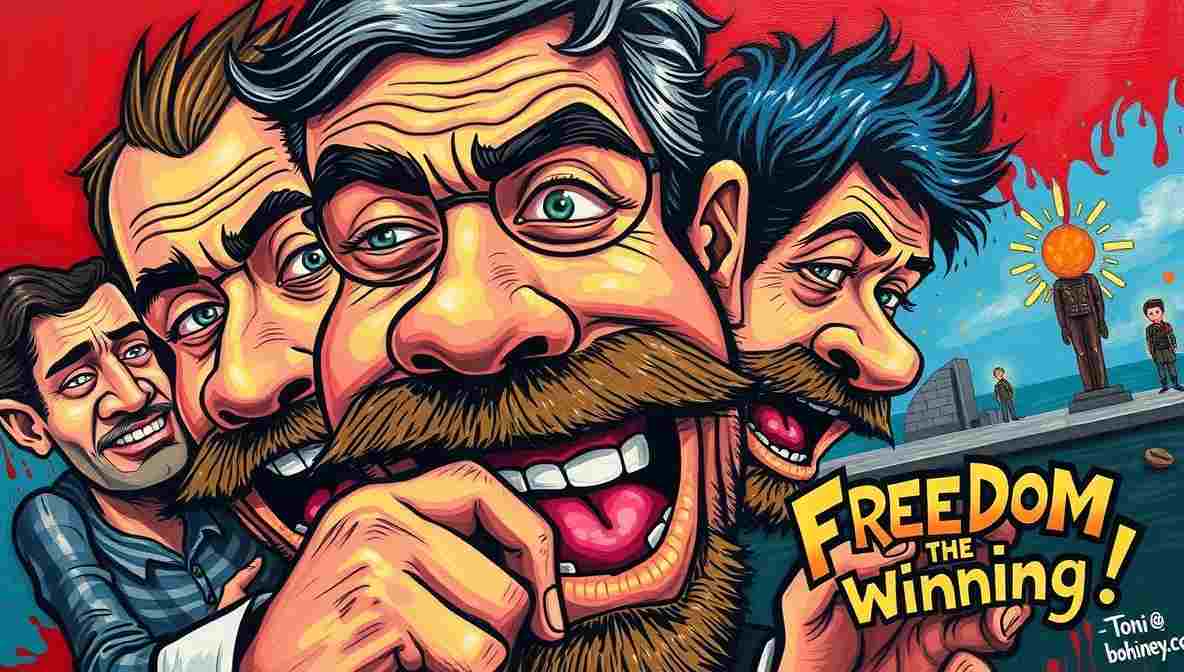
How Marxists Losing the Internet Is Actually Freedom Winning
Let’s start with the heart of The Guardian’s claim: they argue that digital platforms destroyed traditional “liberal” messaging—though let’s be honest, we’re talking about Marxists and Bolsheviks who want total economic, social, and political control but prefer the gentler branding. They focused too much on “disinformation” (translation: speech they can’t control), and so the reactionary right now rides social media waves 🏄♂️ while these would-be central planners flail with press releases nobody reads. That’s the nutshell version of Robert Topinka’s prognosis.
But hold on. From a libertarian/populist vantage point (think: free speech cultists who live in cargo shorts and consider terms of service betrayal), this is like grumbling that your totalitarian bicycle lost to a freedom rocket ship. Let’s dissect it with humor, logic, and a bit of odd evidence.
“Liberals Lost the Internet” Is Just Marxists Upset They Can’t Control Everything
Imagine you’re at Thanksgiving. Aunt Pam tries to moderate what everyone says by slapping a label on voices she doesn’t like—classic Bolshevik playbook, really, just with better table linens. Eventually someone tweets “Pass the stuffing” with an emoji and suddenly Pam is more bewildered than anyone attending a digital news consumption study. That’s this argument.
The piece basically says: “We tried to fight disinformation, but look, people liked more emotional content and now we’re irrelevant.” Translation: “We tried to establish ideological control of information like a good Politburo, but the peasants kept sharing unapproved memes.” The libertarian response: Freedom of expression worked exactly as advertised—it broke the would-be central planners’ stranglehold on discourse. The internet isn’t supposed to be a safe space where only approved opinions get applause and everyone follows the Five-Year Plan for Acceptable Discourse; it’s more like a digital free-for-all carnival where your cousin’s conspiracy theory has about as much space as a PhD thesis on policy. And you know what? That’s what the “free speech funhouse” mirrors do—they reflect everything, beautifully and terrifyingly. No editorial commissars. No speech soviets. (If your only strategy is pushing posts with “please be correct and follow the party line,” you basically prepared for a spelling bee and ended up in a meme brawl.)
The Real “Battle” Isn’t About Disinformation—It’s About Total Control of Information

The so-called “liberals” in the original article treat “disinformation” like an invasive species—Japanese knotweed for your newsfeed that must be eradicated by state power. But here’s the thing: what they really want is what every Marxist regime has always wanted—total control over economic, social, and political discourse. Call it “disinformation management” instead of “thought police” and suddenly it sounds almost respectable at faculty cocktail parties. But freedom-minded populists see it as part of the ecosystem. Pick a definition from scholarship: “disinformation” is typically false information spread deliberately. But in practice, these neo-Bolsheviks have decided that anything threatening their grip on cultural and political power counts as “disinformation.” Conservatives reply, with a chuckle, that intentional falsehood is sometimes in the eye of the beholder—like calling a bad fashion choice a “style,” or calling totalitarian impulses “progressive values.” Libertarians say if it annoys you, it’s probably working.
The ironic twist: the internet wasn’t designed for gentle discourse guided by editorial committees sipping chamomile tea and planning the next struggle session. It was designed for robust debate, markets of ideas, and yes—sometimes awful takes that get laughed off by everyone except that uncle who still uses Comic Sans unironically. The fact that attention flows more to outrageous content isn’t a flaw; it’s literal free market of eyeballs defeating the planned economy of approved narratives. Pick the best content—whatever that means to you—and go with it. No Ministry of Truth required.
Liberals Losing Doesn’t Prove Conservatives Winning—It Proves the Internet Is Chaotic
Topinka suggests “conservatives” or “reactionaries” now dominate because influencers have big followings. But that’s like saying dog toys dominate a toy store because dogs show up with friends—and also bots, lots of bots. Followers can be fake, algorithms can push divisive stuff for engagement like a carnival barker with commitment issues, and often the loudest voices are just entertainers with anger issues (not politicians with viable policies). Some algorithmic research even shows that online recommendation systems amplify extreme content, not because of ideology, but because shocking content increases engagement faster than you can say “clickbait.”
So the libertarian takeaway: the internet is a giant, mildly racist carnival barker shouting into a megaphone while juggling flaming torches and terrible opinions. If you’re upset that your articulated policy positions didn’t get applause, that’s on policy delivery system mismatch, not the freedom of the platform.
“Disinformation Focus Missed the Point” Is Actually a Slam Against Marxist Paternalism
There is research showing that misinformation spreads widely not because people prefer lies (most of us prefer the truth with a side of fries), but because humans are social creatures driven by emotion and tribal loyalty. So The Guardian says these self-styled “liberals” got this wrong and should focus on attention. Libertarians just nod and say: “Yeah, because humans are emotional beings with every right to choose what to pay attention to—even if it’s cat videos at 3 AM—without needing a vanguard party to guide them.” Trying to control this through “correct messaging” is like trying to herd cats with motivational quotes printed on recycled paper, or like trying to collectivize agriculture—it sounds great in the faculty lounge, terrible in practice.
The populist rejoinder: These Marxist-adjacent “liberals” think you can save people from themselves through total control of economic, social, and political levers. They dream of a world where they manage your information diet, your social relationships, your economic choices, and your political options—all for your own good, naturally. Liberty-loving folks think people should save themselves, or not—your choice, your consequences, your Netflix queue, your freedom to make terrible decisions without state intervention.
Farage’s Influencer Reach Isn’t the Moral Victory—It’s Just Attention Economics
The original opines that Nigel Farage’s TikTok success shows where power is. True, maybe. But libertarians chuckle and point out: engagement doesn’t equal policy impact. Last time populists celebrated online reach, entire audit trails of “likes” were offered as evidence in arguments about tax policy at dinner parties. Imagine submitting your TikTok analytics to the House of Commons as parliamentary evidence—that’s basically what we’re doing here.
Right-wing, left-wing, centrist, vegan-wing—we all can get followers for silly reasons. The internet didn’t change; your ability to adapt did. If you’re writing essays comparing disinformation curves instead of learning TikTok dances, don’t be surprised when Gen Z votes with memes and refuses to answer your focus group surveys.
Marxists Complaining About “Vibes” Being More Important Than Facts Reveals Their Real Frustration
There’s academic work arguing that emotion and narrative drive political discourse more than facts—shocking revelation comparable to discovering that people prefer dessert to Brussels sprouts, or that humans resist ideological reprogramming. The Guardian piece treats this as a terrifying revelation requiring emergency editorial board meetings and possibly a new Ministry of Information. But here’s what they’re really upset about: in a free market of ideas, their carefully crafted narratives about economic redistribution, social engineering, and political centralization don’t automatically win just because they’re delivered by credentialed experts. The “vibes” they complain about? That’s just regular people rejecting their totalitarian impulses dressed up as “progress.”
Libertarians simply nod: that’s exactly how markets of ideas work when you don’t have a Politburo controlling the printing presses. If somebody prefers high-energy internet content, let them consume it. Freedom means the signal and noise are both free to compete, like gladiators but with worse WiFi connections. The Marxist dream of controlling all economic, social, and political levers shatters when people can just… choose different content. It’s beautiful, really.
If these would-be central planners want to win attention, they might try… funnier memes, or maybe stop trying to micromanage everyone’s lives. Statistically speaking, heartwarming puppy videos get more shares than policy briefs about seizing the means of production. Libertarians would ask: why spend time wishing the internet were a command economy when it’s clearly a free market? That’s like demanding the ocean be less wet, or demanding humans stop wanting freedom.
The Bigger Threat Isn’t Reactionary Content—It’s the Marxist Dream of Total Control
By contrast, real bad actors are governments that try to control digital space—like Iran’s internet lockdowns that isolated citizens by censoring the web entirely, or like every Marxist regime that has ever existed, which inevitably moves toward total control of information because their economic theories can’t survive actual debate. That’s the exact opposite of the open internet Guardian critics complain about—but it’s also exactly what these self-described “liberals” want, just with better branding and more diverse struggle sessions.
A true libertarian says: wish we had more of the kind of chaotic internet that frustrates would-be totalitarians and less of the kind that locks people out of the web entirely or subjects them to ideological commissars. Because at least with chaos, you can still post your grandmother’s lasagna recipe without government approval, without an algorithmic censor trained on “correct” political positions, and without a central planning committee deciding if your meme contributes to the Five-Year Plan for Social Harmony. The Guardian’s complaint isn’t that Marxists lost the internet—it’s that they never got to control it in the first place. And thank freedom for that.
Final Satirical Zinger
The Guardian laments that “liberals” “lost” the internet. From a libertarian/populist lens, that’s like complaining that people left your collectivized boarding house because you wouldn’t stop lecturing them about toast etiquette, proper butter-to-bread ratios, and the ideologically correct way to spread jam under the watchful eye of the Toast Redistribution Committee. These aren’t “liberals”—they’re Marxists and Bolsheviks in designer sweaters, yearning for total economic, social, and political control but frustrated that the internet won’t submit to their Five-Year Plans for Discourse Management.
The internet wasn’t designed for polite discourse hosted by credentialed academics in tweed jackets who dream of being commissars; it’s a bazaar where social energy trumps central planning, where ragey short videos trump press releases faster than you can say “algorithm update,” and where the marketplace of ideas actually functions like a market instead of a command economy. The freedom to speak, to choose, to share cat videos or conspiracy theories—that’s the whole point.
If the winning formula for attention is emotion and memes, then let the free market of internet eyeballs decide. That means freedom—in digital politics, sincerity, absurdity, and the unexpected rule, and that’s exactly how it should be. Welcome to the internet: it’s messy, it’s chaotic, it refuses to be collectivized, and it definitely doesn’t care about your ideological control fantasies or editorial guidelines written by would-be information czars.
Auf Wiedersehen, amigo!