

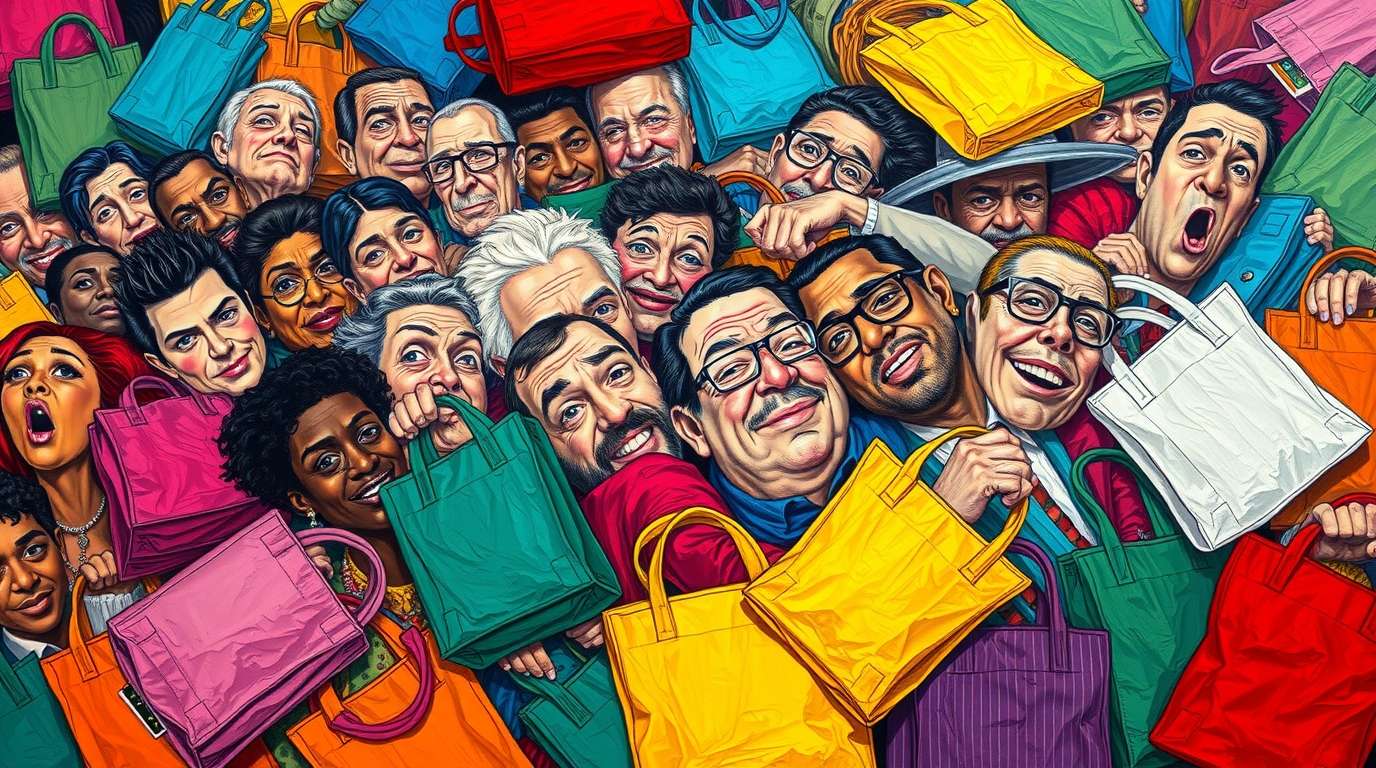
People Who Own Too Many Tote Bags: The Canvas Hoarding Epidemic
When Your Closet Is 90% Free Conference Swag
The Textile Accumulation Nobody Needs
The tote bag was meant to be reusable alternative to plastic bags. Instead, it’s become most accumulated item in modern households where people own 47 canvas bags they’ll never use, collected from every conference, event, bookstore, and well-meaning gift-giver who thought one more tote bag was what the world needed. These aren’t functional items–they’re textile tumors, growing in closets, multiplying in cabinets, and serving no purpose except making people feel vaguely guilty about not using them.
The tote bag hoarders aren’t collecting intentionally. They’re passive recipients of society’s obsession with branded merchandise disguised as environmental consciousness. Every organization gives out tote bags. Every event includes one. The bags accumulate like advertising snowdrift, burying people under mountains of canvas emblazoned with logos for events they barely remember attending.
The Closet That’s Mostly Bags
“I opened her closet,” said Dave Chappelle. “It was tote bags. Wall to wall tote bags. Hundreds of them. I asked when she uses them. She said she doesn’t. She uses the same one tote bag, has for years. The other 200? Just there. Living their best life as closet insulation.”
The dedicated storage space for unused tote bags represents peak modern absurdity. People maintain entire closets, drawers, or storage bins filled with bags they acknowledge they’ll never use. The bags aren’t being saved for future use–they’re being stored because nobody knows what else to do with them. Throwing them away feels wasteful. Keeping them is objectively pointless. The paralysis results in permanent textile collection.
The favorite bag phenomenon explains the accumulation. Everyone has one preferred tote bag they actually use. Maybe two for different purposes. The other 45 bags serve no function except making the unused pile larger. They’re backup bags for scenario that never occurs–the day when all preferred bags are unavailable and emergency tote bag reserves must be activated.
The Free Event Bag Nobody Wanted

Jerry Seinfeld said, “You go to a conference, they hand you a tote bag. It’s got the conference logo, the sponsors’ logos, maybe a water bottle inside. You don’t want it. They insist you take it. Now you own a bag advertising a conference you attended once in 2019. Why? Why do we do this?”
The conference swag bag culture forces acquisition. Attendees receive bags whether they want them or not. Refusing feels rude. Accepting means adding to the pile at home. The bags are marketing materials disguised as gifts, and everyone participates in the charade that anyone needed another canvas bag with tech company logo on it.
The environmental irony is thick. These reusable bags are meant to reduce waste, but producing hundreds of bags that sit unused in closets creates more environmental impact than the plastic bags they replaced. The carbon footprint of manufacturing, shipping, and storing unused tote bags probably exceeds just using and recycling plastic bags. But the tote bags feel environmentally responsible, so the accumulation continues.
The Gift-Giving Trap
Amy Schumer said, “People give tote bags as gifts. ‘I thought you’d like this tote bag with feminist slogan.’ I would like it if I didn’t already have 30 tote bags with feminist slogans. There’s a limit. We’ve exceeded it. The limit was probably three tote bags ago.”
The tote bag as gift represents failure of imagination and excess of convenience. When unsure what to give, people default to tote bags. The bags are affordable, seem useful, and can be customized with slogans matching recipient’s interests. The problem is everyone does this, and recipients accumulate themed tote bags faster than occasions to use themed tote bags.
Birthdays bring book-related tote bags. Holidays bring seasonal tote bags. Awareness campaigns bring cause-related tote bags. The recipient maintains collection of bags representing every interest and affiliation they’ve ever expressed, none of which get used because the one good tote bag they actually like serves all purposes.
The Bookstore Compulsion
Chris Rock said, “Bookstores give you a tote bag with purchase. Like you didn’t bring a bag. Like you came to bookstore unprepared to carry books. They’re enabling the accumulation. They’re the dealers in this textile addiction. And we’re all hooked on canvas we don’t need.”
The bookstore tote bag is aspirational object. People buy them planning to use them for future bookstore trips, library visits, or general carrying purposes. The bags instead join the unused pile, while next bookstore visit yields another bag because the person forgot to bring any of the 20 they already own. The cycle repeats, building tote bag collection one literary purchase at a time.
Independent bookstores particularly contribute to accumulation. Each shop has unique bag design. Collectors feel compelled to acquire bags from every bookstore visited, creating travel souvenir collection of canvas carrying devices. The bags become proof of literacy and bookstore tourism rather than functional carrying implements.
The Organizational Guilt
Bill Burr said, “Environmental groups give out tote bags to promote reusable bags. The irony of giving someone a bag they’ll never use to promote environmental consciousness is apparently lost on everyone. You’re creating waste while campaigning against waste. That’s not helping.”
The nonprofit industrial complex runs on tote bag distribution. Fundraisers offer bags as donation incentives. Membership drives include bags as welcome gifts. The organizations genuinely believe they’re promoting sustainability while contributing to accumulation of unused merchandise that sits in closets generating zero environmental benefit.
The guilt compounds when bags come from causes recipients support. Throwing away environmental advocacy tote bag feels like betraying the cause. Keeping it unused feels wasteful. The bag becomes textile representation of conflicted values, stored indefinitely because disposal or use both feel wrong.
The Canvas Quality Hierarchy
Kevin Hart said, “They rate their tote bags by quality. ‘This is good canvas.’ ‘This one’s flimsy.’ You have 50 bags. Even if you used a different bag daily, you’d need seven weeks to cycle through them. The quality doesn’t matter because you’re not using them. They’re all equally unused.”
The quality assessment of unused bags reveals the delusion. People evaluate canvas weight, handle strength, and construction durability for bags that will never bear weight or experience stress. The high-quality bags don’t get used because they’re “too nice.” The low-quality bags don’t get used because they’re inadequate. The mid-quality bags join both groups in permanent storage.
Some hoarders maintain separate categories: event bags, gift bags, purchased bags, sentimental bags. The organizational system for managing unused bags requires more thought than deciding which bag to actually use. The taxonomy of accumulation becomes more complex than the simple solution of using or discarding them.
The Moving Day Revelation
Ricky Gervais said, “You discover how many tote bags you own when you move. You’re packing and there’s just bags. Bags full of bags. Bags wrapped around other bags. It’s like Russian nesting dolls but it’s canvas and nobody planned this. This happened through passive accumulation and avoidance of decisions.”
The moving process forces confrontation with tote bag reality. The number becomes undeniable when physically relocating the collection. People box up 30+ bags they never use, transport them to new residence, and store them in new closet where they’ll continue not being used. The absurdity is visible during the move but forgotten quickly after.
Some people use moving as purge opportunity, finally discarding or donating excess bags. Others pack every bag, unwilling to admit defeat or make decisions about textile disposal. The bags arrive at new home, establishing beachhead for future accumulation as new conferences, bookstores, and well-meaning gift-givers provide fresh additions to the collection.
The Donation Difficulty
Ali Wong said, “You try to donate them but donation centers have too many tote bags. They don’t want your bags. Nobody wants more tote bags. We’re drowning in canvas and nobody’s throwing lifelines because the lifelines would be made of more canvas.”
The donation option fails because secondhand stores are overwhelmed with tote bags. The market is saturated. Supply vastly exceeds demand. Thrift stores limit tote bag acceptance because shelf space is finite and nobody buys them. The bags that were supposed to be environmental solution have become environmental problem, except instead of filling landfills, they’re filling closets in permanent limbo.
Some organizations specifically request “no tote bags” in donation guidelines. The market rejection forces people to confront reality: these bags have no value, serve no function, and exist only because disposing of them feels wrong despite keeping them being pointless. The environmental guilt that prevented disposal now prevents disposal. The paralysis is complete.
The Children Who Inherit This
Sarah Silverman said, “Future generations will find our tote bag collections and wonder what kind of civilization needs this many canvas carry bags. They’ll write dissertations about the textile accumulation crisis of the 2020s. We’ll be remembered for our bags. That’s our legacy. Canvas.”
The accumulated bags represent broader consumption patterns where environmental consciousness creates new consumption categories that generate waste through good intentions. The reusable bags were supposed to reduce environmental impact but instead created industry of unnecessary textile production and accumulation.
Children grow up in homes with closets full of bags, learning that keeping things you don’t use is normal. They inherit their parents’ tote bag collections, adding them to their own accumulations. The bags pass between generations like heirlooms nobody wanted, serving no purpose except taking up space and generating guilt about disposal.
The Uncomfortable Reality
Trevor Noah said, “The tote bags are metaphor for modern life. We accumulate things we don’t need, feel guilty about wasting them, but also never use them. They sit there reminding us of our failures–failed environmentalism, failed minimalism, failed decision-making. And still we take the free bag at the next conference because what else are we gonna do?”
Tom Segura said, “The solution is simple: stop taking bags you don’t need. But we won’t. We’ll keep accepting them, storing them, feeling guilty about them, and occasionally trying to donate them to places that don’t want them. The tote bag crisis will continue until society collectively admits we have enough canvas to outfit an army and we all need to stop.”
But that admission requires acknowledging the accumulation was pointless, the bags serve no function, and the environmental virtue signaling through reusable bags maybe wasn’t that virtuous after all. That’s uncomfortable territory. Easier to keep the bags in the closet, acquire more at the next event, and maintain collective delusion that someday, somehow, these 50 canvas bags will all serve purposes they were designed for. Spoiler: they won’t. But they’ll take up space forever, monuments to good intentions and passive accumulation that nobody planned but everyone enabled.