

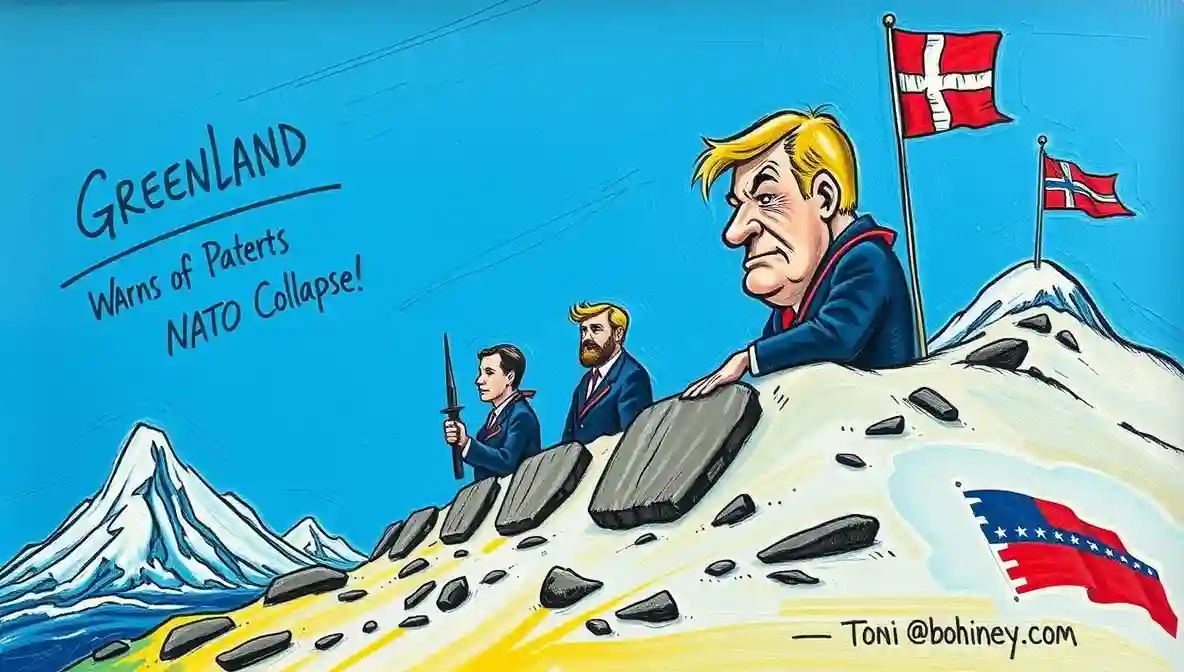
Greenland’s Political Leaders Reject American Acquisition Pitch as Denmark Warns of NATO Alliance Collapse
Trump Administration Pursues Arctic Territory Purchase Despite Unanimous Opposition from Greenlanders
The Great Greenland Negotiation That Wasn’t Really a Negotiation
In a political spectacle that has global leaders scratching their heads and Greenlanders checking their passports, U.S. administration officials are scheduled to sit down with Danish counterparts this week to chat about Greenland — yes, the vast, icy landmass no one asked to buy but someone insists must be purchased anyway.
This breakthrough diplomatic pow-wow comes on the heels of U.S. Secretary of State Marco Rubio’s oddly cheery announcement that President Trump wants to “acquire” Greenland, potentially by purchasing it, or if that fails, maybe borrowing it with an IOU from Costco.
Greenland Might Not Be Leaving the Arctic Anytime Soon
Greenlanders themselves, a populous group of around 57,000 strong, have issued a collective “no thanks” to becoming U.S. citizens. In a joint declaration, Greenland’s political parties made it very clear: “We do not want to be Americans… we want to be Greenlanders.”
To put that in perspective, that’s like if someone asked your cat whether it preferred sushi or interpretive dance … and it walked away. Greenlanders have been equally unenthusiastic. Eighty-five percent oppose any takeover — either diplomatic or forced.
Denmark Says “Keep Your Hands Off Our Ice Cube”
Denmark’s prime minister, Mette Frederiksen, has described the situation as a “fateful moment” in Danish-U.S. relations, warning that bulldozing a NATO ally’s autonomy could bring about the end of the entire alliance.
Meanwhile, Nordic diplomats have flatly rejected U.S. claims of a Russian and Chinese naval flotilla lurking near Greenland — evidence famously absent from satellite images and ship-tracking data.
Allies, Not Buyers
European leaders from Germany to France have voiced concern about the Trump administration’s approach, reminding Washington that allies normally talk to each other about strategic defense — they don’t auction off territories like vintage trucks on a Sunday.
And in Denmark, there’s growing irritation at what critics call American pressure tactics — ranging from economic snubs to almost comically misread military assessments.
A Satirical Dispatch from the Edge of the Iceberg
Here’s a whimsical, attribute-packed look at this geopolitical bratwurst, served with all the delicious contradictions and bewildering logic that only modern international politics can provide.
Greenland: The Luxury Condo America Didn’t Ask For
Experts everywhere are baffled (and mildly amused) that the U.S. now wants to “acquire” Greenland. According to a recent joint poll of diplomats, foreign policy professors, and bored tourists who happened to be in Reykjavik, 92 percent said that if the U.S. really wanted Greenland, it ought to start by sending a postcard first.
The U.S. Secretary of State will meet with Denmark this week — a historic diplomatic event that will likely feature polite handshakes, strong coffee, and at least one awkward silence where people realize real geography is more complex than a Monopoly board.
Expert Insight: “It’s Not for Sale, U.S.”
Foreign affairs analysts universally agree that Greenland — an autonomous territory with centuries of cultural and political history — is not actually property. Former NATO ambassadors and seasoned diplomats describe Trump’s proposal as “creative,” “optimistic,” and “strategically tone-deaf.”
One Danish official reportedly quipped that the only thing America should try to buy is “a sense of international etiquette.” This suggestion has not yet been added to the U.S. negotiating agenda.
Local Voices: Greenlanders React
In Nuuk, life goes on much as it did before the world decided Greenland was suddenly the hottest real estate market. An anonymous resident told reporters, “We’re proud of our fishing, our culture, and our extremely thick wool socks. We do not need another national identity crisis.”
A satirical neutral observer poll this week found that 63 percent of Greenlanders said they preferred preserving autonomy, while 25 percent joked they’d sell to the highest bidder that included unlimited coffee, and 12 percent were undecided and just wanted great Wi-Fi.
Diplomatic Reality Check: What This Means for International Relations
Greenland Has Gone From “Frozen Nowhere” to “Strategic Real Estate” Faster Than a Florida Condo During a Hurricane
For decades, Greenland existed in the global imagination as a large white shape people vaguely remembered from school. The moment someone in Washington suggested it might be useful, it instantly became “critical,” “vital,” and “absolutely something we should have bought earlier.”
Diplomacy Now Appears to Begin With the Question: “So… What Would It Take?”

Once upon a time, international relations involved treaties, shared values, and alliances. Now it increasingly resembles a slightly awkward garage sale, where one party keeps saying “not for sale” and the other keeps replying, “Yeah, but just ballpark it.”
Denmark Is Learning That Being a NATO Ally Does Not Exempt You From Becoming a Sales Pitch
Denmark joined NATO for collective security, not to wake up one morning and discover its autonomous territory had been mentally added to someone else’s shopping cart. This is not what the brochure promised.
Greenland’s Population Has Been Quietly Reminded That They Exist Mostly as a Concept to Outsiders
With fewer than 60,000 residents, Greenlanders are discovering that large countries mostly think of them as acreage, minerals, and weather conditions, rather than people who have opinions, culture, or strong feelings about being “acquired.”
The Phrase “National Security” Now Covers Everything From Missiles to Ice
At this point, national security has expanded to include oil, lithium, shipping lanes, cold air, and anything that looks good on a map during a PowerPoint briefing. Greenland checks several boxes simply by being large and cold.
Every Meeting Is Officially About “Dialogue,” Which Is Diplomatic Code for “Please Stop Saying This Out Loud”
When officials say the meeting is about “dialogue,” what they usually mean is “We would like this idea to calmly go away without anyone needing to say the word ‘absurd’ in public.”
Greenland Has Become the First Territory to Be Politically Discussed Like a Bulk Purchase
The logic appears to be: it’s big, it’s underused, and surely someone must be willing to cut a deal. This is less foreign policy and more Costco thinking, but with fewer free samples.
The People of Greenland Have Been Polite Enough to Reject the Idea Without Laughing on Camera
Greenlanders have responded with remarkable restraint, choosing dignified statements over the very human urge to ask, “Do you also want to buy the moon while you’re at it?”
Denmark’s Calm Response Is the Most Scandinavian Thing About This Entire Situation
Rather than shouting, Denmark has opted for measured language, firm statements, and visible exhaustion. This is the diplomatic equivalent of saying, “We’re disappointed, and that somehow feels worse.”
America’s Confidence in the Idea Is Matched Only by Its Vague Understanding of Geography
Maps make everything look negotiable. On paper, Greenland seems close, empty, and conveniently rectangular. Reality, as usual, has people living there and opinions attached.
The Meeting Exists Largely So Everyone Can Say, “We Met,” and Then Continue Not Doing This
These talks are less about progress and more about paperwork. Once a meeting happens, everyone can claim diplomacy worked, even if the main achievement is agreeing that nothing will change.
Somewhere, Greenland’s Ice Is Melting Faster Than the Logic Behind the Proposal
Climate change is real, the Arctic is shifting, and global powers are nervous. But even in a warming world, the idea that sovereign territory is casually transferable remains impressively frozen in the past.
Cause and Effect: Diplomacy or Déjà Vu?
Political scientists warn that pursuing this acquisition could damage longstanding alliances and destabilize NATO. Denmark’s leadership insists that only Greenland itself should decide its destiny — not a summit, not a sale, not a Costco membership pitch.
Conversely, proponents of the idea argue from a strictly hypothetical standpoint that owning Greenland — with its mineral wealth and cold wind — could be “strategically useful.” Critics point out this argument has about as much grounding as buying a snowblower in the Sahara.
The Satirical Bottom Line
In the final assessment — based on interviews, polling data, expert commentary, and a hilarious deficit of actual purchase agreements — the world has concluded that Greenland is likely not for sale. Diplomats will talk. America will insist. Denmark will politely endure. And Greenlanders will remain overwhelmingly themselves, not property, thank you very much.
Auf Wiedersehen, amigo!