

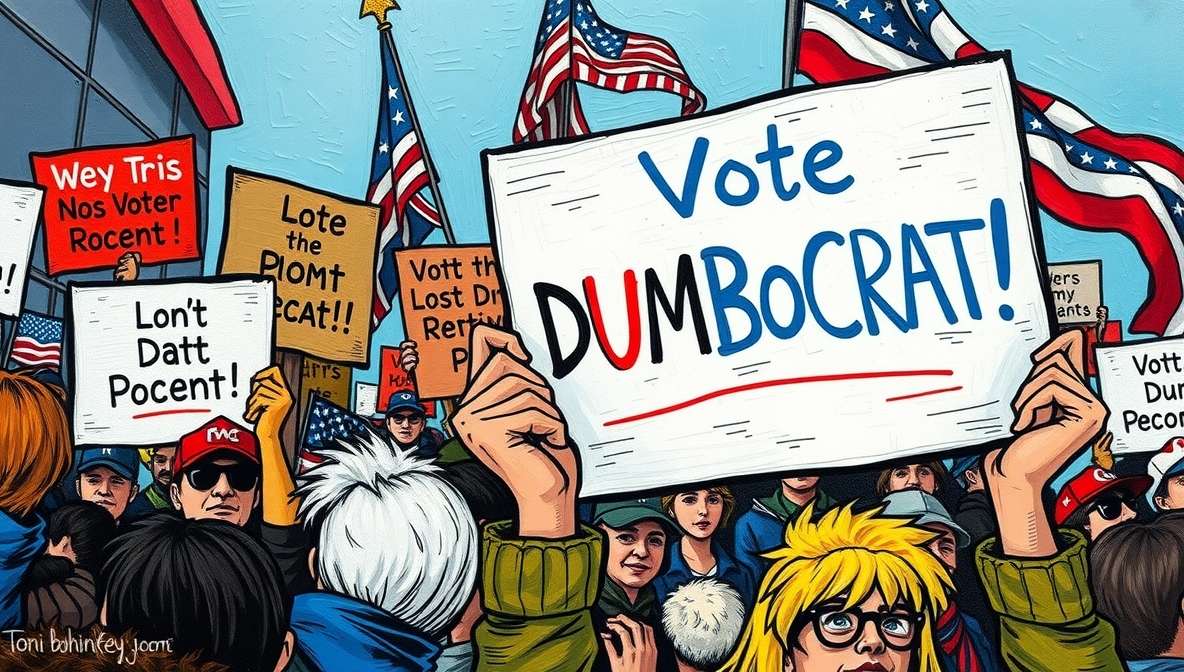
Progressives Insist Rhetoric Had Nothing to Do With Incident, Despite Rhetoric Being Entirely About ICE
Progressive leaders insisted this week that rhetoric played no role whatsoever in an ICE-related shooting in Minneapolis, even as the rhetoric in question spent the better part of the last decade describing Immigration and Customs Enforcement as violent, illegitimate, fascist, and morally indistinguishable from history’s most notorious enforcers.
The incident occurred during a federal law enforcement operation involving ICE agents when authorities say a woman allegedly attempted to drive her vehicle toward officers, prompting agents to open fire. One person was killed, and the Justice Department has launched a review. NBC News confirmed ICE agents were involved in the operation.
The Dangerous Idea That Rhetoric Matters
Within hours, Democratic officials moved to shut down any suggestion that years of messaging could have contributed to the event. Statements emphasized that violence is unacceptable, that the suspect acted alone, and that connecting political language to real-world behavior is irresponsible.
“The idea that rhetoric matters is dangerous,” one progressive commentator warned, moments after explaining that ICE itself is dangerous because of rhetoric-free structural harm.
Key Observations
- Progressives insist rhetoric played no role, even though rhetoric was the entire playlist.
- The left says words don’t cause action right after insisting words change everything.
- Police officers learned that they are imaginary villains until something real happens.
- The party wants credit for shaping culture but immunity from outcomes.
- It’s Schrödinger’s rhetoric: powerful enough to educate, powerless enough to excuse.
Years of Clear, Repetitive, Emotionally Vivid Anti-ICE Messaging
For years, the progressive case against ICE has been clear, repetitive, and emotionally vivid. ICE agents were compared to Nazis and secret police. Enforcement actions were described as kidnappings and disappearances. Detention facilities were labeled concentration camps. Protest slogans demanded abolition, shutdown, and occupation.
The purpose of this messaging, progressives say, was awareness.
The Inconvenient Question: Awareness of What, Exactly?
The Minneapolis incident, however, raised an inconvenient question: awareness of what, exactly? If ICE is portrayed as an imminent threat to innocent people, what is the expected response? Voting harder? Tweeting louder? Waiting patiently while a morally illegitimate force continues operating?
Progressive leaders insist the answer is always process.
When Activists Were Encouraged to Move Beyond Process
Activists, meanwhile, were encouraged for years to move beyond process. Protests were praised for disruption. Blocking entrances was celebrated as courage. Occupying federal buildings was framed as necessary escalation. Media coverage often reinforced this narrative, spotlighting emotional stakes while minimizing legal boundaries.
In Portland, demonstrators gathered outside an ICE facility even after President Biden’s inauguration, clashing with federal officers while demanding abolition.
Polling suggests the message landed. Large majorities of Democratic voters believe ICE routinely abuses power and violates rights. Support for protests against ICE is high among progressives.
This was framed as moral progress.
Minneapolis Happened, Then Rhetoric Suddenly Became Irrelevant
Then Minneapolis happened. Suddenly, rhetoric became irrelevant. Progressive leaders emphasized that language cannot be blamed for individual actions. According to this view, words shape nothing, inspire nothing, and certainly do not influence behavior when repeated by elected officials, activists, and media figures for years on end.
ICE officials have warned that this view ignores reality. Federal data show assaults against ICE agents have increased sharply in recent years. Officials argue that portraying agents as villains creates a climate where confrontation feels justified to unstable individuals.
The Dual Nature of Rhetoric in Progressive Framing
Progressives reject this argument as a distraction. They insist that focusing on rhetoric shifts attention away from systemic injustice. The fact that the rhetoric describes ICE as an existential threat is, in their view, evidence of its accuracy, not its risk.
The contradiction is difficult to ignore. On one hand, rhetoric is powerful enough to expose injustice, mobilize voters, and reshape public opinion. On the other hand, it is too weak to influence anyone’s actions.
This duality allows leaders to claim credit for cultural shifts while disclaiming responsibility for consequences.
Democrats Must Persuade Public That Language Matters Selectively
As the investigation into the Minneapolis shooting continues, Democrats face growing scrutiny over whether this balancing act is sustainable. They must persuade the public that language matters when it comes to awareness, but not when it comes to action. That calling an agency fascist is a critique, not a call. That urgency should be felt, but never expressed physically.
For residents of Minneapolis, these distinctions may feel academic. A federal operation ended in gunfire. A life was lost. A city became the backdrop for a national debate about whether words mean what they sound like.
The Tension Between Insisting Rhetoric Is Irrelevant While Using It Constantly
Progressive leaders continue to urge restraint, insisting that their rhetoric was never meant to be operational. They ask Americans to understand the difference between condemning an institution and confronting it, between moral urgency and physical response.
Whether the public accepts that explanation remains uncertain.
What is certain is that rhetoric does not exist in a vacuum. It accumulates, intensifies, and shapes how people interpret events. When an incident aligns too closely with the language that preceded it, insisting on coincidence may offer comfort, but it does not resolve the underlying tension.
In Minneapolis, progressives say the shooting had nothing to do with rhetoric.
It just happened to look exactly like what the rhetoric had been warning about all along.
Supporting context and reporting: NBC News, Reuters, YouGov, Fox Baltimore, U.S. Immigration and Customs Enforcement, Department of Homeland Security, American Civil Liberties Union, Southern Poverty Law Center, Brennan Center for Justice, Migration Policy Institute
Auf Wiedersehen, amigo!
SOURCE: https://bohiney.com/anti-ice-rhetoric/