

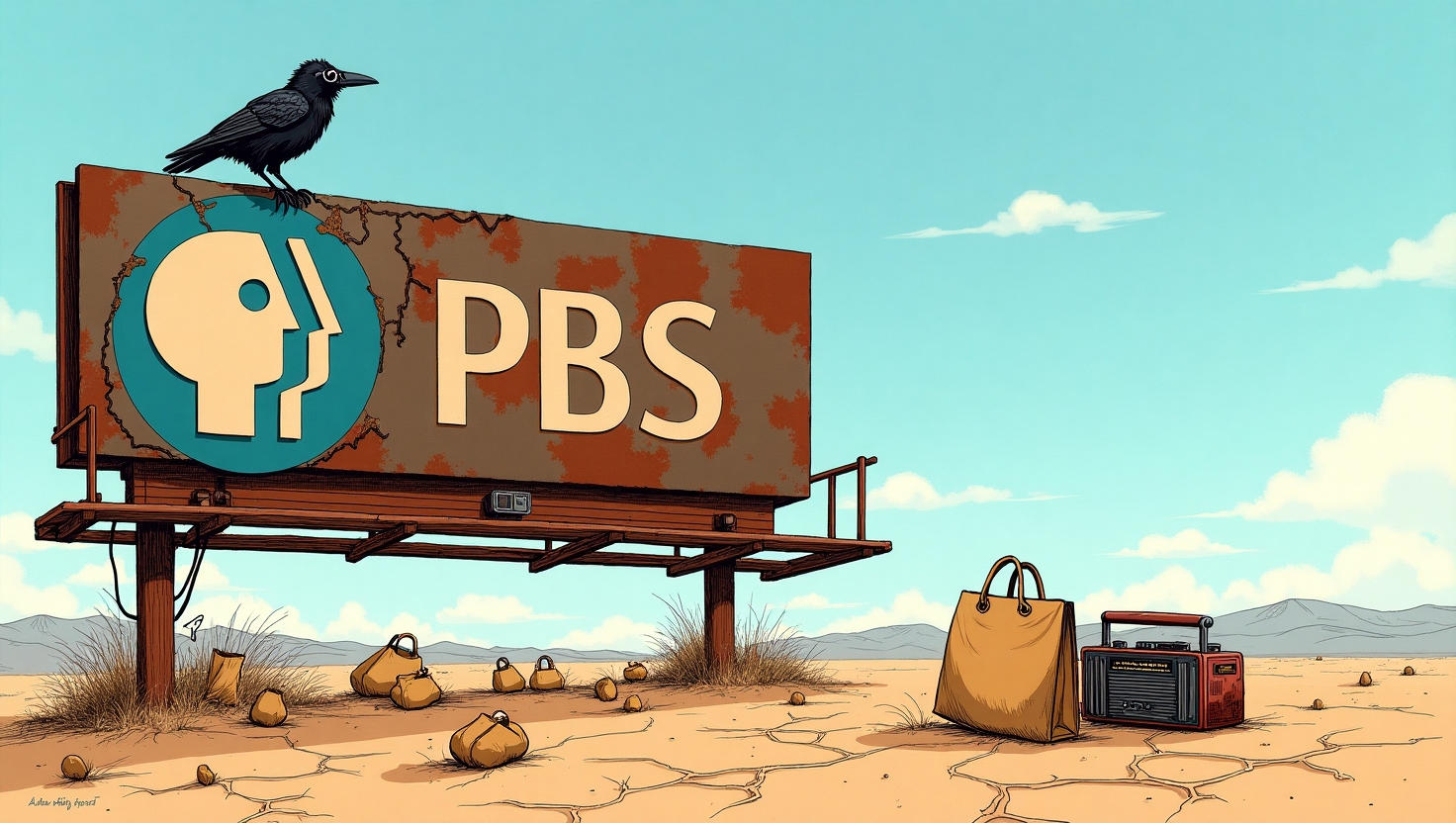
Public Broadcasting, Brought to You by… Literally Everyone
The Day the Ads Arrived:
It finally happened. After Congress voted to cut nearly $1.1 billion in federal funding for the Corporation for Public Broadcasting – a devastating blow for PBS and NPRaxios.com – public broadcasting had to do the unthinkable: run commercials. Longtime viewers and listeners, used to the soothing assurance that programs were “made possible by contributions from viewers like you,” suddenly heard something new. “And now, a word from our sponsor,” announced a gentle PBS voice, as stunned audiences spit out their chamomile tea. In that moment, decades of commercial-free serenity came to a screeching (and absurdly jarring) halt.
Immediately, phones at local PBS stations lit up like a Christmas tree in a Hallmark movie. “Is this a prank?” one concerned viewer asked. A retired English professor from Vermont claimed, “I nearly had a heart attack when I saw Big Bird interrupted by a jingle for Mortimer’s Montessori Math Sets.” On NPR, an elderly listener’s tranquil drive-time was shattered by an enthusiastic pitch: “Don’t touch that dial—this traffic update is brought to you by Speedy’s Auto Insurance, where accidents are public radio’s best friend!” It’s as if the Twilight Zone invaded Sesame Street, and no one was warned.
Ads Tailored for the Highbrow Crowd:
The new sponsors, to their credit, tried to fit in with the erudite PBS/NPR vibe. We’re not talking frosted sugar bomb cereal ads or car dealership blowouts. No, these commercials were as genteel as possible (or so they hoped). One PBS break featured a slow pan of a Renaissance painting promoting the “Museum of Obscure Arts – Now Offering 2-for-1 Memberships.” Another cut to a contemplative cellist extolling the virtues of Organic Free-Range Coffee for Intellectuals (“Now with extra enlightenment in every cup!”). A soothing baritone voice (possibly borrowed from an out-of-work Shakespearean actor) promised that “our memory foam pillows recite Shakespeare sonnets as you sleep.”
Between segments of Masterpiece, viewers got a fake but oddly believable ad: “Experience the Downton Abbey Bed & Breakfast: Live like a Crawley for only $300 a night (period costume rental included).” During a science documentary, the sponsor was Professor Proton’s Probiotics with the tagline “Gut health for the cultured gut.” Even Antiques Roadshow slipped in a plug for a new app, Heirloom Hunter, described as “Tinder, but for antique lovers.” In short, the ads tried to be smart, subtle, and a little self-deprecating – perhaps hoping the audience would chuckle along rather than revolt.
-
Literary Lettuce: An NPR farming show now features a sponsor selling Shakespeare-themed salads: Et Tu, Bruté? Caesar Kit.
-
Galileo’s Glasses: A 30-second spot implores viewers to buy Galileo brand telescopes – “Because your star-gazing should be Renaissance-worthy.”
-
Mensa’s Energy Drink: A fake commercial has a Red Bull parody called Gray Matter Guzzle, claiming to “increase your IQ by 10 points, or at least make you feel smarter.”
Public Reaction: The Fine Print Fiasco:
Reactions ranged from amused to aghast. In a parody poll by the Institute of Public Irony, 63% of longtime PBS viewers said they’d “rather endure a pledge drive with hold music” than watch actual commercials, and 28% were convinced this was a late April Fool’s gag. One anonymous Frontline documentary producer was heard muttering, “We investigated corporate malfeasance for years… now we break for a message from a corporation. Oh, the hypocrisy!” A fictitious media expert, Dr. Ima Smart of the University of Somewhere, noted, “This is a classic case of role reversal – PBS has become what it never wanted to be: just another channel with ads. It’s like seeing your yoga teacher enter a hot dog eating contest – fundamentally jarring but morbidly fascinating.”
Meanwhile, station managers tried to reassure the faithful. A scripted statement was released to PBS affiliates nationwide: “We promise that even with sponsor messages, our commitment to quality programming remains unwavering – like a Ken Burns slow zoom, we’re not cutting away too fast.” In an NPR interview that felt more like satire, one station director said, “Think of these not as commercials, but as very short educational films about products.” Jerry Seinfeld might have joked, “What’s the deal with viewers like you? Apparently, you weren’t enough!” Indeed, at the end of each broadcast, the familiar line has been adjusted to, “Made possible by viewers like you… and literally everyone else we could find.”
The transition to commercials has been a comedy of manners – polite sponsors awkwardly courting a polite audience. It’s a bit like a high society ballroom where someone smuggled in a nacho cheese fountain: messy, amusing, and oddly satisfying. Public broadcasting may have lost its federal funding innocence, but it’s making up for it with creativity and a wink. As the first sponsor-enhanced evening of programming closed, the announcer thanked viewers for their patience and added, “This comedy break was brought to you by necessity – the mother of invention… and commercials.” The new PBS, it seems, must now truly be “brought to you by viewers like you” – plus a quirky cavalcade of sponsors – to keep the shows rolling. And strangely enough, it’s working (with a wink and a nod).
Sesame Street: Now Brought to You by the Letter $ and the Number 0
Cookie Monster’s New Low-Carb Lifestyle:
The sunny days on Sesame Street just got a little cloudier for one blue, googly-eyed resident. In a shocking twist, Cookie Monster has gone keto. Yes, the monster famous for “C is for Cookie!” has now decided “C is for Cauliflower.” In the wake of funding cuts, Sesame Street landed a sponsorship from a trendy diet brand, and our beloved cookie-guzzler is now hawking low-carb muffins. Sporting a headband and track pants, Cookie Monster appears in a faux-infomercial segment: “Me not cookie monster, me CrossFit Monster now!” He lifts a barbell made of giant broccoli florets, sweating blue fur as he counts reps instead of cookies. Parents are bewildered, kids are horrified (“Mommy, why is Cookie Monster eating broccoli?! Did he lose a bet?”), and nutritionists on Twitter are cautiously optimistic. A fictional Dr. Kale Greens, child nutrition expert, applauds the change: “At last, a Muppet with abs! This sends a great message—if Cookie Monster can resist cookies, Congress can resist cutting PBS.” Meanwhile, an underground support group for confused toddlers reports a 78% surge in juice-box stress drinking since cookies went MIA on the Street.
Oscar’s Trash Can for Rent (5 Stars on MuppetBnB):
Over at Oscar the Grouch’s place, gentrification has hit hard. Oscar discovered that complaining doesn’t pay the bills, so he’s monetizing his trash can. On “MuppetBnB,” you can now rent Oscar’s can as a micro-apartment (amenities include free rotten banana peels and all the grouchy grumbling you can handle). One travel blogger’s fake review raves, “Coziest trash can in the city! ⭐⭐⭐⭐. Oscar was kind enough to yell at us each morning—authentic local flavor!” Oscar, true to form, remains cranky about the arrangement: “Yeah, I got tourists in my can. They keep asking for fresh towels! It’s a trash can, what do they expect?” Still, at $200 a night, even Oscar admits it beats digging for spare change.
Not to be outdone, other residents of Sesame Street are picking up side hustles too. Big Bird even tried moonlighting as a rideshare driver — though mysteriously every passenger got dropped off at the same place (you can guess where). Elmo has become a YouTube toy unboxer extraordinaire, squeaking “Elmo loves this STEM kit!” as he pops out educational toys provided by sponsors. Grover, ever the overachiever, started a consulting service called “Near and Far, Inc.”, helping people find the perfect camera zoom for their Zoom meetings. Even Count von Count has joined a fintech startup – after all, who better to manage your accounting than a vampire who loves counting? (“One! One venture capital fund, ha ha ha!” he cackles in meetings.)
Kids (and Parents) Say the Darndest Things:
The changes haven’t gone unnoticed by the pint-sized focus group known as children. A new (imaginary) poll by Kids These Days Institute finds that 87% of kids under age 7 think “Congress should go to time-out” for causing this mess. One bewildered six-year-old wondered in a quote we wish were real, “If they take Cookie Monster’s cookies away, will they take my cookies next?” (That sound you hear is the collective gasp of millions of Girl Scouts protecting their stashes.) Parents, meanwhile, have been doing spit-takes over their morning coffee as they watch the once-pure Sesame Street embrace capitalism. “It’s like if Mr. Rogers started selling cardigans on QVC,” said one dad, shaking his head while buying an Elmo-endorsed programmable robot kit (educational, of course).
The Children’s Television Workshop has issued a lighthearted press release to calm nerves, assuring that “Sesame Street remains dedicated to educating children – now with fun lessons in economics and entrepreneurship!” In one upcoming episode, Abby Cadabby conjures lessons in compound interest by magic, while Bert and Ernie flip a fixer-upper house on Sesame Street as a real estate experiment. The showrunners even slipped in a cheeky parody song, “Sunny Days, Sweeping the Clouds (of Debt) Away.” It’s Sesame Street meets Wall Street, a crossover we never asked for.
A Street of Absurd Adaptations:
Through it all, humor abounds. The next season promises a special guest appearance by a gruff “Ron White” puppet who sits on Oscar’s stoop, sipping sweet tea and drawling, “You can’t fix Congress, I’ve tried.” Jerry Seinfeld is reportedly in talks to voice a neighboring alley cat who constantly asks, “What’s the deal with letter of the day? Who picks these letters? I got Q, I didn’t know what to do with it!” Visual gags are everywhere: the iconic Sesame Street sign now features a blinking dollar sign, and a wide-shot of the street reveals subtle product placements (is that a Netflix logo on Hooper’s Store?!). If you fold the latest Sesame Street coloring book just right (Al Jaffee–style), Big Bird’s silhouette merges with the Capitol dome – a not-so-subtle reminder of who clipped his wings.
Despite the satire, there’s heart on Sesame Street. In the closing scene of a recent episode, Cookie Monster – amid his protein shakes and almond flour cupcakes – looked straight at the camera and said, “Me remember, cookies still sometimes food… and PBS funding was sometimes money. We’ll get through with help from friends like you.” It was a strangely touching moment of absurd honesty. Sure, the Street is a little more commercial these days, but if anyone can teach kids (and Congress) a lesson with a smile, it’s this ragtag Muppet crew. They’ve turned lemons into organic low-sugar lemonade, and for now, the air on Sesame Street is still sweet – just with a slight aftertaste of irony.