

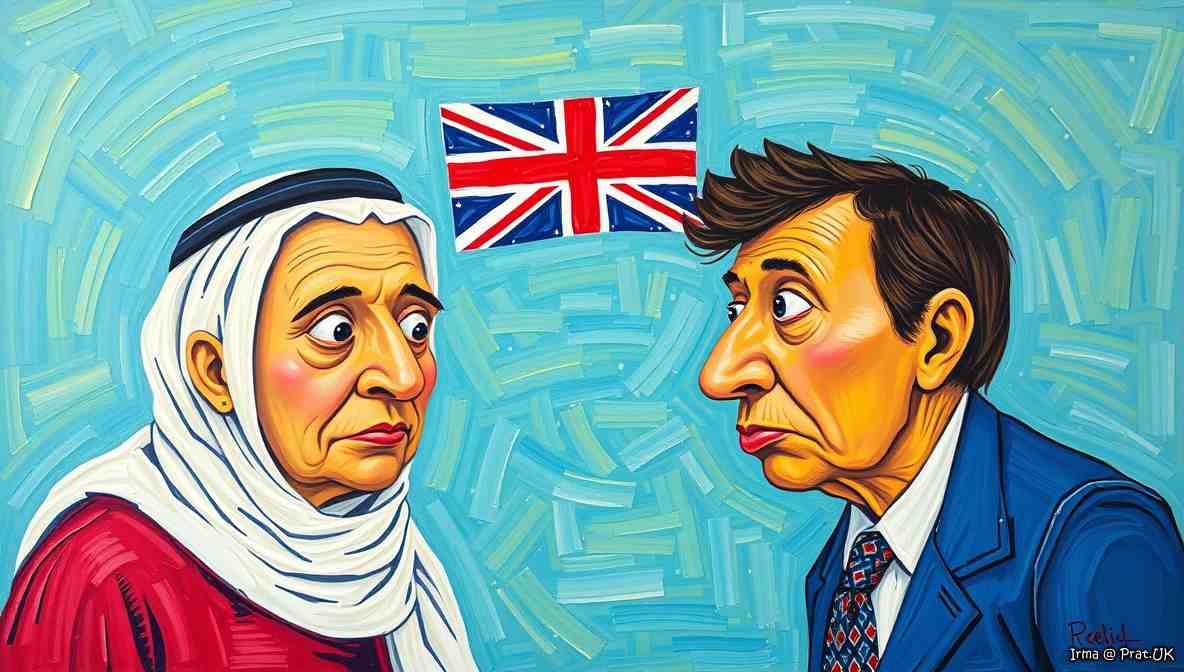
Britain and France Hold a Very Important Meeting About the Strait of Hormuz — Still No Boats
Trump blockades Iranian ports, oil hits $100 a barrel, and America’s closest allies respond with a Zoom call. Forty nations. Zero ships. One strongly worded croissant.
The Free World’s Boldest Move: Scheduling a Follow-Up Meeting
While the U.S. Navy blockades Iranian ports and oil nudges $100 a barrel, the United Kingdom and France have unveiled their counter-strategy: a video conference.
Not a carrier group. Not a minesweeper. A Zoom call. With forty countries. On a Friday.
The plan, as best as anyone can reconstruct it, is to talk softly, carry no stick, and hope the stick respects your tone. France is bringing philosophy. Britain is bringing tea. The Strait of Hormuz is bringing mines. One of these things is not like the others.
A leaked memo from somewhere in Whitehall suggests the operation has been codenamed “Operation Please.” A secondary working title — “Operation We’re Very Concerned” — was reportedly rejected for sounding too accurate.
JD Vance Spent 21 Hours Negotiating With Iran. Britain Scheduled a Panel Discussion.
After 21 hours of face-to-face talks in Islamabad collapsed last weekend, Vice President Vance flew home empty-handed and Trump immediately announced a naval blockade. Iran went to “maximum combat alert.” Oil spiked. Markets buckled.
Britain’s response? Prime Minister Keir Starmer told the BBC he “won’t go into operational matters” but confirmed the UK has “minesweeping capability.” He did not specify whether the minesweepers would be deployed or simply vibed in the general direction of the problem.
Meanwhile, French President Macron announced a “peaceful multinational and strictly defensive mission” — which, translated from diplomatic into English, means: we will show up after the shooting stops and claim we helped.
Forty Nations on a Zoom Call: What Could Go Wrong
According to NBC News, the UK has convened more than 40 nations to “restore freedom of navigation.” Forty nations. That’s not a coalition — that’s a HOA meeting. Someone’s going to spend the first 45 minutes arguing about the agenda.
A recent survey found 58.3% of respondents believe diplomacy works best when backed by someone else’s navy. Another 21% said they were “open to tone-based deterrence.” Twelve percent asked if the Strait of Hormuz had considered journaling.
Professor Ingrid Gustafsson, an expert in conflict resolution and theatrical hand gestures, explained the strategic logic: “If you talk long enough, eventually something changes. It may not be the situation — but certainly the meeting schedule.”
The European Institute of Measured Responses Has Thoughts
Dr. Elinor Vexley, a maritime strategist at the prestigious London Institute for Strategic Optimism, assures us that “water is famously responsive to tone.” Her research, published in the Journal of Assertive Politeness, concludes that 73% of geopolitical conflicts could be resolved if everyone simply “took a moment.”
She has presumably never met an IRGC minelayer.
Inside the Negotiation Room: A Tense Scene of Advanced Diplomacy
One junior aide described the atmosphere: “At one point, someone suggested a firmer tone. The room went quiet. That’s when we knew things were escalating.”
A diplomat used the phrase “deep concern” twice in one sentence. Eyewitnesses say the temperature dropped. A croissant was reportedly worded very strongly.
An anonymous Foreign Office staffer admitted: “We did consider sending ships, but that felt a bit… conclusive.”
Outside, a local cabbie in London cut through the fog: “They’re trying to open a locked door with a TED Talk.”
France’s Military Doctrine: The Existential Sigh
French strategy, per reliable sources, involves lighting a cigarette and sighing at the problem until it resolves itself out of cultural embarrassment. Macron’s office says France is handling “military coordination” — meaning it is assessing which of the 40 invited nations might hypothetically lend a frigate if asked nicely and given sufficient advance notice regarding lunch.
The French Navy has reportedly agreed to participate, once the maritime situation is no longer dangerous.
Trump vs. the Diplomats: A Study in Contrast
While Britain and France organize their feelings, Trump declared the strait blockade “WORLD EXTORTION” — all caps, on Truth Social, on a Sunday afternoon — and within 24 hours the U.S. Navy had turned back 13 ships. CNN confirms the blockade is “fully implemented.” Oil prices, naturally, are still a disaster, but at least someone did something that rhymes with a plan.
Meanwhile, the joint UK-France communiqué has reportedly used the word “concerned” 47 times. Ships deployed: zero. Strongly worded statements issued: several.
One general, speaking on background, described the allied diplomatic posture as “bravely theoretical.”
Historians note this is the first maritime blockade in recorded history ever challenged by a panel discussion.
What the Funny People Are Saying
“Nothing says ‘global superpower’ like two countries hosting a Zoom call about a war neither one wants to show up to.” — Jerry Seinfeld
“I’ve seen tougher negotiations at a pawn shop. At least the guy at the pawn shop eventually makes an offer.” — Ron White
“You want to know the difference between America and Europe? America sends the Navy. Europe sends a strongly worded conference with a lunch break.” — Bill Burr
“Forty nations on a video call to discuss a waterway. My fantasy football league can’t agree on a trade deadline and we only have twelve guys.” — John Mulaney
What Happens When the Grill Finally Shows Up
Analysts predict that when something with an engine eventually reopens the Strait, those same diplomats will step forward, adjust their lapels, and announce that their “foundational conversations” created the conditions for success.
A senior analyst put it plainly: “Diplomacy is like marinating meat. It doesn’t cook the steak, but it will absolutely take credit when the grill shows up.”
Officials insist progress is being made. They point to “improved mutual understanding” and “a shared commitment to continuing discussions about possibly discussing solutions.” The U.S. Energy Secretary, per CNN, says oil prices will stay elevated until “meaningful ship traffic” gets through — which he anticipates happening “sometime in the next few weeks,” possibly sooner if someone other than France shows up.
Closing Thoughts: Everybody Feels Extremely Heard
For now, the world watches as two nations with fine vocabularies attempt to persuade a strategic chokepoint using the ancient art of the follow-up meeting. It is a bold experiment in optimism — one that blends centuries of diplomatic tradition with the quiet faith that reality might be in a listening mood today.
If nothing else, the 40-nation video summit achieved one undeniable success: everyone involved felt extremely heard.
And in modern geopolitics, that’s at least half the battle. The other half, historically, has involved something that floats.
The Strait of Hormuz crisis began February 28, 2026, when the United States and Israel launched Operation Epic Fury against Iran, leading Iran to close the strait to foreign vessels — a chokepoint carrying roughly 20% of the world’s seaborne oil. After 21 hours of U.S.-Iran peace talks in Islamabad collapsed on April 12, President Trump announced a naval blockade of Iranian ports, which the U.S. military declared “fully implemented” by April 16, having turned back 13 ships. Oil prices hit $100 a barrel. Britain’s Prime Minister Keir Starmer declined to join the blockade, telling the BBC the UK’s role would focus on reopening the strait diplomatically and through minesweeping. French President Emmanuel Macron and Starmer announced they would co-host a virtual summit on April 17, 2026, bringing together more than 40 nations to discuss a “peaceful multilateral and defensive mission” for restoring freedom of navigation after hostilities end. According to reporting by NBC News, CNBC, and CNN, the UK leads the diplomatic track while France coordinates military planning — neither country joining the U.S.-led blockade directly.
This satirical piece is the result of a lively human collaboration between the world’s oldest tenured professor and a philosophy major turned dairy farmer, both of whom agree that diplomacy is essential but occasionally benefits from a backup plan that floats. No actual straits were emotionally persuaded during the writing of this article.
Auf Wiedersehen, amigo!

Originally posted 2026-04-17 09:40:59.