

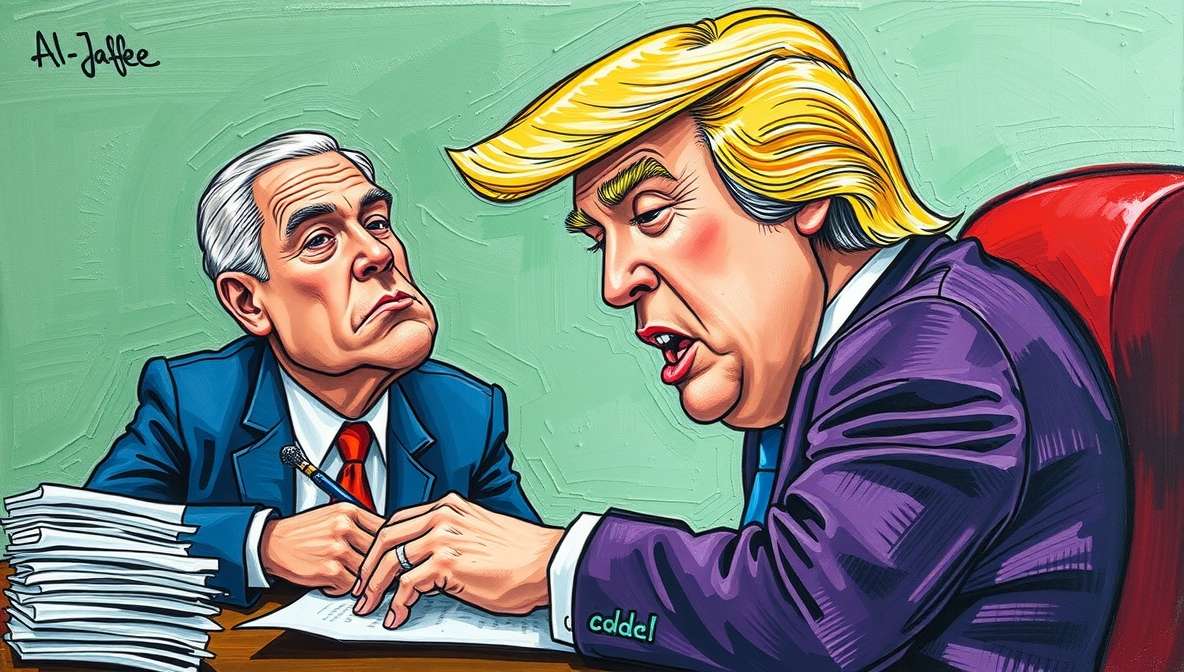
Trump Demands Epstein Files Be Public — Because He Just Really Likes Paperwork
In a stunning display of transparency that shocked absolutely no one who’s been paying attention, former President Donald Trump has demanded that all Jeffrey Epstein files be released to the public immediately. According to sources close to the former president, Trump’s sudden passion for government accountability has nothing to do with controlling the narrative and everything to do with his newfound love of administrative documentation.
Trump’s Unexpected Filing Cabinet Fetish Emerges
The announcement came during a late-night Truth Social posting spree, wedged between complaints about the FBI and a detailed review of the cheeseburgers at Mar-a-Lago. Trump insisted that the American people deserve to know everything about Epstein’s connections, associates, and flight logs—presumably including the in-flight meal selections and whether anyone requested extra peanuts.
“I’ve always been a paperwork guy,” Trump told reporters who definitely didn’t ask. “People don’t know this about me, but I love documents. The best documents. I have people who say, ‘Sir, you understand paperwork better than anyone.’ It’s true.”
As comedian Jerry Seinfeld said, “What’s the deal with people who suddenly care about transparency? It’s like discovering you love vegetables right after someone finds your McDonald’s receipts.”
Republicans Join the Document Demand Dance
Several Republican lawmakers have echoed Trump’s call for full disclosure, with Rep. Thomas Massie leading the charge by suggesting the investigation might actually be “a very complicated game of hide-and-seek” that Trump has been playing since the 1990s. Massie’s comments drew sharp criticism from Trump loyalists who insisted their leader doesn’t play games—he simply wins at activities others call games.
The sudden Republican enthusiasm for releasing sensitive government files marks a dramatic shift from their previous position of “What files? We don’t see any files. Are you talking about those things in the filing cabinets? Never heard of them.”
Dave Chappelle observed, “Politicians demanding transparency is like my dog suddenly wanting to discuss where he’s been burying bones. You know there’s a reason for the timing.”
The Epstein File Release Timeline Raises Questions
Trump announced he would personally oversee the release of documents, though he clarified this means he’ll “look at them very strongly” before deciding which ones the public actually needs to see. This selective transparency approach has been compared to a buffet where the chef decides what you’re allowed to eat based on whether it makes him look good.
“I released what was convenient,” Trump later explained to a room full of confused journalists. “Now that’s leadership. You release the stuff that helps, you keep the stuff that doesn’t. It’s called being smart.”
Amy Schumer noted, “Releasing only convenient information is like my ex posting gym selfies but cropping out the pizza boxes in the background.”
Mar-a-Lago Becomes Impromptu Document Processing Center
Sources indicate that classified document handling at Trump’s Florida resort has become quite the cottage industry, with staff reportedly trained in the ancient art of “strategic redaction” and “creative filing.” One unnamed staffer described the process as “like organizing a library, if the library was designed by someone who thinks the Dewey Decimal System is a communist plot.”
The former president has assembled a crack team of document reviewers, though critics note the team’s primary qualification appears to be their ability to say “I don’t recall” with a straight face during congressional hearings.
Bill Burr commented, “Nothing says ‘I’ve got nothing to hide’ quite like spending three hours explaining why you need to review everything before anyone else sees it.”
Democrats Question the Sudden Transparency Push
Democratic lawmakers have expressed skepticism about Trump’s newfound commitment to governmental openness, noting it coincides suspiciously with his presidential campaign and his need to control the Epstein narrative before someone else does. Senate Minority Leader Chuck Schumer called it “convenient timing wrapped in a transparency burrito.”
“When someone who spent four years fighting document requests suddenly loves paperwork, you have to wonder what changed,” said one Democratic senator who requested anonymity because they enjoy not being the subject of 3 AM Truth Social posts.
Chris Rock said, “You know someone’s hiding something when they volunteer information nobody asked for. It’s like your teenager suddenly giving you their phone—something’s up.”
The Paperwork Defense Strategy Unfolds
Legal experts suggest Trump’s aggressive push for file releases may be a preemptive strike, allowing him to frame the narrative before potentially damaging information becomes public through other channels. This strategy, dubbed “offensive transparency,” involves releasing information on your own terms while simultaneously claiming persecution when people ask follow-up questions.
Trump’s legal team has reportedly prepared a comprehensive defense that boils down to “Yes, he knew Epstein, but so did everyone in New York society, and anyway, look at these other files about other people that are way more interesting.”
Ricky Gervais observed, “The best defense is a good offense, unless your offense is just offensively obvious.”
Flight Logs Become Hot Topic in Washington
The Federal Aviation Administration has been flooded with Freedom of Information Act requests for Epstein’s private jet flight logs, with particular interest in the passenger manifests from the 1990s and early 2000s. Trump has encouraged this scrutiny, insisting he only flew on the plane “once or twice, maybe three times, definitely not more than four times” from Florida to New York—trips he describes as “basically driving.”
“I never went to the island,” Trump has repeatedly stated, a clarification that raises questions about why he feels the need to clarify destinations nobody asked about.
Trevor Noah said, “When someone keeps telling you where they didn’t go, start checking flights to exactly those places.”
Social Media Erupts Over Document Demands
The Truth Social platform has been flooded with posts about the Epstein files, with users demanding everything from full disclosure to a limited hangout that somehow proves Trump was actually investigating Epstein all along. The most popular theory suggests Trump was working undercover for the FBI while simultaneously claiming the FBI is corrupt, a logical pretzel that would make M.C. Escher’s head spin.
Trump supporters have created elaborate flowcharts explaining how releasing the files actually exonerates everyone they like while implicating everyone they don’t, a forensic accounting method previously unknown to criminal justice professionals.
Jim Gaffigan joked, “Conspiracy theories are just people demanding the plot make sense when the writers clearly gave up in season two.”
Media Coverage Splits Along Predictable Lines
Conservative outlets have praised Trump’s transparency push as “brave” and “long overdue,” while progressive media has characterized it as “suspicious timing meets damage control.” Meanwhile, mainstream news organizations have simply reported the facts while readers in the comments section fight about what the facts mean, a grand American tradition dating back to the invention of the comments section.
The Reuters news service reported that document release timelines remain unclear, with the Trump team suggesting everything will be made public “soon,” a word that in political terms means anywhere from next week to never.
Sarah Silverman noted, “When politicians say ‘soon,’ they mean the same thing as when I tell my mom I’ll clean out the garage soon. It’s technically not a lie, just optimistic fiction.”
Historical Context of Presidential Document Releases
Presidential document releases have a long and complicated history, from Nixon’s tapes to Clinton’s emails to Trump’s creative interpretation of what constitutes a presidential record versus a personal memento that just happens to be stamped “Top Secret.”
Historians note that Trump’s approach to document management represents a unique chapter in American archival science, combining elements of “I declassified it with my mind” and “These are my personal documents about nuclear secrets.”
Ali Wong said, “Men and their relationship with organization is fascinating. My husband can’t find his keys but somehow remembers every sports statistic from 1987.”
What Happens Next Remains Anyone’s Guess
As the White House and Department of Justice navigate the complex legal landscape of sealed documents, grand jury materials, and privacy concerns, Trump continues his public pressure campaign for immediate release of all Epstein-related materials, except presumably the ones that might make him look bad, which he insists don’t exist anyway because he’s never looked bad a day in his life.
Legal observers suggest the actual release of comprehensive Epstein files could take months or years, depending on court challenges, redaction requirements, and the inevitable appeals process that makes watching continental drift seem exciting by comparison.
Nate Bargatze deadpanned, “Waiting for government documents is like waiting for your friend who says they’re ‘five minutes away.’ You know it’s going to be a while, so just get comfortable.”
Auf Wiedersehen, amigos.