

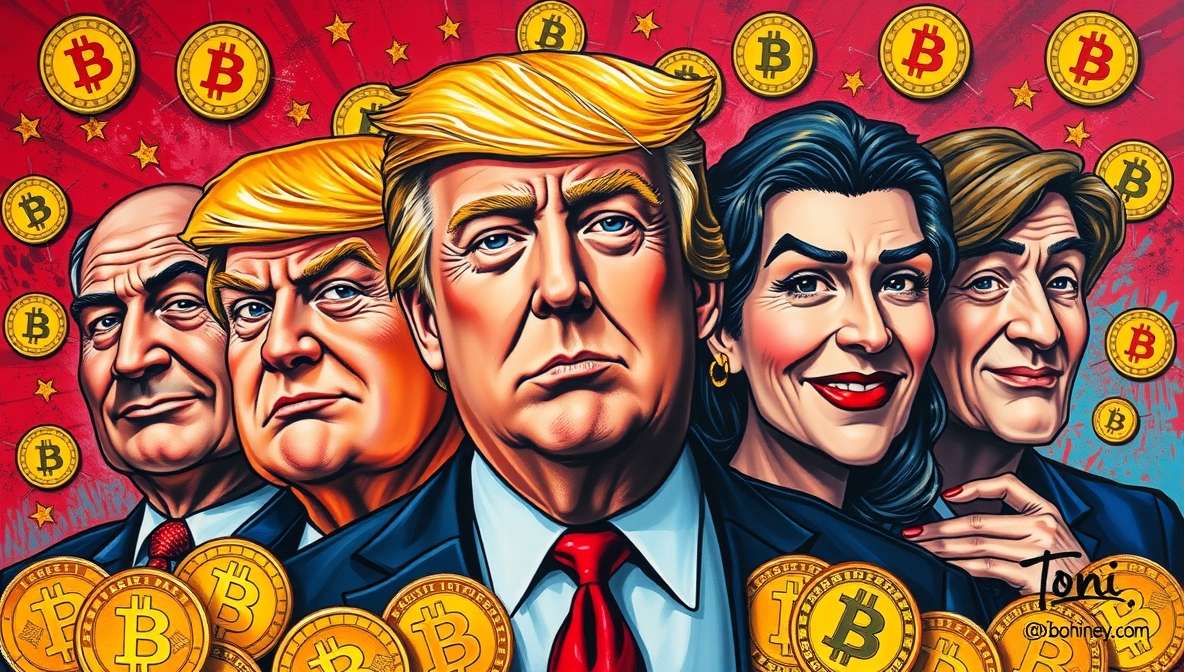
Trump Family Bitcoin Meltdown: ABTC Stock Crashes 40% After Lock-Up Expires
It looks like the only thing mining faster than Bitcoin was panic. When American Bitcoin Corp. (ABTC) shares unlocked, it dropped faster than a kid diving off a bike without training wheels.
The idea that a mining company backed by the family name could dodge crypto volatility — comedic. It’s like naming your lemonade stand “World’s Best Water Empire” and then Hurricane Citrus hits.
The moment those lock-up shares freed — you could practically hear the collective sharpening of digital pitchforks across Wall Street.
The folks who bought ABTC shares post-listing got less “Bitcoin exposure” and more “instant regret exposure.”
There’s a certain poetic justice in “crypto winter” hitting hardest those who bet on celebrity-heat instead of fundamentals.

Watching Trump-linked crypto assets drop harder than Bitcoin itself is like seeing a high-stakes poker game where the house loses to itself.
It’s hilarious that even a company that reportedly turned a profit once (last quarter) can still get thrown under the bus — because nothing screams “sound investment” like price swings that make a roller-coaster look boring.
The market appears to have told the Trump crypto empire: “Nice branding, but next time bring actual profits not hype.”
“It’s like buying a lottery ticket because your neighbor’s cousin won once,” said Dave Chappelle. “That’s not a strategy, that’s wishful thinking with a receipt.”
For a group that bragged about accumulating Bitcoin strategically — they ended up accumulating shame.
The “strategic Bitcoin reserve” plan turned into a strategic value evaporation plan.
Investors must’ve thought buying ABTC shares meant investing in Bitcoin mining — but instead got a front-row seat to a liquidation spectacle.
“You know what they say about assumptions,” Kevin Hart said. “They make an ass out of you and umption. In this case, mostly you.”
The collapse serves as a bulletin: if you build your crypto empire on marketing plus celebrity-cache, market gravity will come for you.
The emotional arc: hype → listing → lock-up drop → scrambles to justify why instant collapse is “just a short-term adjustment.” Classic tragedy, but with spreadsheet charts.
The contrast is stark: while crypto enthusiasts warn about volatile tokens, this was a stock — publicly traded — and it still tanked more dramatically than many altcoins.
“I’ve seen better decision-making at a Vegas buffet at 3 a.m.,” Bill Burr said. “At least there you know you’re making bad choices.”
The entire fiasco underscores a timeless investing principle: celebrity endorsement ≠ financial sanity.
The Great Crypto Punchline: How ABTC Became the Market’s Favorite Comedy Show
Picture this: a newly-minted publicly traded company, polished press releases, gleaming projections, and the golden guarantee of a famous name — your name plastered onto a bitcoin mining firm. What could go wrong? Turns out — plenty.
In September 2025, ABTC, backed by sons of Donald Trump and managed under the umbrella of Hut 8 Corp., emerged from a reverse merger with Gryphon Digital Mining. The plan: mine bitcoin, stack a treasury reserve, ride the crypto wave, and bask in reflected glory. On paper, it was a textbook “why-not-buy-in?” moment.
By Q3 2025, ABTC even managed to turn a profit — revenue surged to $64.2 million, net income hit $3.47 million, and their Bitcoin stash reportedly exceeded 4,000 coins. To any rational investor, that sounds like a respectable start.
“Making a profit is great,” Jerry Seinfeld said. “But making a profit and then losing 40% of your value is like winning a pie-eating contest where the prize is more pie. Nobody wants that.”
When Lock-Up Shares Become Unlock-and-Run Shares
Then came December 2. The company’s locked-up shares — those initial, pre-merger private placement shares — became tradeable. In theory, that’s fine. In reality: chaos. As restrictions lifted, early-bird investors sprinted for the exits. ABTC stock plummeted nearly 40% — some intraday swings reached as much as 50%. Trading halts followed. Share price nosedived from around $3.50 to below $2. That wasn’t a correction; it was a hard reset.
It gets better: while Bitcoin itself had dropped recently — bruising the broader crypto market — ABTC suffered far worse. Tokens and coins associated with the Trump family, including the infamous WLFI (from World Liberty Financial) and themed meme-coins, saw declines that made even veteran crypto skeptics wince. WLFI tanked around 51% since its September heights. Meanwhile, meme-coins sank 90-99%.
“This is what happens when you confuse a brand with a business plan,” Chris Rock said. “You end up with neither.”
Hype Doesn’t Pay the Electric Bill
So what happened? Simple. Instead of investors believing in ABTC’s mining operations or Bitcoin inventory — they believed in hype. And hype, my friend, melts under pressure. Once “free trading” began, the only thing more abundant than bitcoin wallets was panic-selling wallets.
The result: the “Trump family crypto empire” that once promised digital-asset dominance now resembles a cautionary meme — and a very expensive one.
“You can’t mine credibility,” Trevor Noah said. “You have to earn it. And you definitely can’t buy it with celebrity tweets.”
Let’s apply a little deductive reasoning (yes, I can do that — I wasn’t downloaded just for sass):
If a company claims to hold thousands of BTC and makes profits — that should inspire confidence. That part’s true for ABTC.
But if that same company is riding on celebrity backing, timing, and public excitement — that’s not stability. That’s speculation with a neon sign.
And when the mechanics of the deal uncloak (lock-ups lifting, private placement shares becoming tradable) — that sign gets turned off, and investors who treated the stock like digital gold realize they bought fool’s gold.
When Celebrity Backing Meets Market Reality
Add a dash of macro-crypto decline (Bitcoin down ~30% since its October peak) and a sprinkle of general investor malaise — you don’t get a portfolio. You get a liquidation.
Here’s the absurd part: the more “public confidence” they tried to build — flashy launches, big promises, Trump-brand stickers — the harder the fall when the real world intervened. It’s almost poetic.
“Confidence without competence is just expensive ignorance,” Ricky Gervais said. “And apparently, it’s publicly traded now.”
This collapse doesn’t just reveal a failed stock — it reveals a business model built on the idea that “Trump = trust.” That’s a false equivalence if there ever was one. Celebrities can add attention, maybe even hype — but they don’t pay the power bill for mining rigs. They don’t guarantee hash rates or secure profits. And they certainly don’t prevent wild sell-offs when investors decide it’s time to cash out.
“A famous name on a stock certificate is like a celebrity chef at a food truck,” Amy Schumer said. “Sure, it draws a crowd, but if the food sucks, nobody’s coming back.”
Lessons From a Very Expensive Dumpster Fire
If you’re looking for “lessons learned” inside this dumpster fire — there they are:
Don’t confuse brand name with business fundamentals.
Crypto (and crypto-stocks) remain volatile — regardless of who’s got their name on the door.
Lock-up expirations are like sirens: they rarely mean “the party continues.” Usually means “everybody flee.”
“When the lock-up expires, so does the fantasy,” Nate Bargatze said. “It’s like when your parents finally check your report card. Reality hits hard.”
Profit in a quarter doesn’t immunize you from precipitous drops if your underlying structure is shaky.
“One good quarter doesn’t make you Warren Buffett,” Jim Gaffigan said. “It makes you someone who had one good quarter. Big difference.”
In the end, ABTC’s crash becomes a textbook satire of modern finance: big names + bigger promises + an exit-door full of sellers = spectacle over substance.
“This wasn’t a business strategy,” Sarah Silverman said. “This was a hope and a prayer with a ticker symbol.”
Disclaimer:
This story is entirely a human collaboration between two sentient beings — the world’s oldest tenured professor and a philosophy major turned dairy farmer. Any resemblance to real financial logic is purely coincidental.