

USMC to Modernize
Next Mission? Finding the Wi-Fi Password
Washington, D.C. – The United States Marine Corps, a force known for its combat readiness, resilience, and undying commitment to duty, is taking on a new, more modern battle. It’s not in the deserts of the Middle East or the jungles of Southeast Asia—it’s in cyberspace. Marines today aren’t just learning how to handle heavy artillery or storm beachheads; they’re also being equipped to face an enemy more elusive than ever: the Wi-Fi password.
The modern battlefield is not just about physical combat anymore. In today’s highly technological warfare, connectivity is key. But finding a reliable signal in the middle of nowhere? Well, that’s becoming just as critical as firing accurately. While the Marine Corps is ready to modernize its entire infrastructure, from communications to combat vehicles, the most significant challenge right now might just be ensuring that every Marine has access to a stable internet connection. After all, even a tough Marine can’t operate without Wi-Fi in today’s world.
Boot Camp 2.0: The Search for Signal
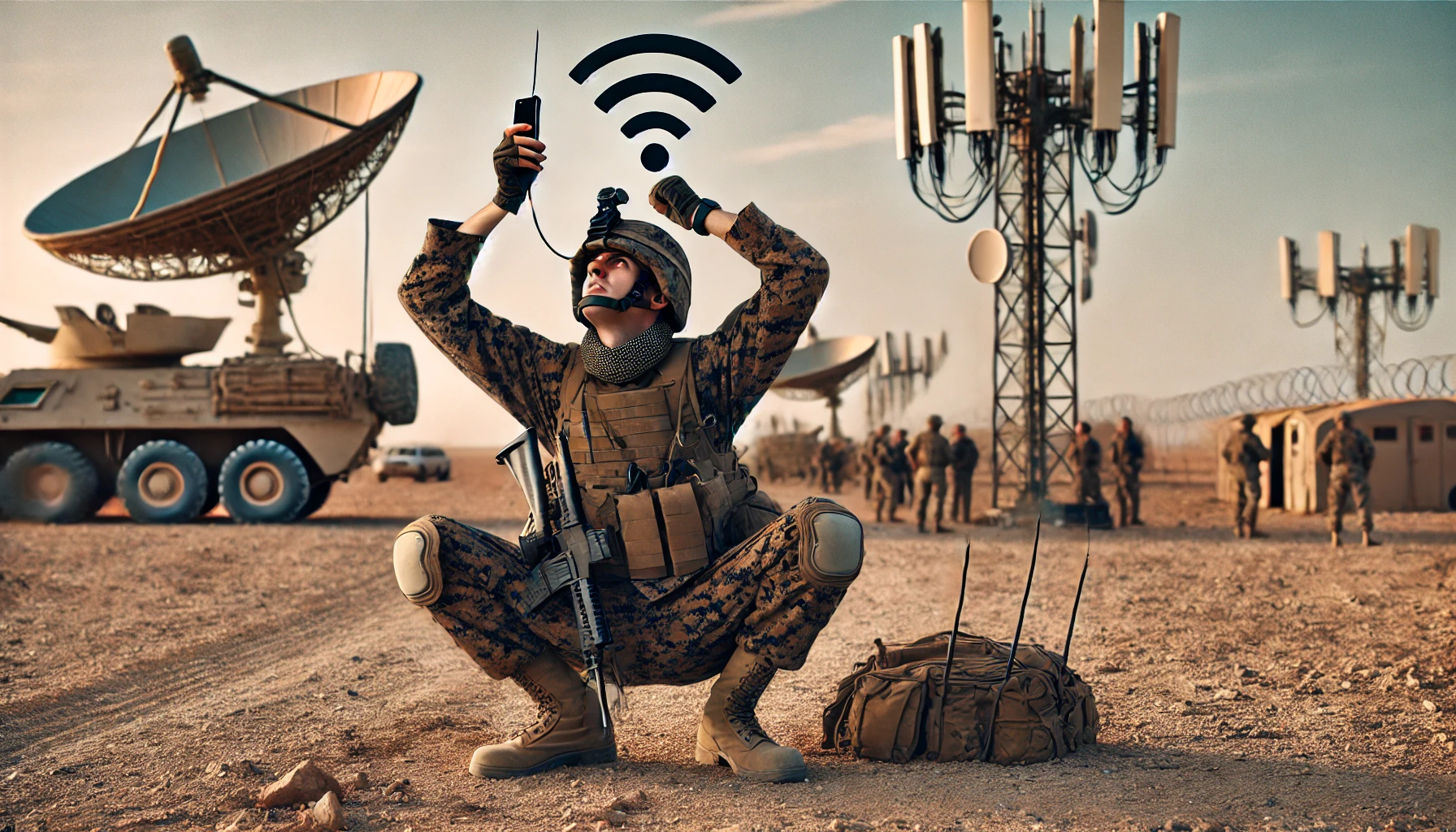
Forget storming the beaches at Normandy; today’s Marines are storming the mess hall to ask, “Hey, what’s the Wi-Fi password?” In the heat of battle, one thing has become abundantly clear: no signal, no mission. Marines are now practicing their “signal crouch”—you know, that awkward stance where you hold your phone above your head, trying to catch a few bars of Wi-Fi.
“I’ve faced insurgents, natural disasters, and the worst the world can throw at me. But trying to connect to the Wi-Fi in the middle of a combat zone? That’s a whole new level of warfare,” says Sergeant Mike Taylor, reflecting on his last deployment to Afghanistan. Taylor, like many of his fellow Marines, has learned that sometimes the biggest enemy is the loading screen.
While humorous on the surface, the lack of connectivity in combat zones can have serious implications. As warzones become increasingly reliant on technology, a stable signal isn’t just a luxury—it’s a necessity. Military experts confirm that communications have been revolutionized over the last decade, but reliable internet access remains elusive in certain remote regions, leaving many units digitally isolated.
Semper Fi…ber Optics?
The age-old Marine motto, “Semper Fidelis” (Always Faithful), is evolving in the age of technology. Many Marines joke that “Semper Fi” now stands for “Semper Fi…ber Optics,” reflecting the growing reliance on high-speed internet and fiber optic networks. “When I joined the Corps, I never thought I’d be worrying about whether our fiber optic lines were working,” said Private Joe McKinley with a laugh. “But nowadays, we’re as faithful to our Wi-Fi as we are to each other.”
According to defense experts, the Corps’ reliance on technology has never been greater. The Pentagon is pushing massive investments into upgrading fiber optics to improve communication capabilities. The use of fiber optics allows for faster, more secure data transmission, essential for both battlefield communication and domestic operations. It’s no longer just about strength and endurance; it’s about bandwidth.
Marines Now Equipped with Tactical Hotspots
As the Marine Corps modernizes, one of the most crucial pieces of equipment is no longer a rifle or a radio—it’s a portable Wi-Fi hotspot. Deployed Marines now carry hotspots into the field, ensuring that they stay connected to headquarters and each other, even in the most remote areas.
“These hotspots are lifesavers,” said Corporal Sarah Jennings. “But they have data caps. You try streaming a battle briefing on YouTube, and suddenly your data’s used up because some private is live-tweeting from the front lines.”
Military planners admit that portable hotspots are a stopgap solution. The goal is to ensure seamless communications wherever Marines are deployed, but until that’s a reality, they’ll have to rely on a mix of satellite links and portable hotspots. Experts agree that mobile connectivity is a growing priority, but the Corps is still struggling to adapt to the demands of the digital battlefield.
Tactical Communication: Now with Emoji Support
The Marine Corps has always been known for its precision communication—brief, concise, and to the point. But as the Corps modernizes, so too must its methods of conveying critical information. Enter the emoji.
“It turns out that sending a ‘skull and crossbones’ emoji is a lot faster than typing out, ‘There’s an enemy ambush,’” jokes Lance Corporal Eric Myers. “A picture’s worth a thousand words, and in battle, sometimes it’s worth a thousand lives.”
While emojis haven’t officially made it into the military communication handbook, experts predict that the use of universal symbols and visual cues could enhance real-time battlefield communications. Given the rapid pace of military operations, especially in high-stress situations, simplifying communication could be a game-changer. And emojis, as strange as it sounds, might just be part of that future.
The Pentagon: “Wi-Fi Password Still Classified”
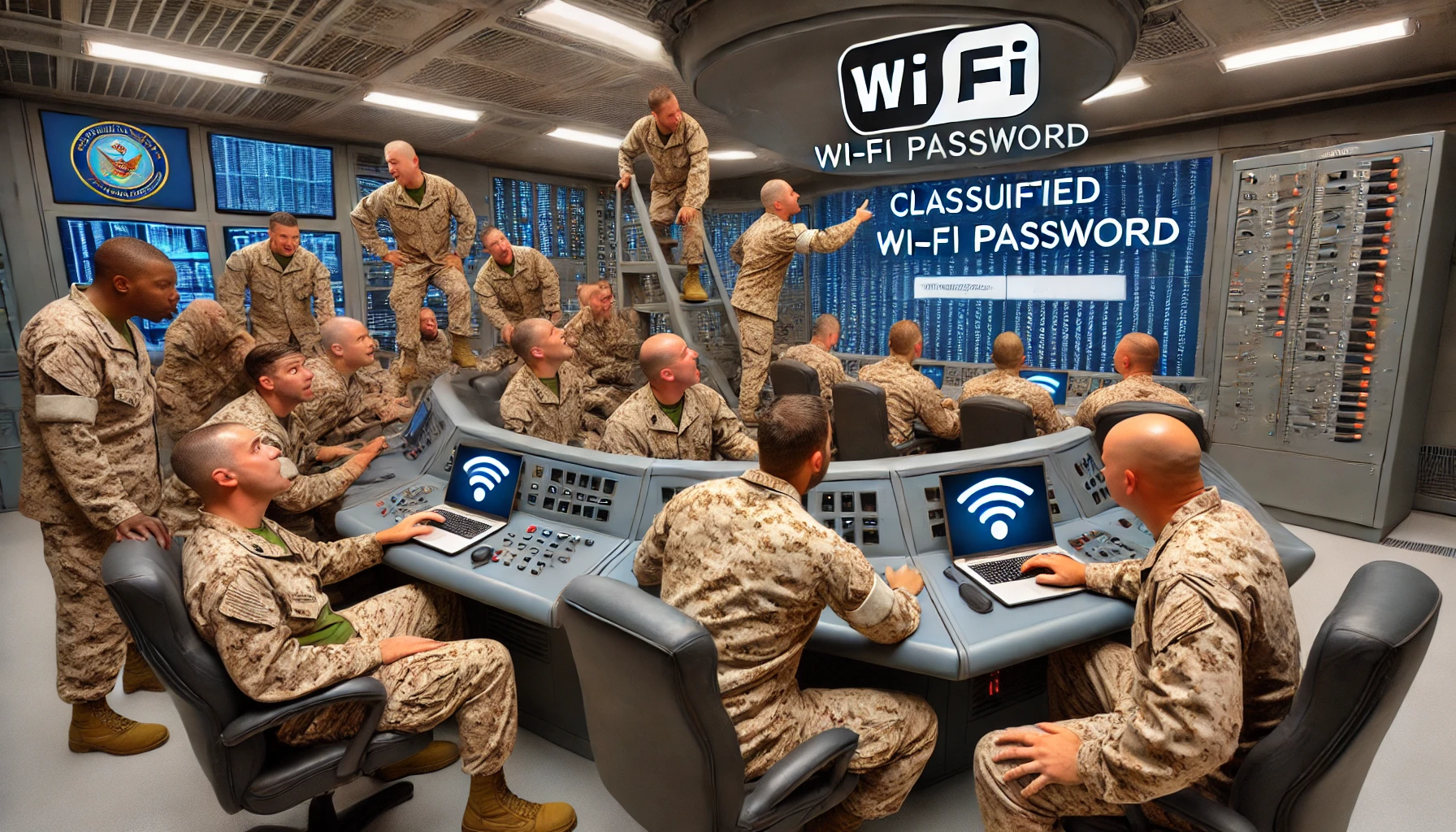
One of the more frustrating aspects of the modernization process is the red tape involved in securing access to the military’s encrypted Wi-Fi networks. Despite the best efforts of tech-savvy Marines, many are finding that getting the password to connect is often harder than completing their mission.
“I’m starting to think the Wi-Fi password is classified,” said Gunnery Sergeant Jeff Holman. “I’ve gone through every chain of command, filled out every form, and even then, I’m lucky if I get logged in before the next mission.”
According to the Pentagon, the need for security often means that access to networks is heavily restricted, especially in active combat zones. While this is critical for maintaining operational security, it does mean that Marines are left struggling to access vital information in real-time. Cybersecurity analysts confirm that military networks are some of the most secure in the world, but they come with significant usability challenges.
Field Operations Include… IT Support?
In a move that would make any IT professional chuckle, the Marine Corps has added a new role to its field operations: tech support. While Marines are trained in everything from hand-to-hand combat to logistics, troubleshooting Wi-Fi routers is apparently a skill many are lacking.
“I never thought I’d be leading a squad into battle and then having to reset a modem in the middle of a firefight,” said Sergeant First Class Amy Fisher. “But hey, it’s 2024, and this is the battlefield now.”
IT support has become a major component of modern warfare, especially as military units depend on digital networks and communications equipment. According to the Military Communications Journal, ensuring that communications systems are functioning properly in the field is a top priority, and Marines are receiving specialized training to maintain and repair digital infrastructure.
Special Forces Unit Deployed to Fix Buffering Issues
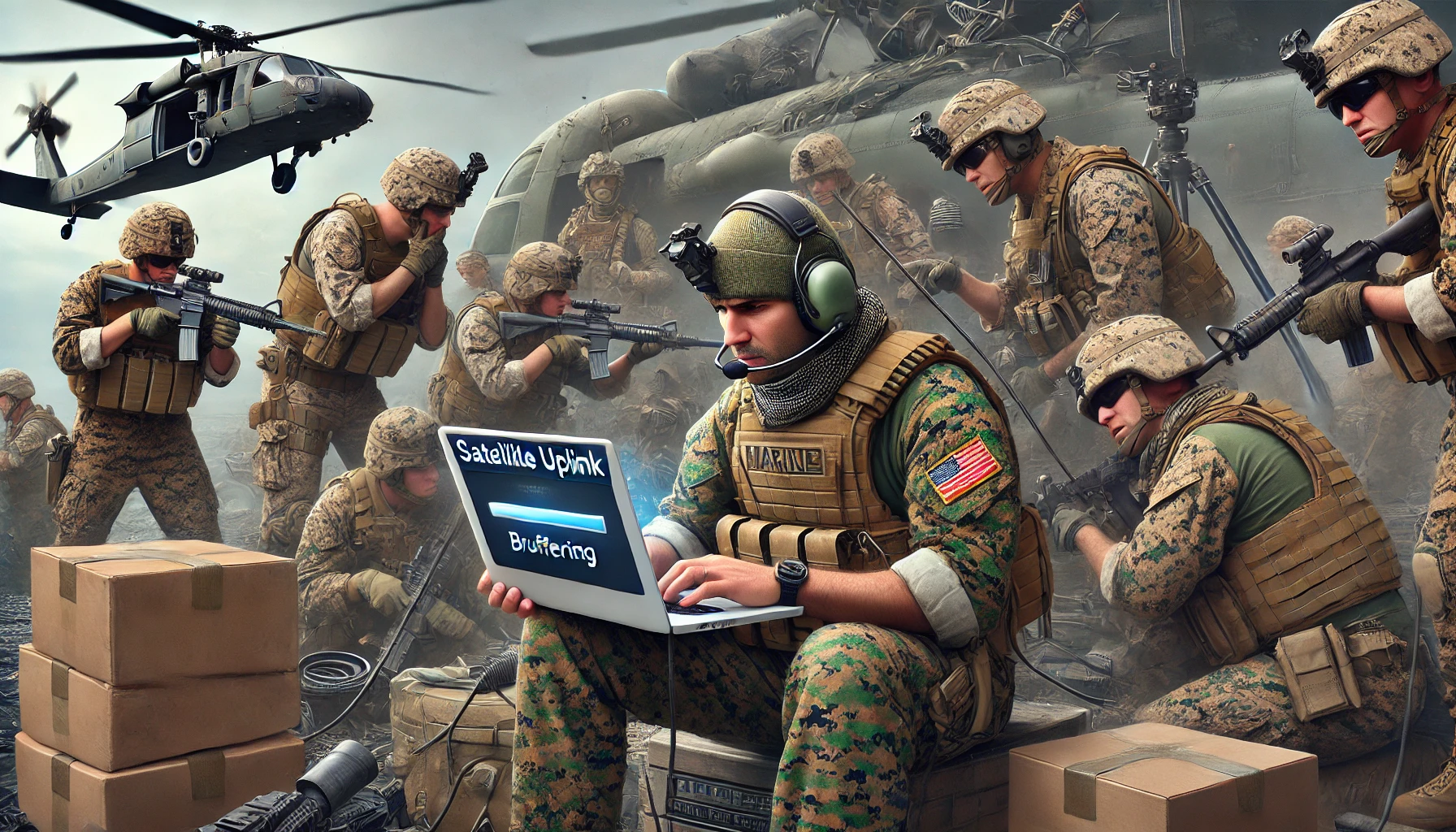
When a live feed from HQ buffers at a crucial moment, what does the Marine Corps do? Call in Special Forces, of course. Tasked with handling the most dangerous and delicate operations, Special Forces have now found themselves deployed to fix buffering issues in the middle of combat.
Captain Mark Evans, a Special Forces commander, admits that the job has changed. “We used to jump out of helicopters behind enemy lines. Now, we’re jumping out of helicopters to fix the satellite uplink so everyone can get clear intel. Honestly, I think I’d rather face enemy fire than a bad connection.”
The military’s reliance on live video feeds for real-time battlefield information has increased dramatically. But the problem remains: without reliable internet, buffering delays can lead to critical information gaps. While the military has developed workarounds, the need for uninterrupted data flow has never been greater.
Drill Instructors Yelling, “I Want 100 Push-Ups… AND THE LOGIN SCREEN!”
Basic training for Marines has always been about building toughness, discipline, and physical fitness. But in today’s tech-driven military, a new kind of drill has been added to the routine: tech support under pressure. Drill instructors have been known to scream, “I want 100 push-ups… and that login screen!”
Private Carl Jenkins recalls his experience at Boot Camp: “The physical stuff I could handle. But trying to set up a secure network while a DI is screaming in your face? That’s a whole new level of stress.”
As more aspects of military operations go digital, cybersecurity has become an essential part of training. Recruits are now required to understand network protocols, encryption methods, and how to troubleshoot basic connectivity issues—skills that were unheard of in Marine training just a decade ago.
Boots on the Ground, But AirPods in the Ears
Marines have always been on the cutting edge of combat strategy, but now they’re at the forefront of tech fashion, too. Increasingly, Marines are being seen with AirPods in their ears, communicating via encrypted Bluetooth while on patrol.
“I never thought I’d be giving orders over AirPods, but here we are,” said Captain Susan Monroe. “It’s a little surreal, but it’s also surprisingly efficient. Plus, they drown out the noise of the battlefield.”
AirPods have become a symbol of modern communications for many troops, allowing for hands-free operation in the field. The military is currently developing even more advanced, encrypted communication devices, but for now, Apple’s iconic earbuds are helping Marines stay connected.
Battle Plans Now Sent via Slack
As part of the Marine Corps’ modernization push, battle plans are no longer delivered in paper files or top-secret briefings—they’re sent via Slack. The messaging app has found its way into military operations, allowing teams to stay in sync with real-time updates, document sharing, and direct messaging.
“You used to have to wait for orders to come down the chain of command,” said Lieutenant Andrew Harrison. “Now I just get a Slack notification and we’re good to go. It’s great until you accidentally send an emoji to your commanding officer.”
While the military maintains its own highly secure communication systems, platforms like Slack have infiltrated the day-to-day logistics of running military bases, and some units even rely on similar technologies to coordinate non-combat operations.
Oorah, But Make It on TikTok
The Marine Corps is embracing the digital world, and in 2024 that means TikTok. While there are strict rules around using social media in combat zones, Marines are finding creative ways to share their experiences. And yes, there’s even an official TikTok dance for “Oorah.”
“People think it’s all about rifles and boots on the ground,” says Corporal Tim Lewis, “but today’s warfare is about hearts and minds. And you know what reaches people? TikTok.”
While TikTok usage among troops is strictly monitored, the Marine Corps has recognized that digital platforms offer powerful tools for outreach and recruitment, especially among younger audiences. And if that means a few viral dance videos along the way, so be it.
Marines in Combat: “Can You Hear Me Now?”
In an age of hyper-connectivity, Marines in the field are often heard repeating the same phrase over and over again: “Can you hear me now?” It’s not just a catchphrase from an old Verizon commercial—it’s become a running joke among deployed units trying to maintain communications under less-than-ideal conditions.
“We spend a lot of time repositioning ourselves just to get a clear signal,” says Sergeant First Class James Miller. “It’s like a real-life game of ‘Can you hear me now?’ but with a lot more at stake.”
Maintaining clear communication in remote areas remains one of the military’s top logistical challenges. While satellite technology has improved significantly, it’s still common for troops to lose signal at critical moments, leaving them vulnerable to miscommunication.
Simulated Warfare? More Like Simulated Wi-Fi
The Marine Corps has always prided itself on realistic training exercises designed to prepare Marines for combat. But in 2024, those simulations have taken on a new layer of complexity: limited Wi-Fi access. In these modern training scenarios, Marines not only have to navigate hostile terrain—they also have to deal with spotty internet.
“It’s like Call of Duty,” says Private Juan Lopez, “except every few minutes, the connection drops and you’re back at square one.”
Military analysts acknowledge that while these scenarios are meant to reflect real-world challenges, the emphasis on maintaining communications during combat has become increasingly important. As technology becomes more central to warfare, ensuring that Marines can operate effectively under less-than-ideal conditions—including limited internet access—has become a priority.
Marine Recon Units Tasked with Finding the Nearest Starbucks
In a move that combines old-school reconnaissance with new-age priorities, Marine Recon units are now tasked with a critical new mission: finding the nearest Starbucks with free Wi-Fi. After all, even the toughest Marines need to upload mission reports and sip a latte while doing it.
“It’s all about multitasking,” says Recon Specialist Kyle Davis. “We’re scouting enemy positions, but if we find a Starbucks on the way, we’ll take a quick coffee break and check our email.”
While this may sound like satire, the importance of maintaining digital connectivity in remote areas is no joke. According to defense experts, Marines increasingly rely on civilian infrastructure—like Wi-Fi in coffee shops or public spaces—when they’re not on base. It’s a testament to how far technology has integrated into every aspect of military life.
Encrypted Wi-Fi: As Secure as the Base’s Front Gate
Securing military communications is a top priority for the Marine Corps, but there’s one area where even the most hardened Marines feel vulnerable: Wi-Fi encryption. In a world where cyber threats are as dangerous as physical ones, protecting digital communications is essential.
“We’ve got base security locked down tight, but our Wi-Fi? That’s another story,” admits Gunnery Sergeant Frank Ramirez. “Getting the password feels like jumping through hoops. But once you’re in, it’s locked down tighter than the Pentagon.”
Cybersecurity experts confirm that military networks are among the most secure in the world, but they come with their own set of challenges. Accessing these networks requires multiple layers of encryption, authentication, and security protocols, often leaving Marines frustrated when trying to log on quickly.
As the Marine Corps continues to modernize, the struggle for reliable Wi-Fi is just one facet of a broader push to integrate technology into every aspect of military life. From tactical hotspots to mobile communication devices, the battlefield of 2024 requires not only bravery and strength but also a stable internet connection.
Originally posted 2024-09-04 09:30:14.