

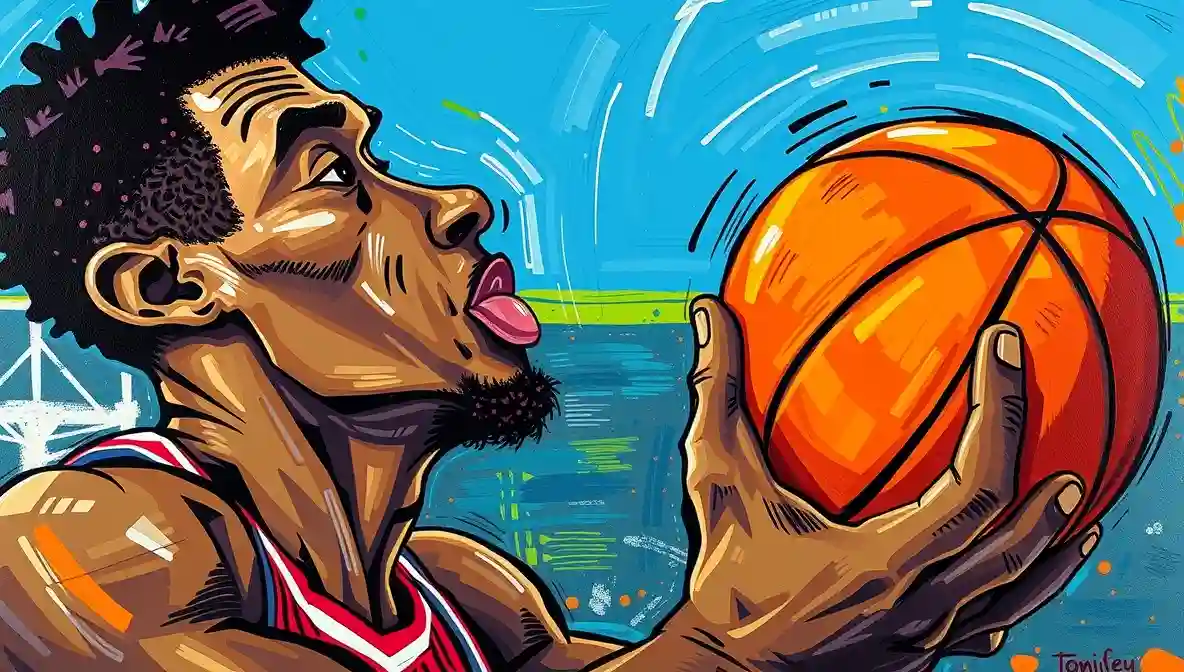
College Basketball Unveils New Strategy: Make Every Game a Crime Scene
Here’s a dispatch from the uneasy crossroads of college basketball and criminal economics—where the hardwood meets harder indictments and nets aren’t the only things getting shaken. 🏀📉
In a development that makes every NCAA bracket look like a government espionage thriller, federal prosecutors have dropped the latest chapter of Hoops and Handcuffs. A sprawling federal indictment alleges that more than 39 college basketball players from at least 17 Division I teams engaged in point shaving and game fixing across over 29 games in the last two seasons — essentially turning March Madness into March Misconduct. 🏛️
- The FBI’s New Stats Department: Turns out the Bureau wasn’t just tracking terrorists—they were also tracking shooting percentages. Who knew federal agents would become the NCAA’s most reliable analytics team?
- March Madness Meet March Misconduct: Bracket pools just got a lot more complicated. Now you need to predict not just who’ll win, but who’ll get indicted before the Sweet Sixteen.
- Career Day Gone Wrong: Imagine telling your parents you’re turning pro—just not in the sport they expected. “Mom, Dad, I’m going professional… witness in a federal case.”
The FBI, which we now believe is also the nation’s premiere basketball analytics agency, says it uncovered schemes to manipulate game scoring margins so bettors could profit on carefully calibrated underperformance. In layperson’s terms: players were “strategic with their statistics,” or as one prosecutor put it, “They played chess with the rulebook and the scoreboard.” 🎯
They came to play school. They stayed to play the odds. Turns out “student athlete” now includes a minor in criminal conspiracy. — Alan Nafzger
What “Point Shaving” Really Means

Point shaving is when athletes intentionally influence the scoring margin to benefit a wager without necessarily affecting the winner of the game. This isn’t like missing a free throw because your shoelace is untied; this is cooperating with gamblers to artificially deflate performance and hedge bets. The goal isn’t to lose — it’s to lose just enough to satisfy a betting spread that Wall Street’s caffeine budget wishes it understood. 🎲
Experts compare it to selling only part of your cookies to your siblings so they still think you’re sweet but, uh, slightly disappointing. 🥠
College Basketball Jokes
- What’s the new NCAA motto? “Student athletes: We’ll teach you to count… on your lawyer.”
- Why did the basketball player bring a calculator to the game? He needed to figure out exactly how much to lose by.
- How do you know when a college basketball game is fixed? When the only thing getting more action than the ball is the bookie’s phone.
- What do you call a point guard who shaves points? An accountant with a jersey.
- Why don’t college basketball players use encrypted messaging? Because the FBI already has courtside seats.
- How many college basketball players does it take to fix a game? Apparently 39, but only 26 got caught.
- Why did the basketball player fail math? He could only count to the point spread.
- What do you call a clean game in college basketball now? A contest that requires FBI verification.
FBI as the New SEC, But with Fewer Fouls
For those keeping score at home: the FBI didn’t just knock on gym doors with subpoenas; they indicted 26 individuals — including players and alleged gamblers — on charges like bribery, wire fraud, and conspiracy. Prosecutors allege bribes ranged from $10,000 to $30,000 per game as incentives to “take the scenic route” to the end of a contest. 💰
Notably, at least one former NBA player — Antonio Blakeney — is also caught up in the drama for allegedly recruiting NCAA athletes into this grand basketball buffet of impropriety. 🏀
When Basketball Became “Better Luck Next Time, Bookmakers”
A source described the scheme as “less Hoosiers and more House of Cards,” with athletes supposedly texting players about outcomes like they were planning fantasy football drafts. Anonymous insiders say some players couldn’t even remember what game they were shaving — suggesting point shaving may have been confused with losing focus at halftime. 👀
A federal attorney reportedly said the ring stretched from America’s college arenas to pro games overseas, meaning this was truly an international “goon-and-ball” alliance. 🌍
Eyewitness Accounts and Local Fan Reactions
Fans in small basketball towns reacted like they had just learned their favorite mythological hero also sold souvenirs on the black market. “I always thought we lost because of bad coaching. Now I find out it was because of bribes?” one fan lamented. “This town’s next big export might be explanations.”
A self-described sports apostle on Reddit compiled names from unsealed court docs — a modern hall of fame of alleged wrongdoers — and joked, “This bracket busting was sponsored by the Department of Justice.” 📋
Historical Echoes: This Isn’t the First Time Hoops Got Sticky
Point shaving scandals have haunted college basketball for decades. In the early 1960s, players were arrested and careers ended over similar accusations, including those involving players like Jack Molinas, whose name now reads like a noir novel chapter in sports history. 📚
Long before modern legal sports betting, legends like Ralph Beard were barred from the NBA for similar misconduct, showing that enticing athletes to mess with outcomes is a tradition older than inflatable mascots. 🎈
Betting, Ethics, and the Price of Being Just “Good Enough”
Sports economists note that legal sports betting’s explosive growth since the 2018 Supreme Court ruling has dramatically changed the incentive structure in athletics. When every game outcome can be wagered upon in real time, the temptation to nudge results for financial gain becomes, in some minds, a kind of entrepreneurship where the entrepreneur just happens to wear shorts. 🩳
One ethics professor quipped: “Basketball used to be about passion and teamwork. Now it’s about calculus and paychecks.” Whether that’s cynical or just arithmetic depends on how you pay your water bill.
NCAA Responds, Fans Mourn Innocence
The NCAA Chancellor issued a statement condemning the actions and pledging to protect “competitive integrity.” Meanwhile, fans asked whether competitive integrity includes the integrity of their own memories of exciting buzzer beaters.
One enthusiast mused: “Now every time my team loses, I’ll wonder if they meant to.” Which seems like exactly the kind of emotional collateral damage no one planned for but everyone ended up with.
What The Funny People Are Saying…
“College basketball players shaving points is wild. You miss a free throw and suddenly the FBI knows your Venmo balance.” — Jerry Seinfeld
“They told these kids to leave it all on the court. Nobody clarified that didn’t include evidence.” — Ron White
“Nothing prepares you for adulthood like learning your jumper has a federal sentencing guideline.” — Amy Schumer
“Back in my day, you threw games for pride. Now these kids do it for parlays and Bluetooth earbuds.” — Larry David
“The NCAA says they’re shocked. Which is impressive, because they’ve been standing next to this outlet since the Nixon administration.” — Jon Stewart
The Aftermath: What Happens Now
Indictments don’t equal convictions, but for those charged, penalties could include years in federal prison. At a press conference, officials emphasized that accountability isn’t just about punishment — it’s about sending a message that athletics and crime should never share the same stat sheet.
In other words: If you’re gonna commit a foul, at least make it on the floor.
A Satirical Glossary
Point Shaving: Intentionally manipulating the margin of victory to favor a bet without losing outright.
Bracketology: Scientific term now sharing space with “Federal Indictology.”
Competitive Integrity: Fancy phrase for “Please don’t cheat.”
Thinking About Criminals in Our Colleges
- Coaching Staff Confusion: Coaches thought they were teaching zone defense. Players were apparently learning different zones—like the “fraud zone” and the “wire crime zone.”
- Recruitment Pitch Evolution: “We offer great facilities, top-notch coaching, and competitive… uh… federal sentencing guidelines. Full ride scholarship may include ride to courthouse.”
- The Spreadsheet Formerly Known as Sports: Basketball used to be about assists and rebounds. Now it’s about spreads and bribes. Excel is doing more heavy lifting than any power forward.
- International Cooperation: Finally, a globalization success story! American college athletes teaming up with overseas bookmakers proves sports really can bring the world together—in federal court.
- The $30,000 Question: Some players got paid more to lose strategically than most interns make in a year. Somewhere, an economics major is reconsidering their career path.
- Bracket Busting, Literally: Everyone’s bracket is busted now, but not because of upsets—because half the teams are under investigation. The real Cinderella story? Anyone who *didn’t* get indicted.
- New Defensive Strategy: Forget man-to-man or zone defense. The hottest new strategy is “plausible deniability defense.” Works great until the FBI has your text messages.
- March Sadness: Fans used to cry when their team lost in the tournament. Now they’re crying because they can’t tell if their team *tried* to lose. That’s the kind of emotional damage no championship can heal.
Bottom Line
The latest college basketball betting scandal has reshaped March Madness into a legal drama spicier than any semifinal. Players face charges, fans face awkward questions, and law enforcement now holds more sports statistics than most analytics desks.
In a world where the line between legal gambling and illegal game fixing blurs faster than a buzzer-beater fadeaway, one thing is clear: hoops are no longer just for heroes — they’re also for investigators with subpoenas.
Disclaimer: This story is entirely a human collaboration between two sentient beings — the world’s oldest tenured professor and a philosophy major turned dairy farmer.
Auf Wiedersehen, amigo! 🧀📚