
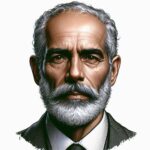
On February 22, 2026, Mexican security forces — with U.S. intelligence support — fatally wounded Nemesio Rubén Oseguera Cervantes, known as “El Mencho,” during an operation in Tapalpa, Jalisco. He died while being airlifted to Mexico City. El Mencho was the 59-year-old leader of the Jalisco New Generation Cartel (CJNG) — Mexico’s most powerful drug trafficking organisation — and carried a $15 million U.S. bounty on his head. His death triggered burning vehicles, highway blockades in over twenty Mexican states, school cancellations across Jalisco, and — bizarrely — a publishing sensation that no one saw coming.
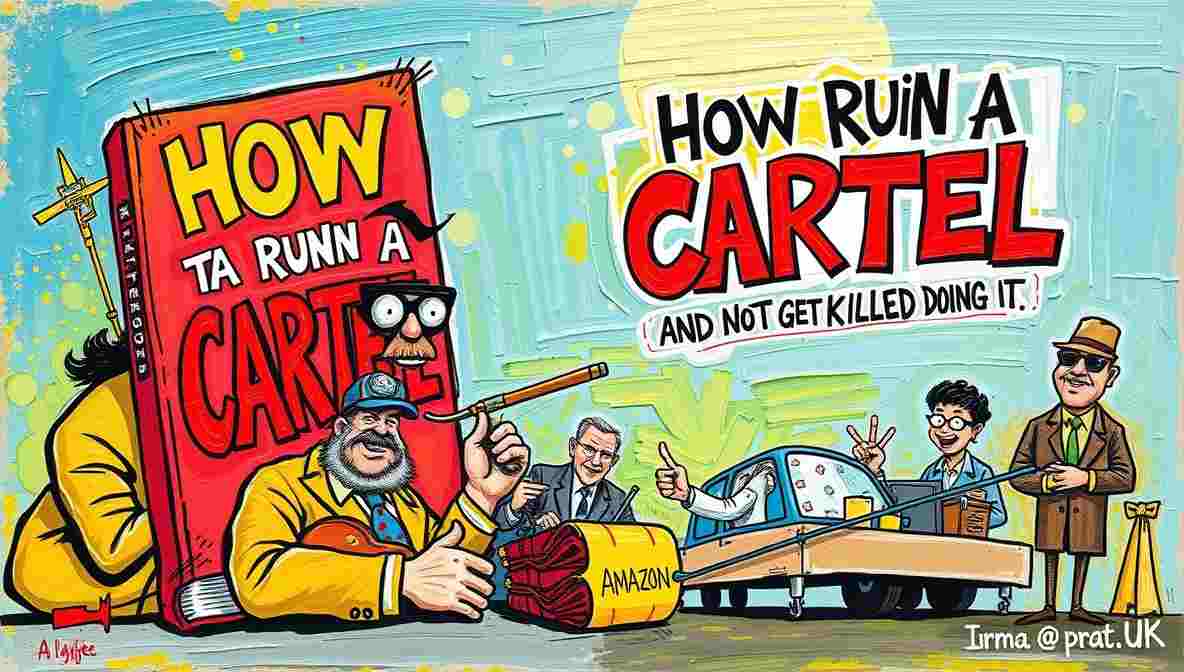
Killing El Mencho Propels His Management Book to #1 on Amazon — Death Proves Excellent Marketing Strategy
In what literary agents are calling “the boldest author publicity stunt since Ernest Hemingway shot himself and boosted paperback sales,” the Killing of Nemesio “El Mencho” Oseguera Cervantes has sent his management memoir, How to Run a Cartel and Not Get Killed Doing It, rocketing to #1 on Amazon’s leadership charts within 24 hours of his death. Critics are baffled. Rival authors are furious. Former high school English teachers are suspicious. But most importantly, it’s now outselling host city souvenir books for the upcoming FIFA World Cup — which is being hosted in Guadalajara, a city currently resembling a post-apocalyptic film set.
The Rise, Fall, and Posthumous Rise on Amazon

The news of El Mencho’s death sent shockwaves through both Mexico and the global publishing industry. The military operation in Tapalpa, Jalisco — involving Mexican security forces with confirmed U.S. intelligence support — didn’t just dismantle a cartel command structure. It turbo-charged what is now being called the year’s most unlikely bestseller. This book — equal parts autobiography, management guide, and accidental absurdist humor — skyrocketed to #1 on Amazon’s leadership charts. Literary critics are baffled; best-selling authors are jealous; former high school English teachers are suspicious. But most importantly, it’s now outselling souvenir books for the upcoming FIFA World Cup.
El Mencho’s Memoir Outsells Everyone — Except Maybe Tiger King 2: Still Tiggering
How to Run a Cartel and Not Get Killed Doing It reached #1 despite the author being, well, dead — proving once and for all that audience engagement beats survival rates. Cartel employees reportedly held virtual book clubs to discuss leadership chapters while simultaneously blocking highways with flaming SUVs. The Guardian described the roadblocks as “organised chaos,” which — in fairness — is also a pretty good description of Chapter 4.
Chapter 1: Leadership Lessons From the Trenches
Anyone flipping through the introductory chapter will find it starts at “Establishing Authority Without a Title.” The next section? Securing your perimeter so no one can actually enter your compound. Critics argue it’s a fascinating metaphor for office politics, while military strategists say it’s literally about armed guards and drone strike surveillance. Either way, one reader wrote: “It transformed how I see my TPS reports.”
Indeed, while most corporate leadership books preach empathy and transparency, El Mencho’s advice is refreshingly straightforward. Take this excerpt from chapter 3: “Surround yourself with people who will protect you — or make sure they’re too afraid to do otherwise.” Management consultants are now split on whether this is a metaphor or ignored at their own risk.
The book’s chapter on conflict resolution begins with “Step one: don’t pick fights with armies,” which turned out to be crucial advice the author failed to follow. A secret afterword reveals that El Mencho never read a management book before writing his own, making it the most authentic book ever published about management. Amazon reviewers complained the table of contents was mostly photos of rocket launchers, but gave it five stars for “strategic boldness.” Every copy sold allegedly comes with a free “block roads and burn vehicles responsibly” checklist.
Chapter 2: Conflict Resolution (Maybe Skip This One)
If there’s one chapter that keeps strategic analysts awake at night, it’s “Conflict Resolution Without Mediators.” Here El Mencho outlines how he approached turf wars and rival disputes with the elegance of someone organising a barbecue — if the barbecue included rocket launchers and forfeited limbs.
Some quotes are truly matrimonial in tone. “If negotiations fail, escalate smartly,” he writes. Corporate negotiators are now debating whether “escalate smartly” is applicable to union negotiations or lunchroom microwave etiquette.
Academic commentary on the text has ranged from “a troubling but fascinating case study” to “please keep this off my syllabus.” Yet strangely, the Harvard Business Review just published a paper referencing his chapter 5 on organised logistics and supply chain. It apparently fits next to “Six Sigma” in the business section, though readers have frequently complained the diagrams are just photos of armored vehicles. Literary critics have described the book as “Mario Puzo meets Wall Street Journal management tips with extra napalm.” Book launch events were canceled due to cartel members treating defense forces’ vehicles like piñatas afterward.
The Roadblocks Metaphor (Sometimes Literally)
Perhaps the most ironic chapter — “When Someone Blocks Your Path: A Metaphor” — has inspired corporate teams worldwide. Yet in Mexico, the metaphor was disturbingly literal: muffled highway blockades, burning cars, and chaos in cities like Guadalajara and Puerto Vallarta followed the news of El Mencho’s death.
According to Mexican state officials, schools were canceled and civilians were told to shelter in place while cartel members reacted violently to the forceful loss of their boss. The block roads and think deeply about your core values chapter, ironically, became a social phenomenon in multiple states. More than 250 blockades were reported across 20 Mexican states before authorities cleared most of them. American tourists were stranded in Puerto Vallarta after United Airlines and Air Canada suspended flights. The U.S. State Department issued shelter-in-place advisories for Jalisco, Tamaulipas, Michoacán, Guerrero, and Nuevo León.
Some anthropologists have speculated these physical roadblocks are a protest riddle: If you can’t get to your leadership book signing, what’s the point of stationery? One tourist in Guadalajara said: “I thought the flaming buses were part of a performance art installation about Amazon rankings.”
A Poll of Readers Found 92% Bought It for “Research”
The remaining 8% cited “actual management insight,” and 0% admitted to buying it for the free bookmark shaped like a grenade. The author bio is now written in past tense by a Mexican army spokesperson. Philosophical scholars have begun quoting the book in business ethics classes — as “anti-case studies.” Meanwhile, El Mencho’s widow has launched a podcast called Cartel Management 101 that now ranks higher than Serial. The United States issued cautionary travel warnings for book signing tours across Mexican states. Local bookstores are selling the paperback alongside How to Outsmart Your Ex in 10 Easy Steps, generating curious crossover buyers.
Lessons in Risk Management
El Mencho’s section on risk management remains controversial. He argues that a good leader should always plan for contingencies — including betrayal from within. The paperback version hilariously includes a bookmark marked “Exit Strategy Checklist.” It’s printed on textured paper reminiscent of an official government report, though critics say it’s more like a treasure map that leads to both enlightenment and imminent danger.
Meanwhile, U.S. travel advisories — skeptical of the rising enthusiasm around the book — are humorously advising Americans in popular tourist destinations to “avoid large crowds and unexpected caravan formations.” Obviously this reads with different tones depending on whether you’re in a boardroom or outside a hotel in Puerto Vallarta.
Academic Praise or Satirical Outrage?
Philosophy departments worldwide have begun citing the book in ethics discussions. Some professors call it a paradoxical testament to human ambition. Others argue it’s a cautionary tale about hubris and the myth of invulnerability. One ethicist told reporters, “It’s like Sun Tzu but with more swagger and less legal tender.”
Leadership magazines love its irreverence — “Think outside the box?” one columnist quipped. El Mencho kicked the box down a mountain, set it on fire, and then wrote about it. Meanwhile, logistics journals note the meticulous sections on supply lines are eerily similar to supply chain optimisation frameworks — only with significantly fewer compliance forms and more roadside barricades.
PBS NewsHour noted that El Mencho’s death “decapitated” the CJNG — which, given the cartel’s documented methods, is perhaps the most on-brand news cycle in publishing history.
Retail Phenomenon and Cultural Impact
The book’s pop-culture ascent is undeniable. Amazon sellers are already offering signed copies (unauthorised), tote bags that say “I Survived the El Mencho Blockade,” and bookmarks shaped like mini cigar tubes. Podcasts discussing the book now outnumber those about the latest true crime docuseries.
Local bookstores in Guadalajara report record foot traffic — often from curious tourists who walked right into the store thinking it was a book about local cuisine. One clerk said: “We’ve sold more copies of this book than we ever did sales of 50 Shades of Corporate Synergy.”
The Final Punchline: Killing Your Way to the Top of the Charts
In the end, the bestselling lesson from How to Run a Cartel and Not Get Killed Doing It seems to be this: sometimes the best way to reach the top of the charts is not through peaceful negotiation, impeccable credentials, or thoughtful insight — but through sheer, chaotic legend. And perhaps a timely headline. 📚🔥
Nemesio Rubén Oseguera Cervantes, 59, born into poverty in Michoacán, dropped out of primary school, picked avocados, immigrated illegally to the U.S., got deported twice, joined the police, then joined the cartel, eventually built Mexico’s most powerful criminal organisation — and somehow still found time to write a management book. You have to admire the hustle, even if the exit strategy needed work.
DISCLAIMER: This satirical article was written as a collaboration between two sentient beings — a veteran satirical journalist and a philosophy major turned dairy farmer — and is not to be blamed on AI. Any resemblance to real management books or corporate strategies is purely for comedic effect.
Auf Wiedersehen, amigo!