

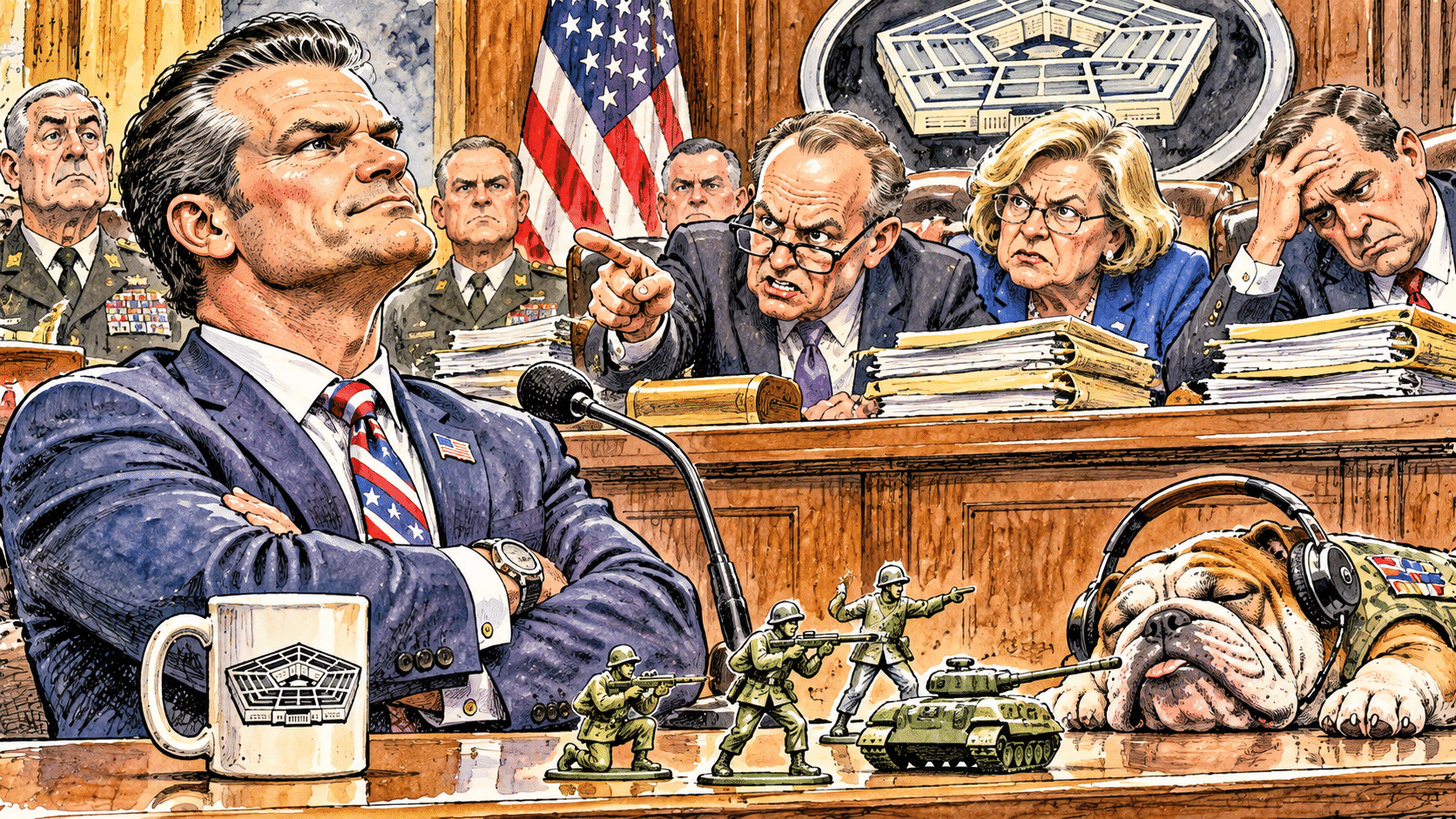
WASHINGTON, D.C. — Defense Secretary Pete Hegseth emerged from another Washington confrontation with a remarkable discovery: Congress has developed a weapons system capable of firing paperwork at a rate no foreign military can match.
After lawmakers circulated demands for hearings, explanations and more hearings about the explanations, Pentagon administrators proposed a new battlefield doctrine. Enemy commanders would no longer need to surrender. They could simply file a grievance with congressional human resources and wait for the United States to investigate itself.
Pentagon Impeachment Debate Creates a New Branch of Warfare
“The old method involved aircraft, ships and infantry,” said Pentagon logistics adviser Colonel Frank Stapleton. “Our new system deploys an urgent request for documents, followed by a second urgent request asking why the first urgent request was not answered by Tuesday.”
Stapleton demonstrated the procedure with a scale model of an enemy bunker. The bunker was surrounded by subpoenas, budget amendments and seventeen television commentators. Within minutes, its commander requested asylum in a country with fewer committee chairmen.
Hegseth reportedly suggested the military might focus on readiness, recruiting and actual national defense. A congressional aide explained that readiness was important, but first the committee needed to establish whether the word should be capitalized in its report.

Congress Discovers Paperwork Has Strategic Range
The Constitution’s impeachment provisions set out the offices and grounds covered by impeachment, while the Department of Defense publishes information about the military’s missions and organization. These are serious institutions. Washington’s ability to turn their disputes into a never-ending television season is considerably less serious.
At a budget hearing, a lawmaker asked whether the Pentagon could reduce administrative spending. An official answered that the department had created a 400-person task force to study the issue. Its first recommendation was to hire more people to track how many people were studying reductions.
Another legislator demanded a detailed accounting of every military coffee mug. The Pentagon submitted 900 pages. Congress demanded a supplement explaining why the mugs were not bipartisan.
Enemy Forces Directed to Congressional Human Resources
Under the new protocol, hostile forces would receive a welcome packet, a workplace conduct handbook and a confidential reporting number staffed between 10 a.m. and 10:15 a.m. on alternate Thursdays.
“We want adversaries to feel heard,” said the director of strategic complaint resolution. “Then we will place them on hold until they lose the will to fight.”
A general objected that military operations sometimes require immediate decisions. The director agreed and promised to form a rapid-response committee within eighteen months.
By week’s end, the Pentagon announced a successful trial. An opposing force had abandoned its position after receiving 63 duplicate forms and an email requesting its preferred pronouns for the after-action report.
Congress immediately opened an investigation into why the forms had been printed in color.