

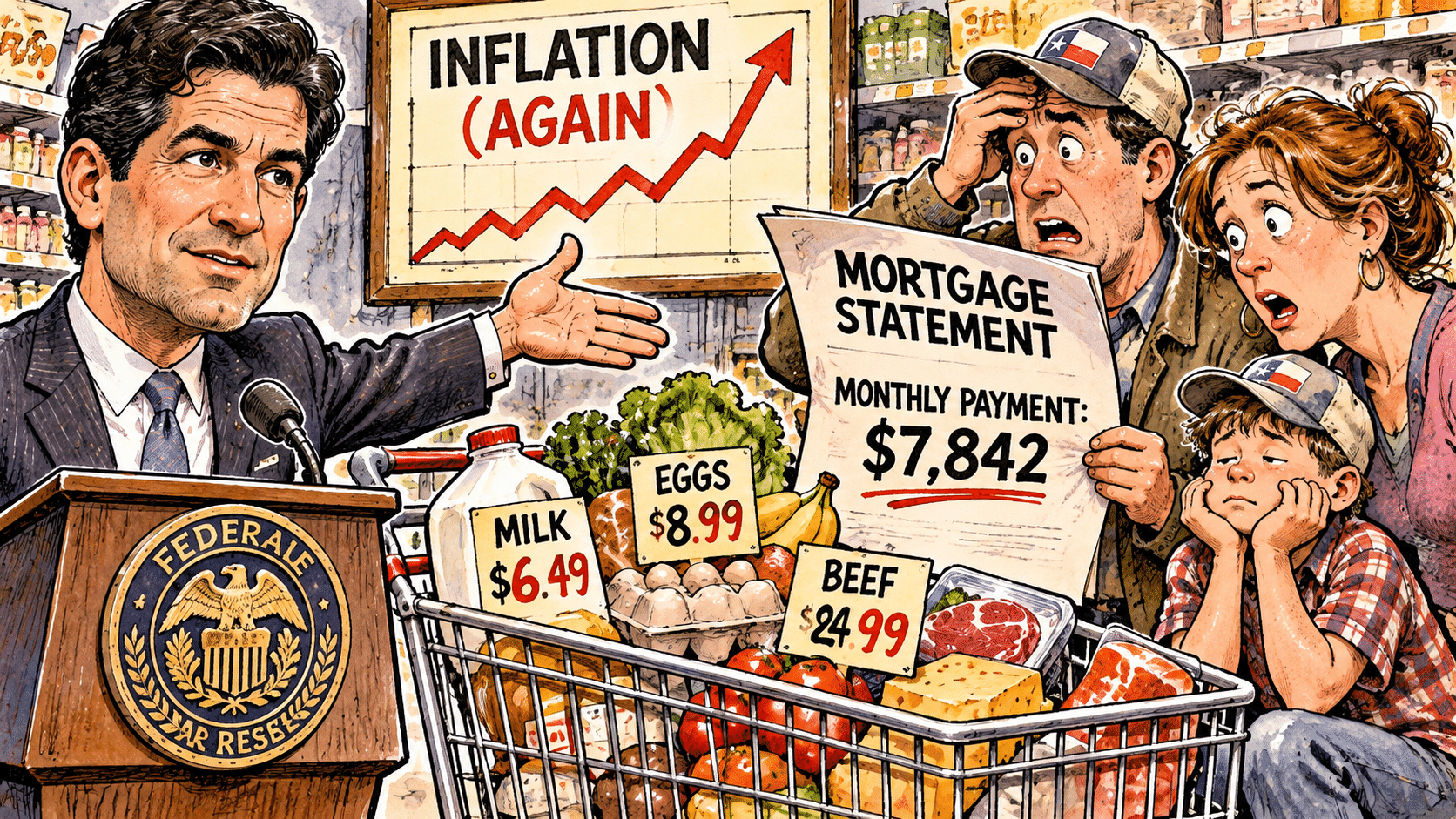
WASHINGTON, D.C. — Federal Reserve Chairman Kevin Warsh has unveiled a bold new affordability strategy: Americans can afford groceries by abandoning the outdated luxury of living indoors.
The plan follows renewed concern about prices, borrowing costs and the peculiar economic condition in which a household can earn more money than ever before and still feel financially mugged by a carton of eggs.
Federal Reserve Finds the Missing Room in the Household Budget
“The problem isn’t that families lack money,” explained senior monetary consultant Harold Spreadsheet. “The problem is that they keep wasting it on shelter. Eliminate the mortgage and suddenly there’s enough for cheese, two avocados and possibly a birthday cake.”
Warsh’s presentation included a chart demonstrating that a family with a $5,000 mortgage could save $5,000 every month by not paying it. Economists praised the calculation as mathematically impeccable and legally adventurous.
One Maryland couple immediately tested the theory by selling their home and moving into a supermarket parking lot. They reported improved access to fresh produce, although the store manager insisted their tent was blocking the seasonal pumpkin display.

Groceries Become Affordable After Housing Is Removed
The Bureau of Labor Statistics Consumer Price Index tracks changes in consumer prices, including food and shelter. The Federal Reserve’s monetary policy resources explain how interest-rate decisions relate to inflation and employment.
These institutions have not yet developed a statistical category for the American who can afford the refrigerator but not the electricity, the milk but not the refrigerator, or the house but not the groceries required to make living in it worthwhile.
At a supermarket in Ohio, shopper Denise Porter examined a package of ground beef and asked whether it included a deed. The butcher explained that the beef was sold by the pound, not the square foot. Porter said she would take whichever option offered the lower monthly payment.
Meanwhile, mortgage lenders have begun offering a new thirty-year loan product with a convenient payment schedule extending several years beyond the borrower’s anticipated lifespan. Applicants must provide proof of income, two references and a written explanation of why they insist on owning a roof.
Economists Celebrate a Historic Victory Over Arithmetic
Warsh’s advisers recommended that families consolidate spending by eating dinner at home, then conceded that the recommendation works best for households that still have one.
A second proposal urged consumers to substitute cheaper products. Steak could become chicken, chicken could become beans, and beans could become a motivational speech about resilience. Nutritionists objected that speeches contain insufficient protein, although Washington already produces them in industrial quantities.
By Friday, the affordability task force announced success. A typical family could now purchase a week’s groceries by redirecting the money previously reserved for housing, transportation and medical care.
“This is a tremendous breakthrough,” Spreadsheet declared. “For the first time in history, Americans can have everything they need, provided they stop needing everything else.”
The committee adjourned for lunch at a restaurant where the bread was complimentary and the parking cost $38.