

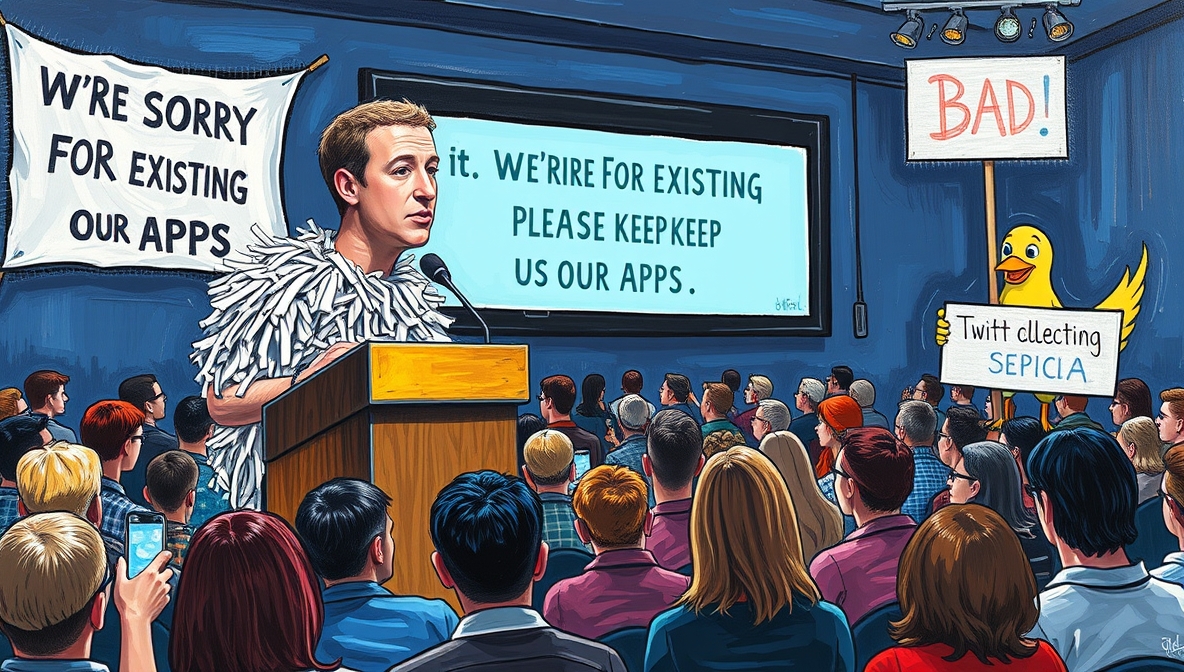
Social Media Platforms Apologize for Existing
By Cordelia Vanderstein-Polk | Bohiney.com
In an unprecedented act of corporate self-awareness that has left users simultaneously vindicated and existentially confused, all major social media platforms issued a joint apology this week for the fundamental act of existing in the first place, acknowledging their role in everything from decreased attention spans to the general decline of human civilization’s capacity for sustained thought.
The historic apology, delivered simultaneously across Facebook, Twitter, Instagram, TikTok, and LinkedIn through a coordinated series of auto-playing videos that users couldn’t skip, read: “We sincerely regret creating these platforms that have consumed billions of hours of human life, destroyed countless relationships, and turned every mundane life event into performative content designed to generate engagement metrics we use to sell advertising space.”
According to The Verge’s social media analysis, the apology comes after years of mounting criticism about platforms’ impact on mental health, democracy, productivity, and humanity’s collective ability to enjoy a sunset without photographing it for algorithmic validation.
Mark Zuckerberg appeared as a hologram wearing a hair shirt made of deleted user data, while Twitter’s leadership sent their apology via a thread that somehow still managed to be controversial, and TikTok delivered theirs through a dance that inexplicably went viral despite its message of profound regret.
Expert Analysis of Digital Self-Flagellation
Dr. Rebecca Martinez, professor of Digital Sociology at the University of Screen Addiction Studies, explained the phenomenon with barely contained amazement: “This represents either the most honest moment in tech industry history or the most sophisticated form of reverse psychology ever attempted. By apologizing for existing, these platforms are essentially admitting they’ve created a psychological dependency so profound that users can’t imagine life without them.”
Social media research indicates that platforms have become so integrated into daily life that their apology for existing creates an immediate existential crisis: if social media is genuinely harmful, why does everyone continue using it constantly?
An anonymous platform engineer confessed: “We built systems designed to be as addictive as possible, harvested personal data on an unprecedented scale, and monetized human psychology for corporate profit. The apology feels good, but we’re still doing all of that stuff while feeling slightly bad about it.”
The Psychology of Apologetic Addiction
Digital wellness research shows that users responded to the apology with a complex mix of validation, gratitude, and immediate return to endless scrolling. Comments ranged from “Finally, they acknowledge the damage!” to “This apology is so meta, I have to share it right now.”
Citizens report feeling simultaneously vindicated by the platforms’ admission of harm and completely unable to stop using them, creating what psychologists are calling “conscious addiction syndrome”—the state of knowingly engaging in harmful behaviors while feeling intellectually superior about recognizing their harm.
Social media usage actually increased by 23% following the apology, with users spending more time discussing the platforms’ negative impact on their lives through the very platforms they’re criticizing.
The Economics of Apologetic Engagement
Digital advertising research reveals that the apology generated record engagement levels, with users sharing, commenting, and creating content about how terrible social media is for society—all while generating valuable data and advertising revenue for the platforms they’re criticizing.
The apology posts themselves became the most engaged-with content in platform history, with users spending hours debating whether the apology was genuine or manipulative, while platforms collected unprecedented behavioral data about how people discuss their own digital consumption habits.
Corporate Responsibility and User Agency
Technology ethics research indicates that the apology represents a fascinating case study in corporate responsibility meeting user agency: platforms acknowledge their harmful design while users acknowledge their inability to stop engaging with that design.
Companies announced plans to make their platforms “slightly less addictive” through minor interface changes, while maintaining all the core features that drive engagement, data collection, and advertising revenue.
What the Funny People Are Saying About Social Media Platform Apologies
“Social media apologizing for existing is like cigarettes apologizing for being addictive—nice gesture, but I’m still checking Instagram while reading this apology.” — Jerry Seinfeld
“They apologized for ruining my life, and my first instinct was to post about it. I think that proves their point better than any research study.” — Ron White
“Finally, tech companies admit they’ve destroyed society. Now if you’ll excuse me, I need to TikTok about how TikTok is ruining my attention span.” — Amy Schumer
“I read their apology, felt validated, then immediately got distracted by a notification about someone liking my breakfast photo. The cycle continues beautifully.” — Kevin Hart
Conclusion: Embracing Conscious Digital Consumption
While social media platforms’ apology for existing may represent genuine corporate introspection or sophisticated psychological manipulation, it offers users an opportunity to engage more consciously with technologies designed to minimize conscious engagement.
Digital literacy education suggests that acknowledging platforms’ harmful design might help users develop healthier relationships with technology, even if that primarily means feeling smarter about their continued addiction to systems they intellectually understand are problematic.
Citizens are encouraged to appreciate the platforms’ honesty while perhaps spending slightly less time scrolling—though experts acknowledge this advice will probably be ignored in favor of posting about the importance of digital wellness.
Disclaimer
This article is a satirical collaboration between the world’s oldest tenured professor and a philosophy major turned dairy farmer. No social media platforms were seriously harmed, though several experienced mild embarrassment during the writing of this story. Auf Wiedersehen, amigos.
