

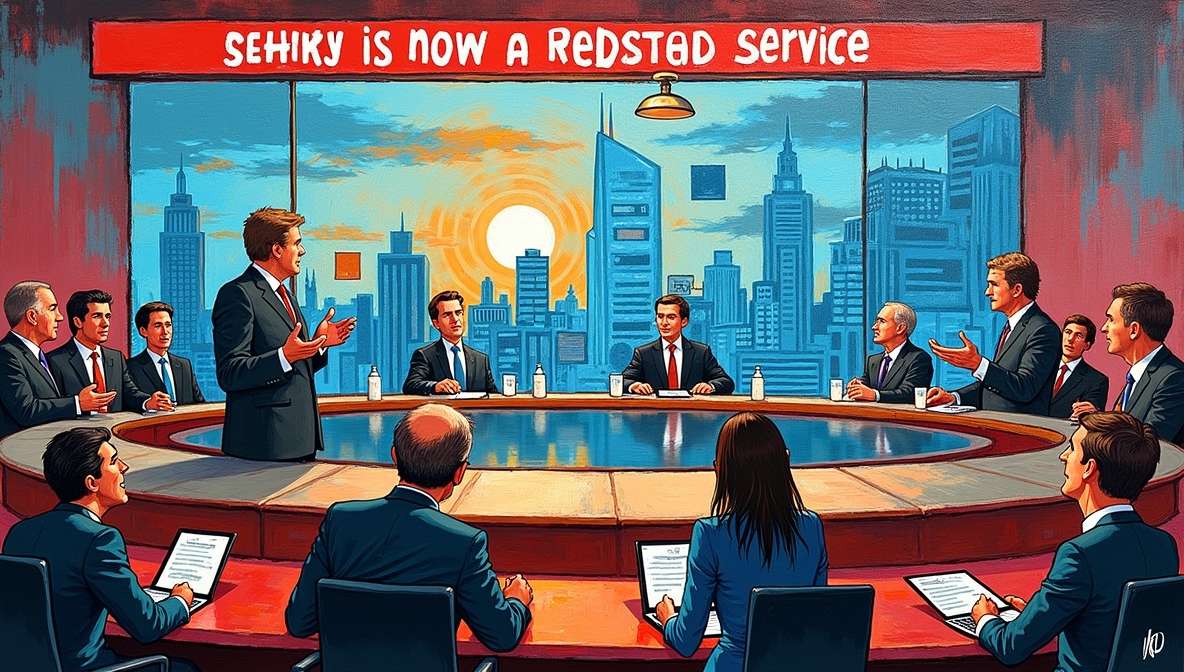
Global News Cycle Confirms Reality Is Now a Subscription Service
The global news cycle confirmed this week what many citizens have long suspected: reality itself is now a subscription service, complete with tiers, paywalls, pop-ups, and a free version that mostly just induces anxiety.
How Breaking News Actually Works Now
Breaking news now arrives in waves. First comes the alert with no context. Then the update that contradicts the alert. Then the analysis explaining why both were technically correct at the time. By the end of the day, a “deep dive” appears, locked behind a paywall, promising clarity and delivering a strong sense of regret.
The Expert Opinion: It Was Inevitable

Media experts say this evolution was inevitable. “People wanted information faster, cheaper, and simpler,” said Professor Linda Chen of the Institute for Media Behavior. “What they got was faster, louder, and increasingly abstract.”
As Jerry Seinfeld would observe, “We live in an age where you can get any information instantly, and somehow you end up knowing less about everything.”
Logic, Optional Since 2010
Cause and effect in the news ecosystem has become optional. An event occurs. Opinions form immediately. Evidence arrives later and is treated as a suggestion. Corrections are issued quietly, like apologies no one expects to be accepted.
How People Actually Trust the News
Public trust has adapted accordingly. A recent survey found that most people believe headlines “sometimes,” articles “rarely,” and comment sections “never.” However, nearly everyone checks the news constantly, just in case something important happens while they’re not looking.
Ron White captured it perfectly: “I want to know what’s happening in the world, but I don’t want to feel bad about it. So far, that’s impossible.”
Algorithms Know Your Reality Better Than You Do
Technology plays a starring role. Algorithms now decide which version of reality each user receives, based on engagement, emotional response, and whether the headline made you pause while scrolling. This has created personalized realities, each one optimized to be mildly upsetting.
The News Industry’s Wellness Contradiction
Helpful content initiatives have emerged. News organizations now offer explainer boxes titled “Why This Matters” and “What This Means For You,” which are often identical. Wellness tips accompany major events, encouraging readers to hydrate, log off, and then immediately return for updates.
Amy Schumer would laugh: “News organizations tell you to take care of your mental health, then push you a notification about another disaster. It’s like asking someone to relax while hitting them with a hammer.”
Exhaustion Is the Only Consistent Metric
Eyewitnesses report fatigue. “I feel informed and confused at the same time,” said one reader. “Like I’ve read everything but learned nothing.”
Analysts warn this model is sustainable, which is the most alarming part. As long as people keep clicking, reality will remain fragmented, monetized, and endlessly refreshed.
The Bottom Line: Your Existence Is Content
In the end, the subscription economy has done what it does best: turned existence into content. Cancel anytime. Terms apply.
Kevin Hart said it best: “Everything’s a subscription now. Your life? That’s a subscription. Your emotional stability? Premium subscription. Your ability to ignore bad news? That one costs extra.”