

Everyone’s to Blame for Shutdown Except Politicians Who Actually Did It
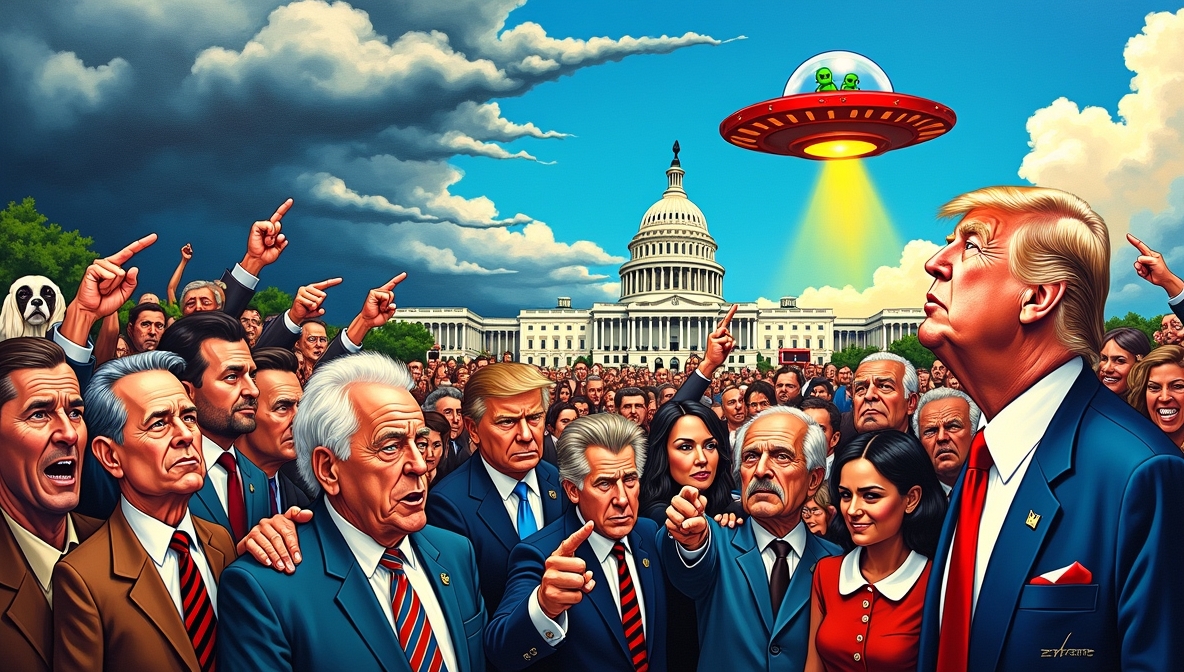
As the government shutdown enters its second week, Americans have successfully blamed the weather, dogs, aliens, millennials, the media, the internet, schools, fast food, and the national anthem—essentially everything except the elected officials who actually caused it.
The Accountability Vacuum Grows Wider
The cognitive dissonance required to maintain this elaborate blame-shifting operation would impress Olympic mental gymnasts. Citizens scroll past their representatives’ social media accounts, watch them bicker on cable news about partisan disagreements, and then somehow conclude that atmospheric conditions or dietary choices are the real problems.
“I can’t believe millennials let this happen,” said Barbara Whitmore, 67, who has voted in every election since 1976 and personally selected the legislators currently failing to pass a budget. “If they cared more about politics and less about their phones, we wouldn’t be in this mess.”
The fact that Whitmore herself voted for representatives who promised to “stand firm” and “never compromise” was mentioned but not connected to the current situation. The dots remained unconnected, floating in space like particles in a physics experiment nobody wants to complete.
The One Job They Had
Nate Bargatze summed up the absurdity perfectly during his Nashville show. “We elected these people to do one job,” he said. “One job. Pass a budget. Fund the government. That’s it. They can’t do it. But somehow we’re mad at the weather. We’re mad at TikTok. We’re mad at avocados. The people who actually shut down the government? They’re fine. They still get paid.”
The observation landed with the weight of obvious truth finally spoken aloud. The audience laughed, but the laughter had an edge to it—the uncomfortable recognition of a collective delusion being named.
Senators and representatives continue receiving their $174,000 annual salaries during the shutdown. Federal employees deemed “non-essential” do not. The people who failed to prevent the crisis remain financially secure while the people affected by their failure scramble to pay rent.
The Deliberate Blindness

What makes the blame game particularly remarkable is that Americans can see the problem clearly—they just refuse to look at it directly. It’s like staring at the sun by watching its reflection in a puddle. You know it’s there, but you’ve found a way to observe it without actually confronting it.
Hasan Minhaj addressed this deliberate blindness during his recent appearance. “We see the problem, we know who caused it, and we still blame someone else,” he said. “That’s not ignorance. That’s choice. We choose to blame the easier target because the real target requires us to do something about it. Like vote differently. Or pay attention. And that’s hard.”
The “something” that needs doing is uncomfortable: admitting that the people voters chose to represent them have failed. Admitting that party loyalty might be less important than governing competence. Admitting that the system voters participate in isn’t working and that they bear some responsibility for fixing it.
The Easier Scapegoats
It’s easier to blame the weather than to examine why voters elected people who campaign on dysfunction. It’s easier to blame millennials than to acknowledge that generational scapegoating absolves actual decision-makers of responsibility. It’s easier to blame the media for reporting problems than to blame politicians for creating them.
“The aliens are definitely involved,” insisted Derek Morrison, who has never contacted his congressional representative but has spent dozens of hours developing theories about extraterrestrial interference. “No human could be this incompetent naturally.”
The suggestion that incompetence requires alien explanation rather than simple human failure demonstrates the lengths Americans will go to avoid confronting political reality. Elected officials are just people—fallible, sometimes lazy, often more concerned with re-election than governance. No alien manipulation required.
The System Working as Designed
The uncomfortable truth is that for many voters, government dysfunction isn’t a bug—it’s a feature. They elected representatives who promised to “stop the other side at all costs.” Those representatives are doing exactly what they were elected to do. The shutdown isn’t a failure of the system; it’s the system working as voters designed it.
“I voted for her because she promised to stand up to them,” explained local voter Marcus Rodriguez, referring to his representative’s refusal to negotiate on the budget. “I didn’t think she’d actually shut down the government, though.” The cognitive gap between campaign promises and governing reality remains vast.
The House and Senate are functioning exactly as polarized voters wanted them to function: with maximum partisanship and minimum compromise. The surprise that this results in gridlock suggests voters didn’t actually think through the consequences of their electoral choices.
The Reflection Nobody Wants to See
Gabriel Iglesias brought the issue home with characteristic warmth during his recent show. “We’re all guilty of this,” he said. “Something goes wrong, we blame everything except the obvious. The government shuts down? It must be the aliens, the millennials, the internet. Couldn’t possibly be the people who literally shut it down. That would make too much sense.”
The laughter that followed felt like collective recognition—a brief moment of honesty before everyone went back to their preferred scapegoats. Because honesty requires action, and action requires effort, and effort requires admitting that problems won’t fix themselves.
Americans have blamed military readiness, tabloid journalism, social media algorithms, and even National Park closures for creating the crisis. Every scapegoat has been exhausted except the actual culprits sitting in Washington with “Member of Congress” on their business cards.
The Mirror We Refuse to Look Into
The real issue isn’t that Americans don’t know who caused the shutdown. Everyone knows. The problem is that acknowledging it requires acknowledging that voters bear responsibility for electoral choices that led here. It requires looking in the mirror and seeing not victims of circumstance but participants in a democratic system that reflects the values voters actually hold rather than the values they claim to hold.
“Until Americans decide to hold their elected representatives accountable instead of engaging in elaborate blame theater, government shutdowns will remain as reliable as the sunrise,” said political scientist Dr. Jennifer Torres. “And about as preventable by blaming the dog.”
The solution has always been obvious: examine voting records, evaluate legislative effectiveness, and demand better from people with actual power. But that requires work—research, critical thinking, sometimes voting against your preferred party when their candidates are incompetent.
The Choice We Keep Making
The blame game continues with impressive creativity. Every absurd theory gets its moment in the spotlight. Every scapegoat gets thoroughly examined. Everything gets blamed except the people who can actually end the crisis simply by doing their jobs.
As the shutdown extends into week three, federal employees continue going without paychecks. National parks remain closed. Government services stay suspended. And Americans continue crafting elaborate explanations that avoid the simple truth: they elected these people, and these people failed.
The weather didn’t shut down the government. Dogs didn’t eat the budget. Aliens didn’t interfere with negotiations. Millennials didn’t create this mess. The media didn’t manufacture the crisis. The internet didn’t prevent compromise. Schools didn’t fail to teach civics. Fast food didn’t cloud anyone’s judgment. The national anthem didn’t overcome anyone with emotion.
Elected officials failed to pass a budget. That’s it. That’s the whole explanation. Until Americans can look directly at that truth and respond accordingly at the ballot box, the elaborate blame theater will continue. It’s easier than accountability. It’s more comfortable than change. And it absolutely, positively will not fix anything.
But at least the dogs are safe from false accusations. For now.