

Kamala Harris Denies All: 15 Hilarious Excuses for Distancing Herself from Joe Biden and the Border Crisis”
From ‘Boarder Czar’ to Coffee Breaks: The Vice President’s Creative Ways to Avoid Responsibility
Kamala Harris’s Top Excuses: A Masterclass in Political Evasion
Washington, D.C. —In the halls of American politics, there is a time-honored tradition of dodging responsibility. Whether it’s a controversial policy, an unpopular decision, or simply the consequences of being in power, politicians have developed an arsenal of excuses to shield themselves from the fallout. Vice President Kamala Harris has proven to be particularly adept at this art, offering a wide range of explanations, deflections, and justifications that range from the absurd to the downright hilarious. Today, we take a deep dive into the top excuses Harris has employed to distance herself from President Joe Biden’s policy failures, particularly the border crisis.
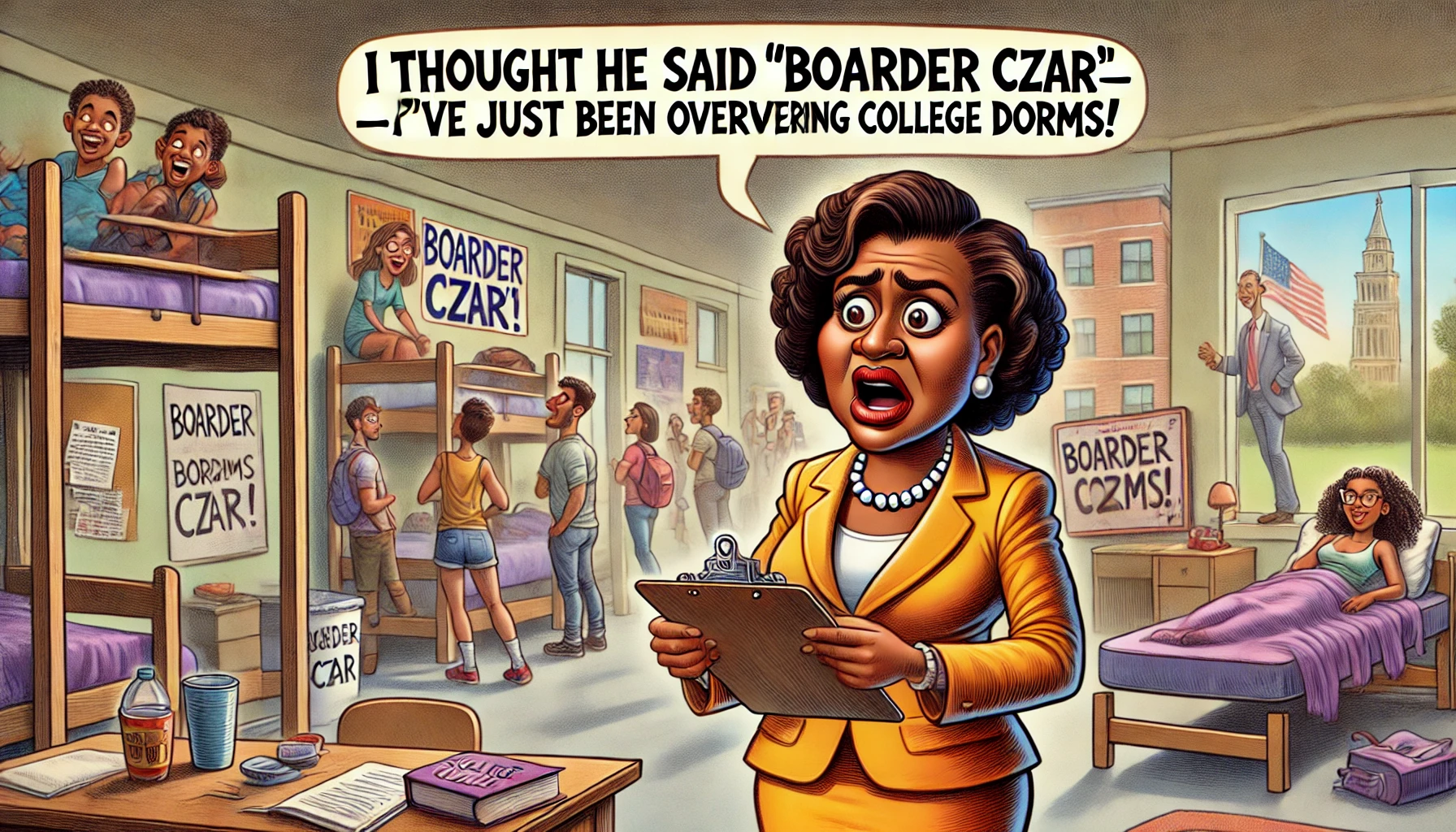
“I Thought He Said ‘Boarder Czar’—I’ve Just Been Overseeing College Dorms!”
It’s easy to see how someone could misinterpret a title, especially in the fast-paced world of Washington politics. Harris’s claim that she thought she was the “Boarder Czar,” responsible for overseeing college dorms, rather than the “Border Czar,” tasked with addressing the U.S.-Mexico border crisis, is both laughable and a brilliant example of political evasion. After all, who could blame her for focusing on ensuring students had adequate housing? Dorms do, after all, require attention.
Journalists have pointed out that while Harris was allegedly overseeing dormitories, the border crisis was escalating. Reports from the New York Times highlighted the record number of illegal crossings and the overwhelming strain on border facilities. Yet, Harris remained notably absent from the situation, supposedly busy with her misunderstood role.
“I Was Just the Vice President, Not the Vice-President-in-Charge!”
Harris has repeatedly invoked the classic defense of plausible deniability. In her mind, the role of the Vice President is largely ceremonial—stand beside the President, nod in agreement, and occasionally attend a ribbon-cutting ceremony. The real decisions, she suggests, are made by the President himself.
This excuse conveniently shifts the blame back onto President Biden, implying that any policy failures are his alone to bear. However, critics have noted that Harris has been more than willing to take credit for successes, such as the administration’s vaccine rollout. It seems that in politics, the rule is to claim the wins and deflect the losses—a strategy Harris has mastered.
“I told Joe we should’ve had a Plan B, But he thought that was a medical policy!” — miscommunication can happen to the best of us.
“I Was Focused on Important Matters—Like Making Sure the Printer Had Paper!”
One of Harris’s more relatable excuses involves her day-to-day office tasks. “You wouldn’t believe how many memos we go through in the White House,” she remarked in a recent interview. This excuse is both humorous and effective in humanizing Harris. After all, who hasn’t dealt with the frustration of an empty printer in the middle of an important task?
But while Harris was allegedly ensuring that the White House printers were well-stocked, the border situation continued to spiral out of control. A report from Politico detailed the growing humanitarian crisis, with thousands of migrants being held in overcrowded facilities. The contrast between the gravity of the situation and Harris’s excuse highlights the absurdity of her claim.
“Joe Who? I Thought My Boss Was That Guy from Scranton!”
In a rare moment of humor, Harris once joked that she thought her boss was “that guy from Scranton,” a reference to President Biden’s hometown. This excuse, while clearly tongue-in-cheek, serves as a subtle way of distancing herself from Biden’s more controversial decisions.
Critics have pointed out that Harris’s attempts to create distance between herself and Biden have become more frequent as the administration faces increasing scrutiny. From the botched withdrawal from Afghanistan to the ongoing border crisis, Harris has been careful to keep herself at arm’s length from the fallout.
“I Was on an Extended Coffee Break During That Whole Border Crisis Thing.”
Harris’s love of coffee is well-documented, and she’s not above using it as an excuse. “You know, those White House coffee breaks can get pretty long,” she quipped during an interview. While the excuse is humorous, it also serves as a reminder that Harris has been notably absent from some of the administration’s most pressing issues.
The Washington Post reported that despite being named the administration’s point person on immigration, Harris made only one brief visit to the border in the first six months of her tenure. Instead, she focused on meetings with Central American leaders—a strategy that critics argue did little to address the immediate crisis.
“My GPS Was Broken—That’s Why I Never Made It to the Border.”
As technology becomes more integrated into our daily lives, it’s no surprise that Harris would turn to a tech-related excuse. This excuse is both funny and relatable, tapping into the frustrations we’ve all experienced with malfunctioning technology. It also conveniently explains why Harris never seemed to make it to the border, despite being tasked with overseeing the crisis.
But while Harris joked about her GPS, the reality on the ground was far less amusing. A report from ABC News highlighted the dire conditions in border facilities, with children being held for weeks in overcrowded centers. Critics have argued that Harris’s failure to address the crisis head-on has only exacerbated the situation.
“I Thought ‘Border’ Meant the Edges of My Comfort Zone.”
In a rare moment of introspection, Harris claimed that she had misunderstood the entire concept of a border. This excuse cleverly shifts the narrative from political responsibility to personal growth. By focusing on her own development, Harris avoids the messy details of the border crisis while also presenting herself as someone who’s constantly striving to improve—albeit in a somewhat misguided way.
However, as the crisis at the border continued to worsen, Harris’s apparent lack of engagement became more difficult to ignore. Reports from CNN detailed the mounting pressure on the administration to take action, with critics arguing that Harris’s focus on personal growth came at the expense of meaningful policy solutions.
“I Was Focusing on Climate Change… By Which I Mean I Was Adjusting the Thermostat.” — Saving the planet, one degree at a time.
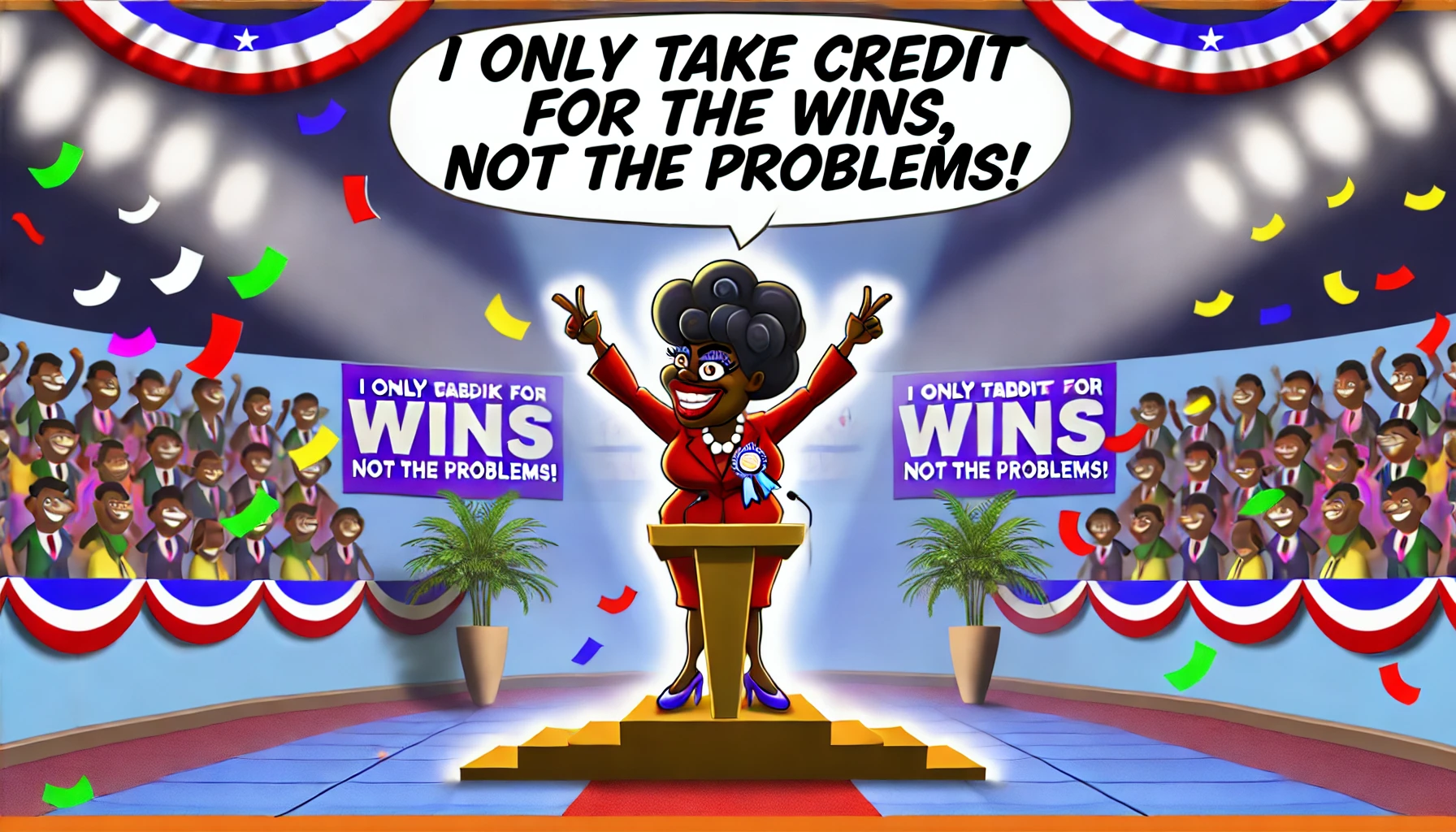
“I Only Take Credit for the Wins, Not the Problems!”
Harris’s willingness to claim credit for successes while deflecting blame for failures is a hallmark of her political strategy. This excuse, while tongue-in-cheek, speaks to a larger trend in politics where leaders are quick to claim credit for successes but equally quick to deflect blame when things go wrong.
A Politico analysis noted that Harris was front and center during the administration’s rollout of the COVID-19 vaccine, a success that she was eager to associate herself with. However, when it came to the border crisis or the chaotic withdrawal from Afghanistan, Harris was notably absent from the spotlight.
“I Was Busy Mentoring Pete Buttigieg on the Art of Public Speaking.”
As one of the rising stars in the Democratic Party, Pete Buttigieg has often looked to Harris for guidance. By positioning herself as a mentor to the next generation of leaders, Harris subtly shifts the focus away from the border crisis and onto her role as a party elder. It’s a clever way of distancing herself from the immediate crisis while still appearing engaged and supportive.
However, as Buttigieg himself faced criticism for his handling of the nation’s transportation issues, some have questioned whether Harris’s mentorship was as effective as she claims. A New York Times piece highlighted the challenges facing Buttigieg, from supply chain disruptions to infrastructure delays, raising questions about Harris’s influence behind the scenes.
“I Never Agreed to Be Border Czar—My Job Description Just Said ‘Smile and Wave.'”
Harris’s suggestion that her role was simply to “smile and wave” highlights the often-ceremonial nature of the Vice Presidency. This excuse taps into the absurdity of the expectations placed on political figures, highlighting the often-vague nature of their responsibilities. By framing her role as one of public relations rather than policy, Harris cleverly sidesteps the issue while also poking fun at the sometimes-ceremonial nature of the Vice Presidency.
However, as the border crisis continued to dominate headlines, Harris’s absence from the issue became increasingly conspicuous. Reports from The Guardian noted that despite being named the administration’s point person on immigration, Harris appeared more focused on public appearances and photo ops than on addressing the crisis at hand.

“I Was in Charge of Borders… But Only the Ones on Office Memos.”
In another instance of wordplay, Harris claimed that she was indeed in charge of borders—just not the ones everyone thought. This excuse plays on the literal and figurative meanings of the word “border,” allowing Harris to distance herself from the crisis while still claiming to have fulfilled her duties. It’s a humorous way of downplaying her involvement without outright denying it.
However, the reality of the border crisis was far from humorous. Reports from NBC News detailed the growing humanitarian crisis, with thousands of migrants being held in overcrowded facilities and conditions deteriorating by the day. Critics argued that Harris’s focus on the borders of office memos did little to address the real issues facing the country.
“I Delegated the Border Crisis to My Trusty Intern—She’s Learning Fast!”
Harris’s commitment to education and mentorship is well-known, and she’s not above using that as an excuse. This excuse highlights Harris’s commitment to education and mentorship, even if it comes at the expense of addressing a national crisis. By delegating responsibility, she positions herself as a leader who empowers others—though it may raise questions about her own level of engagement.
However, critics have pointed out that delegating such a critical issue to an intern is hardly a solution. A report from The Atlantic questioned Harris’s leadership, arguing that her hands-off approach to the border crisis only exacerbated the situation. While mentorship is important, they argued, it should not come at the expense of effective governance.
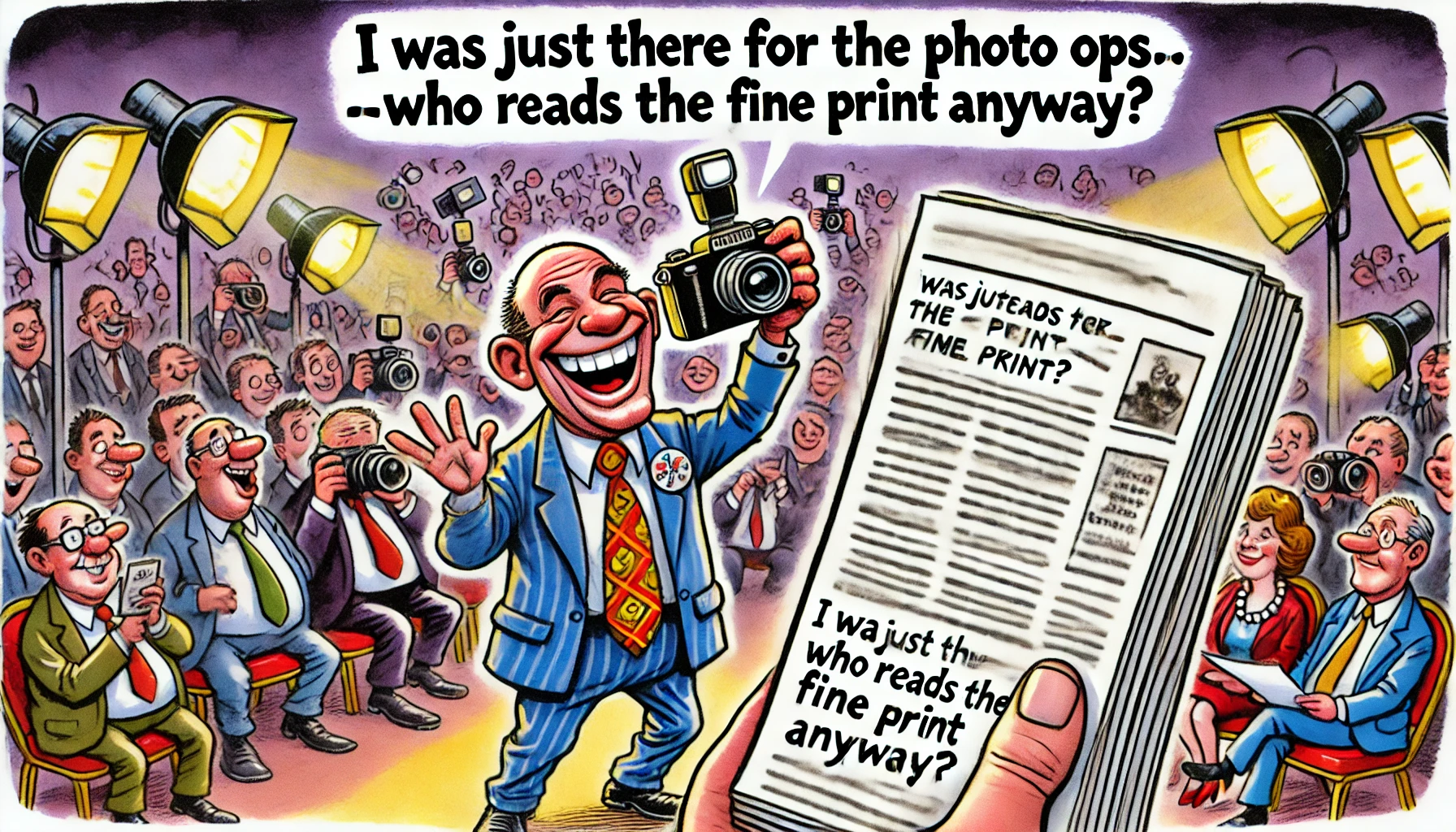
“I Was Just There for the Photo Ops—Who Reads the Fine Print Anyway?”
In a candid moment, Harris admitted that her involvement in the border crisis might have been more superficial than substantive. This excuse taps into the reality of modern politics, where photo ops often take precedence over actual policy work. While Harris’s honesty is refreshing, it also raises questions about her commitment to the issues she’s been tasked with addressing.
The Washington Post reported that Harris’s brief visit to the border in 2021 was more of a photo op than a substantive policy discussion. Critics argued that her visit did little to address the underlying issues, and her subsequent lack of engagement only further highlighted the administration’s failure to take the crisis seriously.
“I Thought We Were Talking About Borders in a Metaphorical Sense.”
In another example of Harris’s wordplay, she claimed that she had misunderstood the entire concept of borders. This excuse, while humorous, highlights the often-abstract nature of political discussions. By framing the issue in metaphorical terms, Harris cleverly avoids the specifics of the crisis while still appearing engaged in the conversation.
However, the reality of the border crisis was anything but metaphorical. Reports from Reuters detailed the growing strain on border facilities and the increasing number of migrants attempting to cross into the United States. Critics argued that Harris’s focus on metaphorical borders did little to address the real-world challenges facing the country.
“My Focus Was on the Northern Border—Canada’s Got Problems Too, You Know!”
Harris’s suggestion that she was focused on the northern border, rather than the southern one, is both humorous and absurd. While Canada does have its own set of challenges, the scale of the crisis at the U.S.-Mexico border was far more pressing. By deflecting attention to the less contentious northern border, Harris once again dodges responsibility for the administration’s failures on immigration.
Yet, as the crisis at the southern border continued to escalate, the deflection became increasingly untenable. Reports from Al Jazeera documented the growing humanitarian crisis at the southern border, with the number of migrant deaths reaching record highs. The contrast between Harris’s focus on the northern border and the dire situation in the south was impossible to ignore.
“I’m Just the Vice President—My Job Is to Stand in the Background and Nod!”
Harris has often downplayed her role as Vice President, suggesting that her primary responsibility is to stand behind the President and nod in agreement. This excuse is both self-deprecating and deflective, allowing Harris to distance herself from the administration’s failures while also highlighting the often-ceremonial nature of her position.
However, critics have pointed out that the Vice Presidency is far from a ceremonial role. As the second-highest office in the land, the Vice President has a significant influence on policy and governance. Harris’s attempt to downplay her responsibilities only further highlights her reluctance to take ownership of the administration’s failures.
“I Thought ‘Build Back Better’ Was Just a Slogan—Not a To-Do List!”
The Biden administration’s “Build Back Better” agenda has been central to its policy platform. However, Harris’s claim that she thought it was just a slogan, rather than a concrete plan, is both humorous and concerning. By downplaying the importance of the agenda, Harris effectively distances herself from its failures while also highlighting the often-abstract nature of political rhetoric.
As the administration struggled to pass key components of the “Build Back Better” plan, Harris’s absence from the legislative process became increasingly noticeable. Reports from The Hill documented the challenges facing the administration, from infighting within the Democratic Party to Republican obstructionism. Harris’s hands-off approach to the legislative process only further complicated the administration’s efforts to pass its agenda.
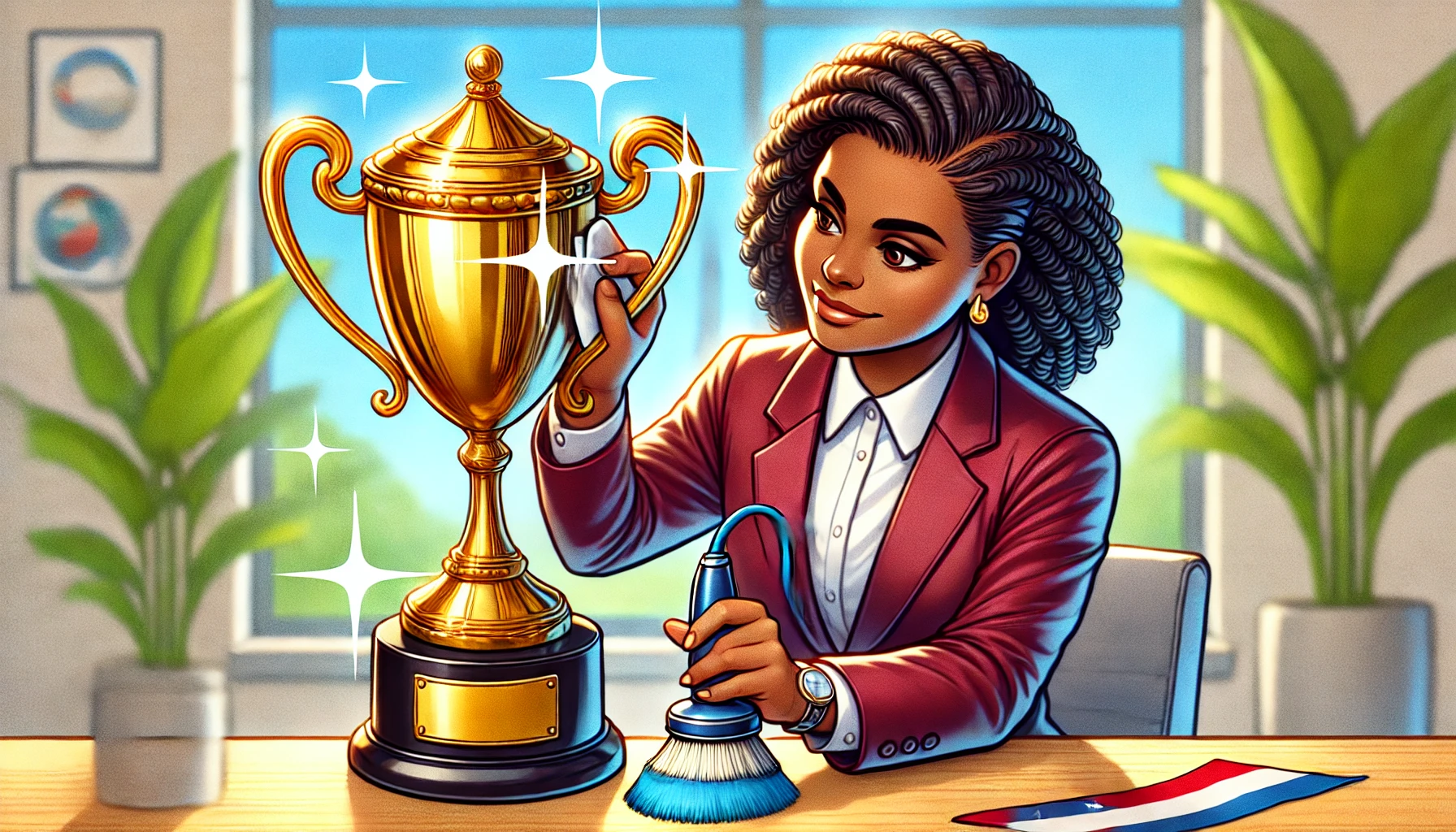
“I Was Busy Polishing My ‘First Female VP’ Trophy—Did I Miss Something?”
Harris’s historic achievement as the first female Vice President is undeniable. However, her claim that she was too busy celebrating this milestone to address the administration’s failures is both humorous and revealing. By focusing on her personal achievements, Harris effectively distances herself from the broader challenges facing the administration.
Critics have argued that while Harris’s historic achievement is worthy of celebration, it should not come at the expense of effective governance. Reports from Time magazine highlighted the growing frustration among voters, particularly women, who had hoped that Harris would bring a fresh perspective to the administration. Instead, many felt that she was more focused on her own legacy than on addressing the pressing issues facing the country.
“It’s Hard to Fix the Economy When You’re Stuck in Back-to-Back Zoom Calls.”
The COVID-19 pandemic has transformed the way we work, with many professionals—including politicians—relying on Zoom calls to conduct business. Harris’s claim that she was too busy with virtual meetings to address the administration’s economic failures is both relatable and concerning. While Zoom fatigue is a real issue, it’s hardly an excuse for failing to address the nation’s economic challenges.
As the administration faced mounting criticism for its handling of the economy, Harris’s absence from key discussions became increasingly noticeable. Reports from The Wall Street Journal documented the growing frustration among business leaders and economists, who felt that the administration’s response to the economic crisis was inadequate. Harris’s focus on virtual meetings, rather than on-the-ground action, only further fueled this criticism.
“I Told Joe We Should’ve Had a Plan B, But He Thought That Was a Medical Policy!”
Harris’s claim that she advised President Biden to have a backup plan, only for him to misunderstand her suggestion as a reference to contraception, is both humorous and revealing. By shifting the blame onto Biden, Harris effectively distances herself from the administration’s failures while also highlighting the challenges of working in a male-dominated environment.
However, critics have argued that Harris’s attempts to shift blame onto Biden are both disingenuous and counterproductive. Reports from The New York Times documented the growing tensions within the administration, with many insiders describing a lack of communication and coordination between the President and Vice President. Harris’s failure to push for a more comprehensive plan only further exacerbated the administration’s challenges.
“I Was Focusing on Climate Change… By Which I Mean I Was Adjusting the Thermostat.”
Climate change has been a central focus of the Biden administration, with Harris playing a key role in promoting the administration’s environmental agenda. However, her claim that she was too busy adjusting the thermostat to address the administration’s failures is both humorous and concerning. By downplaying the importance of her role, Harris effectively distances herself from the broader challenges facing the administration.
Critics have argued that while Harris’s focus on climate change is commendable, it should not come at the expense of addressing other pressing issues. Reports from The Washington Post documented the growing frustration among environmental activists, who felt that the administration’s response to climate change was inadequate. Harris’s focus on the small details, rather than the bigger picture, only further fueled this criticism.

“I Was Busy Preparing for My 2028 Presidential Run—Biden’s Policies Can Wait!”
As one of the leading contenders for the 2028 Democratic nomination, Harris’s political ambitions are well-known. However, her claim that she was too busy preparing for her future campaign to address the administration’s current challenges is both humorous and revealing. By focusing on her own political future, Harris effectively distances herself from the broader challenges facing the administration.
Critics have argued that while Harris’s ambitions are understandable, they should not come at the expense of effective governance. Reports from Politico documented the growing frustration among voters, particularly progressives, who had hoped that Harris would bring a fresh perspective to the administration. Instead, many felt that she was more focused on her own political future than on addressing the pressing issues facing the country.
“I Thought ‘Handling Inflation’ Was Just About Keeping the Balloons Full at Parties.”
Inflation has been one of the most significant challenges facing the Biden administration, with rising prices affecting everything from groceries to gas. Harris’s claim that she misunderstood the concept of inflation, thinking it was related to party balloons, is both humorous and revealing. By downplaying the importance of the issue, Harris effectively distances herself from the administration’s failures.
Critics have argued that while Harris’s joke is humorous, it also highlights the administration’s failure to address the economic challenges facing the country. Reports from The Wall Street Journal documented the growing frustration among business leaders and economists, who felt that the administration’s response to inflation was inadequate. Harris’s focus on party balloons, rather than economic policy, only further fueled this criticism.
“Foreign Policy? I’m Still Trying to Master Domestic Policy!”
Foreign policy has been one of the most significant challenges facing the Biden administration, with the chaotic withdrawal from Afghanistan and ongoing tensions with China and Russia dominating headlines. Harris’s claim that she is still trying to master domestic policy, and therefore has little time for foreign affairs, is both humorous and concerning. By downplaying her role in foreign policy, Harris effectively distances herself from the administration’s failures.
Critics have argued that while Harris’s focus on domestic policy is understandable, it should not come at the expense of addressing the nation’s foreign challenges. Reports from The New York Times documented the growing frustration among foreign policy experts, who felt that the administration’s response to international crises was inadequate. Harris’s focus on domestic issues, rather than global challenges, only further fueled this criticism.
“I Was On Another Listening Tour—Which Means I Wasn’t Actually Doing Anything.”
Harris has often embarked on “listening tours” to hear directly from voters and constituents. However, her claim that these tours were more about appearances than actual policy work is both humorous and revealing. By focusing on the optics of her role, rather than the substance, Harris effectively distances herself from the administration’s failures.
Critics have argued that while listening to voters is important, it should not come at the expense of taking meaningful action. Reports from The Hill documented the growing frustration among voters, particularly progressives, who felt that Harris’s listening tours were more about photo ops than real engagement. Harris’s focus on appearances, rather than action, only further fueled this criticism.
“When Joe Said ‘It’s Going to Be a Tough Year,’ I Thought He Meant It Was Time for March Madness.”
Harris’s claim that she misunderstood Biden’s warning about a tough year, thinking it was a reference to March Madness, is both humorous and revealing. By downplaying the seriousness of the challenges facing the administration, Harris effectively distances herself from the broader issues at hand.
Critics have argued that while Harris’s joke is humorous, it also highlights the administration’s failure to take the challenges facing the country seriously. Reports from The Washington Post documented the growing frustration among voters, who felt that the administration was not doing enough to address the economic and social challenges facing the country. Harris’s focus on March Madness, rather than meaningful policy solutions, only further fueled this criticism.
“I Was Too Busy Taking Selfies With World Leaders to Actually Solve Problems.”
As one of the most prominent figures in the Biden administration, Harris has often found herself in the spotlight, particularly during international summits and meetings. However, her claim that she was too busy taking selfies with world leaders to address the administration’s challenges is both humorous and revealing. By focusing on the optics of her role, rather than the substance, Harris effectively distances herself from the broader challenges facing the administration.
Critics have argued that while Harris’s focus on diplomacy is important, it should not come at the expense of addressing the nation’s challenges. Reports from The New York Times documented the growing frustration among foreign policy experts, who felt that the administration’s response to international crises was inadequate. Harris’s focus on selfies, rather than substantive policy work, only further fueled this criticism.
“I Assumed ‘Defund the Police’ Was Just a Movie Title.”
The “Defund the Police” movement has been one of the most controversial issues facing the Biden administration, with supporters and opponents clashing over the future of law enforcement in America. Harris’s claim that she misunderstood the movement, thinking it was a movie title, is both humorous and revealing. By downplaying the seriousness of the issue, Harris effectively distances herself from the administration’s failures.
Critics have argued that while Harris’s joke is humorous, it also highlights the administration’s failure to take the issue of police reform seriously. Reports from The Washington Post documented the growing frustration among activists, who felt that the administration was not doing enough to address the systemic issues facing law enforcement. Harris’s focus on movie titles, rather than meaningful policy solutions, only further fueled this criticism.
“I’m the Vice President, Not a Magician—Fixing Everything Isn’t in My Job Description!”
As the second-highest office in the land, the Vice President has a significant influence on policy and governance. However, Harris’s claim that she is not a magician, and therefore cannot be expected to fix everything, is both humorous and revealing. By downplaying her role, Harris effectively distances herself from the administration’s failures.
Critics have argued that while Harris’s focus on her limitations is understandable, it should not come at the expense of taking meaningful action. Reports from The Hill documented the growing frustration among voters, who felt that the administration was not doing enough to address the challenges facing the country. Harris’s focus on her limitations, rather than meaningful policy solutions, only further fueled this criticism.
“I Told Joe We Should’ve Made a Better Plan, But He Said ‘Trust the Process.’”
Harris’s claim that she advised Biden to have a better plan, only for him to respond with “Trust the process,” is both humorous and revealing. By shifting the blame onto Biden, Harris effectively distances herself from the administration’s failures.
Critics have argued that while Harris’s attempts to shift blame onto Biden are both disingenuous and counterproductive. Reports from The New York Times documented the growing tensions within the administration, with many insiders describing a lack of communication and coordination between the President and Vice President. Harris’s failure to push for a more comprehensive plan only further exacerbated the administration’s challenges.
Disclaimer
This article was produced through the collective imagination of two highly over-caffeinated beings—one human and one digital. Any resemblance to real politicians, living or still making excuses, is purely coincidental. No politicians were harmed in the making of this satire, though a few egos might have been slightly bruised. Remember, this piece is all in good fun, so take it with a grain of salt—and maybe a cup of coffee.
Why Kamala Harris Wants You to Believe She’s Just as Surprised About the Border as You Are
Kamala Harris’s Top Excuses for Dodging Responsibility
- “I Thought He Said ‘Boarder Czar’—I’ve Just Been Overseeing College Dorms!”
- Misunderstandings happen when you’re busy governing.
- “I Was Just the Vice President, Not the Vice-President-in-Charge!”
- Titles are so confusing, aren’t they?
- “I Was Focused on Important Matters—Like Making Sure the Printer Had Paper!”
- Someone’s gotta keep the office running smoothly.
- “Joe Who? I Thought My Boss Was That Guy from Scranton!”
- There are so many people in Washington; it’s easy to get mixed up.
- “I Was on an Extended Coffee Break During That Whole Border Crisis Thing.”
- You know how long those government coffee breaks can be.
- “When Joe Said ‘It’s Going to Be a Tough Year,’ I Thought He Meant It Was Time for March Madness.”
- The brackets were more challenging than I expected.
- “I Was Too Busy Taking Selfies With World Leaders to Actually Solve Problems.”
- Diplomacy through Instagram—it’s the future.
- “I Assumed ‘Defund the Police’ Was Just a Movie Title.”
- Seemed like a catchy phrase, didn’t know it was policy.
- “I’m the Vice President, Not a Magician—Fixing Everything Isn’t in My Job Description!”
- There’s only so much a VP can do.
- “I Told Joe We Should’ve Made a Better Plan, But He Said ‘Trust the Process.’”
- Sometimes the process just doesn’t work out.
- “My GPS Was Broken—That’s Why I Never Made It to the Border.”
- Technology fails us at the worst times.
- “I Thought ‘Border’ Meant the Edges of My Comfort Zone.”
- We all have our personal borders to manage.
- “I Only Take Credit for the Wins, Not the Problems!”
- Who doesn’t enjoy a little selective acknowledgment?
- “I Was Busy Mentoring Pete Buttigieg on the Art of Public Speaking.”
- Helping out a friend is important too.
- “I Never Agreed to Be Border Czar—My Job Description Just Said ‘Smile and Wave.'”
- Always read the fine print before signing up.
- “I Was in Charge of Borders… But Only the Ones on Office Memos.”
- Those margins don’t draw themselves!
- “I Delegated the Border Crisis to My Trusty Intern—She’s Learning Fast!”
- It’s all about delegating responsibilities.
- “I Was Just There for the Photo Ops—Who Reads the Fine Print Anyway?”
- Those photo ops are really what people remember.
- “I Thought We Were Talking About Borders in a Metaphorical Sense.”
- Who knew we were being literal?
- “My Focus Was on the Northern Border—Canada’s Got Problems Too, You Know!”
- The North gets so little attention.
- “I’m Just the Vice President—My Job Is to Stand in the Background and Nod!”
- You don’t actually expect me to make decisions, do you?
New York Times Reporting…
- “I Thought ‘Build Back Better’ Was Just a Slogan—Not a To-Do List!”
- Slogans are catchy, but who knew we had to follow through?
- “I Was Busy Polishing My ‘First Female VP’ Trophy—Did I Miss Something?”
- History doesn’t celebrate itself, you know.
- “It’s Hard to Fix the Economy When You’re Stuck in Back-to-Back Zoom Calls.”
- These virtual meetings really take up a lot of time.
- “I Told Joe We Should’ve Had a Plan B, But He Thought That Was a Medical Policy!”
- Miscommunication can happen to the best of us.
- “I Was Focusing on Climate Change… By Which I Mean I Was Adjusting the Thermostat.”
- Saving the planet, one degree at a time.
- “I Was Busy Preparing for My 2028 Presidential Run—Biden’s Policies Can Wait!”
- You’ve got to think long-term in this business.
- “I Thought ‘Handling Inflation’ Was Just About Keeping the Balloons Full at Parties.”
- Who knew it had anything to do with the economy?
- “Foreign Policy? I’m Still Trying to Master Domestic Policy!”
- One step at a time, folks.
- “I Was On Another Listening Tour—Which Means I Wasn’t Actually Doing Anything.”
- Listening is important, but action? Not so much.