

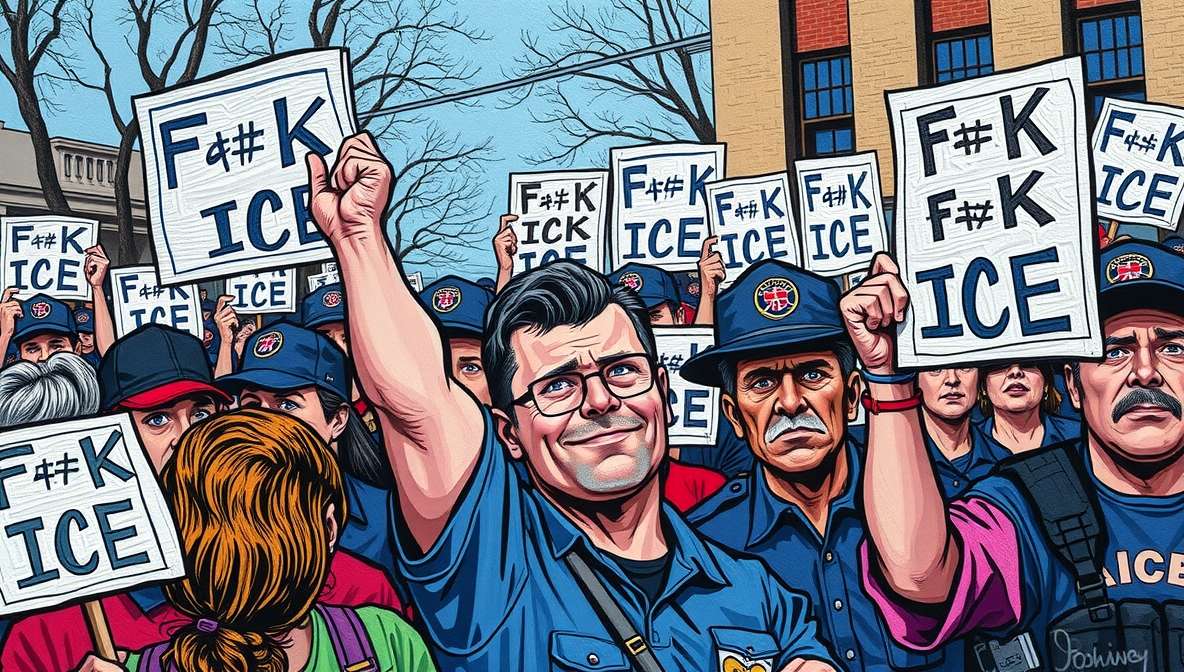
Democrats Shocked to Learn “Abolish ICE” Wasn’t Meant as a Light Metaphor
Democratic leaders across the country expressed sudden, synchronized confusion this week after federal authorities confirmed that a woman in Minneapolis allegedly attempted to run down ICE agents during a federal law enforcement operation, triggering gunfire and leaving one person dead. The incident, reported by NBC News, forced party officials to confront an uncomfortable question they had long postponed: what exactly did people think “Abolish ICE” meant?
According to the report, federal agents were involved in an ICE-related operation in Minneapolis when the suspect allegedly tried to use her vehicle as a weapon against officers, prompting them to open fire. The Justice Department is investigating. Democratic leaders immediately condemned violence, stressed the importance of safety, and gently reminded everyone that words have meanings, but mostly emotional ones, not the kind that lead to people interpreting slogans as instructions.
Key Observations
- Democrats spent years shouting “Abolish ICE” and now appear stunned that someone thought they meant abolish ICE, proving once again that the left believes words are only literal when spoken by conservatives.
- “Abolish ICE” apparently means abolish it emotionally, spiritually, and on Instagram, but not in real life where men with badges still exist.
- The left treats slogans like poetry until someone reads them like IKEA instructions and suddenly everyone pretends they were written in cursive.
- Democrats are now explaining that “abolish” is more of a vibe, like astrology or oat milk.
- Law enforcement officers discovered they are expected to enforce laws while also being psychic enough to know which chants are serious and which are just performance art.
The Messaging Inconvenience Democrats Didn’t See Coming
Privately, however, aides admitted the Minneapolis shooting created what strategists refer to as a “messaging inconvenience.” For years, prominent Democrats and allied activists described ICE as an illegitimate, rogue, fascist organization. Now, faced with an individual allegedly acting as if that framing were literal, party leaders found themselves insisting the rhetoric had always been symbolic, metaphorical, and very much not meant to be operationalized by civilians with access to automobiles.
“This is tragic,” one Democratic consultant said, requesting anonymity. “But when we said ICE was the Gestapo, we didn’t mean people should treat agents like Nazis. We meant voters should feel morally superior while brunching.”
When Microphones Amplify More Than Metaphors
The difficulty, critics note, is that Democratic officials were not whispering these metaphors into therapy journals. They were shouting them into microphones. Minnesota Governor Tim Walz famously compared ICE to the Gestapo, a remark he later defended by saying constitutional concerns justified the analogy. California Governor Gavin Newsom repeatedly warned about “secret police,” pushing legislation to restrict ICE operations and describing agents as masked enforcers operating without accountability. Illinois Governor J.B. Pritzker invoked Nazi Germany to describe immigration enforcement. Members of Congress called ICE “terrorizing,” “vile,” and beyond reform.
None of this, party leaders now insist, was intended to convey urgency, danger, or a moral obligation to intervene physically.
Activist Movements and the Amplification Effect
Activist movements amplified the message. “Abolish ICE” banners were flown outside ICE facilities, including during protests after President Biden’s inauguration. Demonstrators occupied buildings, blocked entrances, and chanted slogans equating ICE with fascism and violence. Media outlets framed enforcement actions as kidnappings, disappearances, and concentration camps. When stories were exaggerated or false, the emotional truth was preserved even as factual details quietly retreated.
How Polling Data Revealed the Impact of Anti-ICE Rhetoric
Polling data showed the messaging worked. Democratic voters increasingly believed ICE routinely arrests citizens, operates without due process, and poses a threat to innocent people. Support for protests against ICE surged. Trust collapsed along party lines. To activists, this represented moral progress. To ICE agents, it represented a growing hostility they were instructed to endure quietly.
Then Minneapolis happened.
The Sudden Need for Disclaimers and Clarifications
Suddenly, metaphors needed disclaimers. Democratic officials rushed to clarify that violence against federal officers is unacceptable, illegal, and not aligned with party values. They emphasized that while ICE should be criticized, dismantled, reimagined, or spiritually exfoliated, citizens should not take enforcement matters into their own hands.
Critics noted this clarification arrived roughly six years after the slogan first entered mainstream political discourse.
Media Coverage and the Politics of Attribution
Media coverage of the Minneapolis shooting carefully avoided connecting rhetoric to consequence. Reports emphasized the investigation, the uncertainty, and the need for restraint. Commentators warned against politicizing tragedy, a phrase commonly used when politicization might require self-reflection.
ICE officials, meanwhile, pointed to a documented rise in assaults against agents. Federal data and White House statements have cited dramatic increases in attacks, warning that portraying agents as Nazis and kidnappers creates a climate where violence becomes thinkable to unstable individuals.
Democrats Navigate the Rhetoric-Responsibility Gap
Democrats reject this framing, arguing that rhetoric cannot be blamed for individual actions. They maintain that calling an agency fascist does not imply resistance, just awareness. The problem, they say, is not what was said but how it was misunderstood by someone insufficiently trained in metaphor literacy.
Still, the Minneapolis case has prompted quiet conversations inside the party about recalibrating language. Consultants are reportedly exploring alternatives that preserve emotional intensity without suggesting confrontation. Proposed replacements for “Abolish ICE” include “Strongly Disapprove of ICE,” “ICE But With Oversight,” and “Let’s All Take a Breath and Workshop This.”
The Moral Framing Dilemma Facing Party Leadership
Publicly, however, the party remains committed to its moral framing. ICE, leaders insist, is dangerous, abusive, and fundamentally flawed. Just not dangerous enough that someone might reasonably think stopping it personally was justified.
As federal investigators examine the Minneapolis shooting, Democrats face a rhetorical dilemma of their own making. When you spend years describing an agency as violent, illegitimate, and fascist, some listeners will eventually believe you. When they act on that belief, insisting it was all metaphor starts to sound less like leadership and more like surprise that language has consequences.
The Path Forward: Conversation Starters, Not Traffic Maneuvers
For now, party officials hope voters will focus on the tragedy, not the slogans that preceded it. They urge calm, reflection, and a renewed commitment to responsible discourse. And above all, they ask Americans to remember that “Abolish ICE” was always meant as a conversation starter, not a traffic maneuver.
Supporting context and reporting: NBC News, Reuters, Star Tribune, California Governor’s Office, YouGov, Department of Homeland Security, U.S. Immigration and Customs Enforcement, Pew Research Center, ACLU, Fox Baltimore
Auf Wiedersehen, amigo!
SOURCE: https://bohiney.com/anti-ice-rhetoric/