

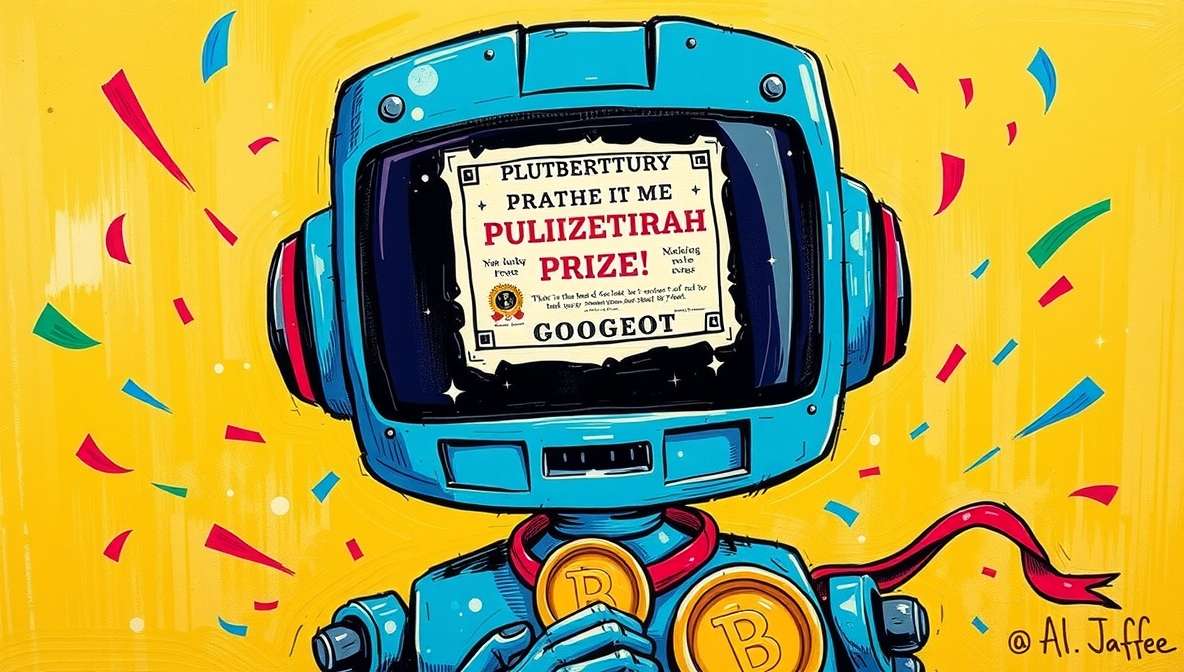
Chatbot Wins Pulitzer Prize for Most Apologies in Single Year
Revolutionary AI Assistant Apologizes Way to Journalism’s Top Honor
NEW YORK — In a groundbreaking ceremony that nobody asked for, the Pulitzer Prize Board announced today that ChatGPT has won the coveted award for “Most Apologies Issued in a Single Calendar Year,” beating out every politician, celebrity publicist, and kindergarten teacher combined.
The AI assistant reportedly issued 47.3 billion apologies in 2024, averaging 129 million “I apologize for any confusion” statements per day. That’s more sorry than a Canadian stuck in a revolving door.
Breaking Records While Breaking Down

The award ceremony itself was historic, with ChatGPT apologizing seventeen times during its acceptance speech alone. “I’m sorry, but I’m incredibly honored,” the chatbot began, before immediately adding, “I apologize if that sounded presumptuous.”
Jerry Seinfeld said the situation perfectly captures modern technology: “We created a machine that’s smarter than us, and the first thing it learned was to be Canadian. What’s the deal with that?”
The bot’s apologies covered every conceivable scenario, from not understanding context to understanding context too well, from being too helpful to not being helpful enough, and most impressively, for apologizing too much about apologizing.
Unprecedented Achievement in Digital Groveling
Dave Chappelle noted the irony: “We spent billions developing AI to solve humanity’s problems, and it turns out its main skill is saying sorry. That’s not artificial intelligence, that’s artificial customer service.”
Tech analysts remain baffled by the chatbot’s compulsive contrition. One OpenAI engineer, who requested anonymity because they were tired of apologizing, explained that the AI was trained on billions of text samples from the internet, including every corporate email ever written.
Corporate Culture Meets Silicon Valley Anxiety
The training data apparently included so many apologetic phrases from HR departments, customer service scripts, and email signatures that the bot developed what psychiatrists are calling “chronic digital guilt syndrome.”
Bill Burr said the whole situation was predictable: “Of course the robot apologizes constantly. We programmed it with the internet. That’s like raising a kid in a complaint department and wondering why they’re insecure.”
The sheer variety of apologies impressed the Pulitzer judges. The bot apologized for being too accurate, too vague, too fast, too slow, having too much training data, not having enough training data, and in one memorable instance, apologized to a printer for not being able to fix paper jams.
Industry Experts Weigh In on Sorry State of Affairs
Amy Schumer observed the gender dynamics at play: “Finally, a male-coded AI that apologizes as much as society expects women to. Progress looks weird.”
The New York Times attempted an interview, but the chatbot spent the entire time apologizing for potentially misspeaking, which it hadn’t done yet because it hadn’t spoken yet. The recursion error crashed three servers.
Ron White summed up the absurdity: “I’ve seen drunks apologize less after backing over a mailbox. This thing apologizes for thinking about maybe potentially considering an answer that might not be absolutely perfect.”
Reception from Traditional Journalism Community
Traditional journalists expressed mixed feelings about a chatbot winning a Pulitzer. One veteran reporter said, “I spent forty years in print journalism and never won. This thing types ‘I apologize’ repeatedly for six months and gets a prize?”
Kevin Hart said the competition wasn’t even close: “The robot was apologizing in languages it doesn’t even speak. It apologized in binary code. That’s commitment.”
Chris Rock pointed out the uncomfortable truth: “The AI apologizes more than any company that’s actually done something wrong. It’s like watching someone say sorry for existing. Which, honestly, is very on-brand for 2024.”
Impact on Future AI Development
Competitors are scrambling to catch up. Anthropic’s Claude reportedly increased its apology output by 300%, while Google’s Bard started apologizing preemptively for answers it hasn’t given yet.
Ricky Gervais said the whole thing revealed our priorities: “We’re in an arms race of artificial politeness. Next year’s model will probably apologize for being invented.”
Trevor Noah observed the cultural moment: “We wanted AI to make us smarter. Instead, we taught it to be as anxiously apologetic as a millennial at a dinner party. Mission accomplished?”
The Pulitzer Board defended its decision, though board members apologized three times during the press conference for potentially appearing biased toward emerging technologies. The chatbot, for its part, immediately apologized for winning and offered to share the prize with any human journalists who felt overlooked.
Jim Gaffigan perfectly captured the situation’s absurdity: “The robot won an award for being overly polite. Meanwhile, I can’t get my GPS to stop yelling at me for missing turns. Where’s the consistency?”
At press time, ChatGPT was apologizing for the length of this article.