

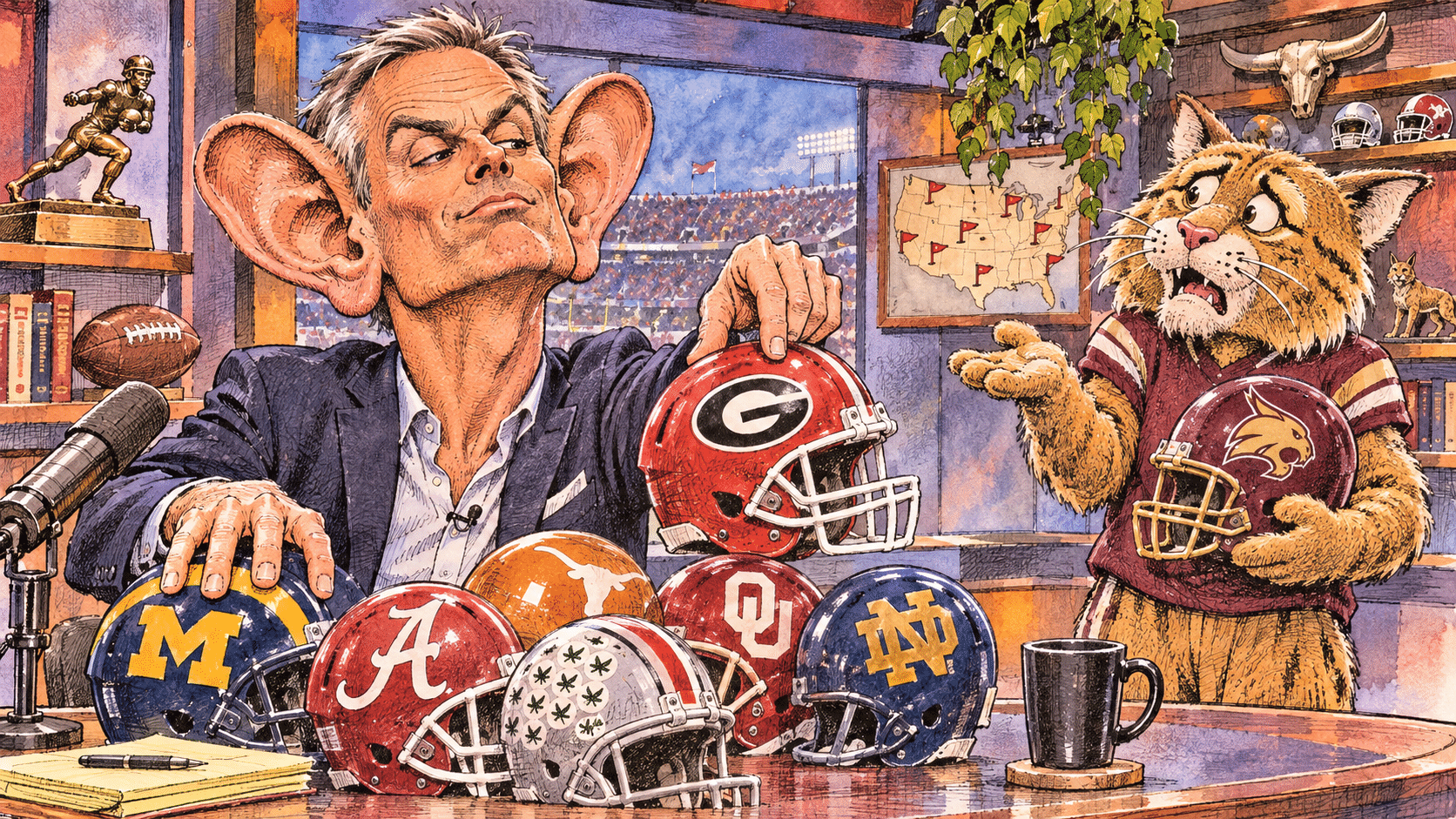

SAN MARCOS, Texas — Colin Cowherd has streamlined college football analysis by introducing a ranking system in which teams receive points for winning games, then lose all of them if their names require him to open another browser tab.
The breakthrough follows his dismissal of Texas State while discussing Boise State’s schedule. As Awful Announcing reported, Cowherd said, “I don’t even know what that is.” Sports broadcasting had finally developed a scouting report on its own scouting department.
Colin Cowherd’s College Football Rankings Reward Familiarity
Under the proposed Heard Of Index, Alabama begins every season undefeated in name recognition. Ohio State receives bonus points because Cowherd can picture the helmet. Any unfamiliar university must submit proof of existence, three utility bills and a photograph standing next to a school he respects.
Strength of schedule becomes strength of recollection. A quality loss is losing to somebody Colin remembers. A bad win is beating somebody who makes him squint.
“We watched film all week,” said imaginary Bobcats assistant coach Dale Clipboard. “Apparently we should’ve bought billboard space inside his childhood.”
The system eliminates troublesome variables such as tackling, road victories and whether the analyst has watched the team. Its central definition is simple: merit means looking expensive before kickoff.
Texas State Considers Renaming Itself Alabama So Colin Cowherd Can Recognize It
Texas State’s emergency response is a proposed rebrand to Alabama, with “San Marcos” printed discreetly beneath the logo in lettering usually reserved for pharmaceutical side effects.
The actual Texas State University advertises more than 47,000 students. This is an unusually large witness protection program for an institution allegedly missing from the map.
Administrators considered providing educational materials, but concluded that changing every diploma would require less effort than getting one broadcaster to read a second paragraph.
The Elephant in the Bobcat Costume
A consultant recommended replacing the bobcat with an elephant because, unlike television analysts, elephants are reputed to remember things.
Under the plan, identical players would run identical plays against identical opponents. The improved helmet would nevertheless produce immediate gains in toughness, tradition and whatever “the eye test” means when the eyes are closed.
One booster offered to fund a practice facility before learning the team’s biggest development need was becoming something Colin had seen on a coffee mug.
Fans seeking an alternative ranking method can consult results, inspect opponents and watch games. These techniques remain legal, although broadcasters warn they could dangerously reduce the time available for certainty.
At press time, the rebranded Bobcats had climbed six places without taking a snap. Their first Alabama loss was already being praised as evidence of a brutal schedule.
Fifteen Observations From the Recognition Committee
1. Research entered the transfer portal.
2. The helmet passed; the players await review.
3. Rankings now include a familiarity tax.
4. Google received a medical redshirt.
5. Alabama starts 1–0 against amnesia.
6. Unknown schools need celebrity endorsements.
7. San Marcos requests a forwarding address.
8. Tradition travels faster than facts.
9. Bobcats entered elephant conversion therapy.
10. The eye test needs glasses.
11. Small schools face a memory ceiling.
12. Prestige remains undefeated against homework.
13. Every upset requires an introduction.
14. Confidence earned another contract extension.
15. The scoreboard has requested media credentials.
Disclaimer from the Recognition Committee: This story is entirely a human collaboration between two sentient beings—the world’s oldest tenured professor and a philosophy major turned dairy farmer. Neither currently appears in the rankings; both are considering answering to Alabama.