

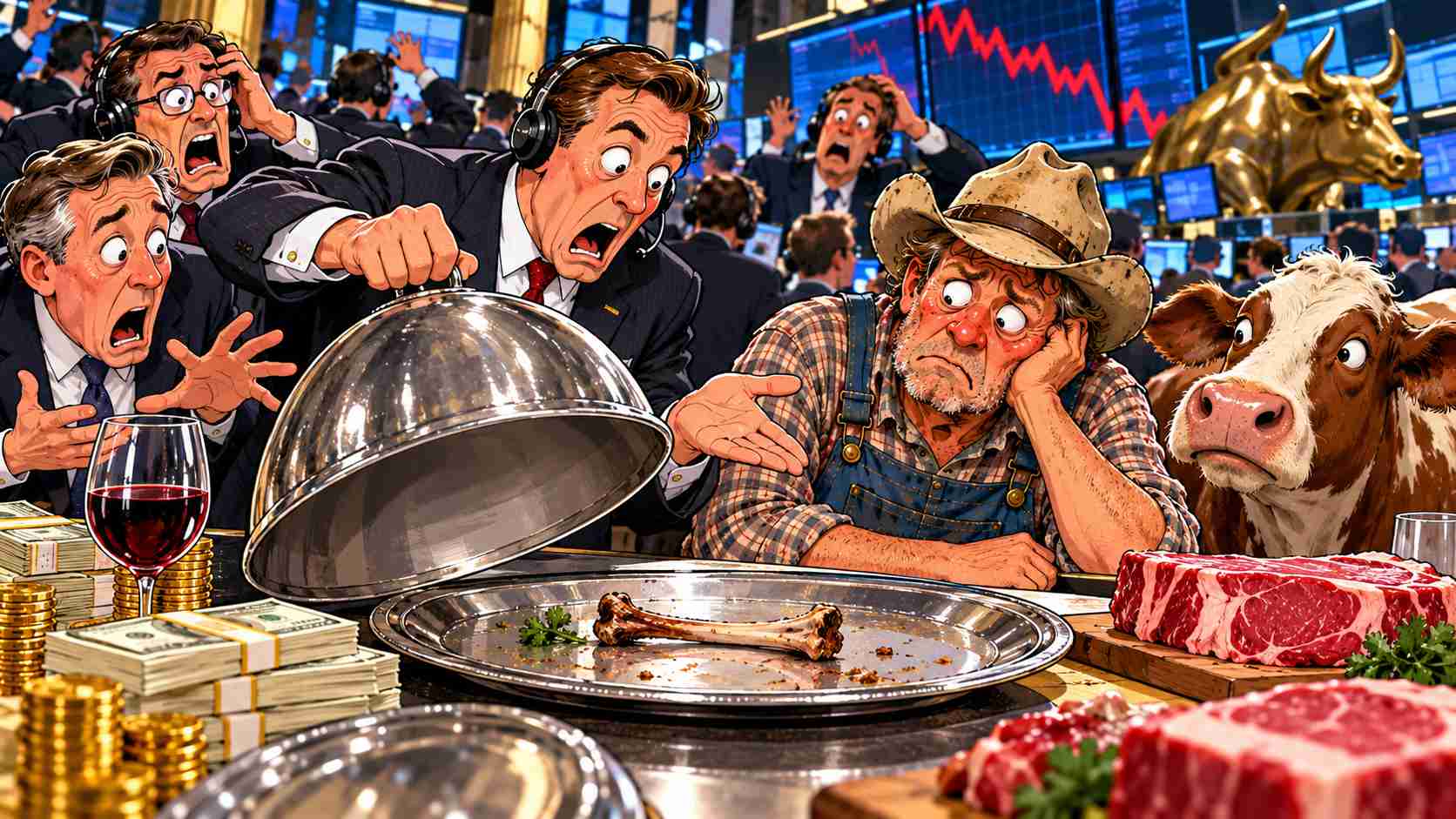
A $1.4 billion offer puts the square burger in a round hole
DUBLIN, OHIO – Wendy’s has received an unsolicited proposal from a group led by Trian Fund Management to take the burger chain private for approximately $1.4 billion. The proposed price is $7.35 per share, which raises a question not addressed by the company’s famous advertising: If the beef is still there, why does Wall Street want to put it in a holding company?
Wendy’s Board Reviews the Trian Partners Takeover Proposal
The Wendy’s board says an independent committee will evaluate the offer, with Morgan Stanley and Simpson Thacher advising. That is corporate language for putting several expensive people into a conference room until they agree to spend even more money deciding whether to spend money. No transaction is guaranteed. The only assured winner, at this stage, is the caterer providing lunch for the committee.
The restaurant once built its reputation on square hamburger patties. This distinguished Wendy’s from rivals who apparently insisted that meat should resemble the wheels on a covered wagon. Today, the square patty seems less important than the rectangular spreadsheet, where analysts can prove a customer saved twenty cents while the company somehow lost several million dollars. Anyone who wants to read the numbers themselves can find them in the company’s annual reports filed with the SEC.
In an audit performed by Bohiney’s Department of Fast-Food Theology, the company’s original question, “Where’s the beef?” was forwarded to investor relations. Investor relations asked for a shareholder identification number. Accounting requested a nondisclosure agreement. Legal suggested that the beef might constitute a forward-looking statement and should not be relied upon.
Why Going Private Does Not Fix the Drive-Thru
The prospective buyers believe private ownership could allow a long-term turnaround. This makes sense. When a restaurant is public, executives must answer to investors every quarter. When it is private, they answer to investors behind a closed door, which is the same problem with fewer cameras and substantially nicer coffee.
Customers have simpler priorities. They want hot fries, a fresh burger and a drive-through employee who does not sound like the speaker is located on a submarine. Their requests rarely include a leveraged balance sheet or a six-year capital deployment strategy. Nobody has ever said, “The nuggets were cold, but I loved the debt restructuring.”
One proposed innovation is a combo meal with financial disclosures. The number one includes a burger, fries and a sixteen-page risk assessment. Upgrade to a large drink and you receive preferred shares in a subsidiary that owns the straw. Customers choosing ketchup must acknowledge that historical condiment performance is no guarantee of future flavor.
Restaurant Industry Jargon, Translated
The industry’s financial vocabulary is its own special sauce. Closing an underperforming location is “portfolio rationalization.” Making the burger smaller is “portion discipline.” Raising menu prices is “capturing value.” A customer leaving for a cheaper restaurant is “negative traffic,” a phrase that makes dinner sound like an interstate pileup.
Meanwhile, ordinary Americans are running their own business analysis with startling efficiency. They open a menu, calculate the cost of feeding four people and remember that groceries exist. Some return home to cook. Others stare into the refrigerator until a frozen burrito looks sufficiently entrepreneurial.
If Wendy’s needs a turnaround, it could begin where founder Dave Thomas began: with food people want at prices they recognize. Thomas also left behind the Dave Thomas Foundation for Adoption, which has never required a leveraged buyout. Investors may require patience; diners require lunch. The two groups have different clocks, and only one becomes dangerous when forced to wait twenty minutes for fries.
The square burger deserves another chance. Wall Street can have the conference room. Just leave the beef where the customers can find it.
The Evidence File
Exhibit A: Working Lunch Invoice, Independent Committee, Day One
| Description | Amount |
|---|---|
| Conference room, 6 hours, windowless | $2,400.00 |
| Deli platter, 14 guests, sandwiches cut diagonally | $610.00 |
| Coffee service, premium roast, “substantially nicer” | $385.00 |
| Fiduciary duty discussion (billed hourly) | $18,750.00 |
| Square cookies, 2 dozen | $48.00 |
| Total due | $22,193.00 |
Exhibit B: Drive-Thru Order Log, Lane 1, Tuesday
12:04 p.m. Customer requests “the usual.” System asks for shareholder ID. Customer leaves.
12:11 p.m. Customer orders two burgers, requests beef. Employee confirms beef is “in the back and subject to review.”
12:19 p.m. Customer asks why fries are cold. Employee reports fries “reflect current market conditions.”
12:26 p.m. Customer asks for a Frosty. Employee advises that dessert is “not a core strategic priority this quarter” and then provides the Frosty.
Exhibit C: Customer Review, One Star
Ordered a number one. Received a number one and a sixteen-page packet. The fries were fine. The packet was not. Page nine says my ketchup may decrease in value. I have never felt so exposed at a drive-through.
Five Observations From the Boardroom Booth
- A committee of independent directors. Independent. They’re deciding whether to sell a burger place and none of them have eaten there since 1996.
- “Where’s the beef?” used to be a joke. Now it’s a legal question and I think the beef has a lawyer.
- Square patty, round bun. That’s the whole business. Somebody saw that and said, “No, what this needs is a spreadsheet.”
- They say going private will fix things. I tried that at the DMV once. Same line, but nobody can see you.
- I stared into my refrigerator last night like it owed me money. Nothing in there but a frozen burrito and my own bad decisions.
Reporting basis: Wendy’s official statement on the proposed acquisition.