

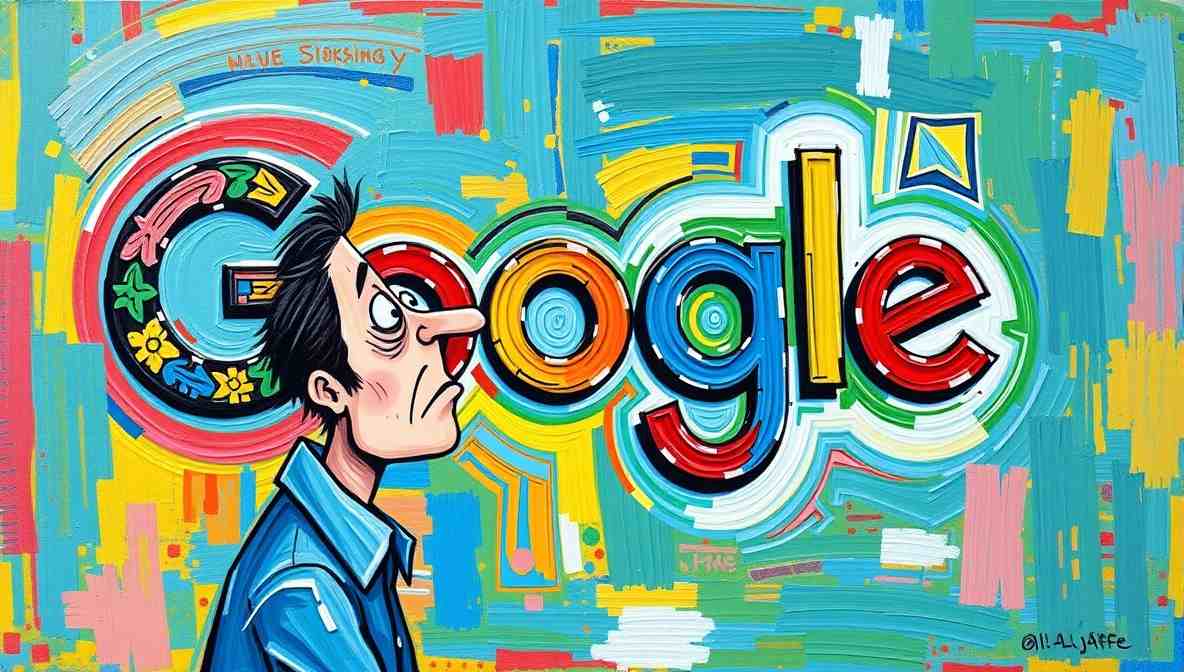
Google Discover Announces It Will Now Personally Decide What You Meant to Think
Silicon Valley, CA — In a move described by insiders as “gentle, thoughtful, and deeply controlling,” Google has confirmed that its Discover platform will now prioritize content based not on what users search for, but on what the company believes they should be interested in, given what engineers have officially classified as each user’s “emotional trajectory.”
The announcement follows a series of quiet updates to Google’s content pipeline, transforming Discover from a passive news feed into what one senior engineer described, without apparent irony, as “a lightly judgmental concierge for your brain.”
“We realized users were making too many independent decisions,” said Dr. Lyle Rennick, Senior Director of Predictive Curiosity at Google, a job title that required three rounds of HR approval. “So we asked ourselves: what if we removed that burden entirely?”
Nobody on the call said no.
The End of Searching — And the Beginning of Being Understood
For decades, Google Search operated on a radical, almost naive premise: users type, Google responds. Discover has quietly inverted that model, offering content before users even realize they want it — like a waiter who brings you a kale salad you didn’t order because, he explains, you “look like you’ve been making choices you’ll regret.”
According to internal documents obtained by Bohiney’s investigative desk, the Discover system now evaluates over 12,000 signals, including browsing history, physical location, scroll hesitation, and what engineers refer to in technical documentation as “existential click fatigue.”
“We’re not just showing articles,” said Rennick. “We’re guiding personal narratives.”
An anonymous staffer familiar with the rollout added, quietly, that it was “less about information and more about intervention.” She then asked that her name not be used, citing a vague fear she described only as “the feed.”
For context on how Discover actually works, Google’s own developer documentation explains the system as a personalized feed built from user interests — which sounds friendly until you realize Google is deciding what your interests are.
Publishers Adjust to Google’s New Emotional Standards
The update has sent shockwaves through the publishing industry, where editors are now frantically trying to understand why some articles receive five million impressions while nearly identical ones vanish into what one journalist called “the digital cornfield.” No corn grows there. Nothing does.
“I wrote a deeply researched, 4,000-word piece on geopolitical realignment in Central Asia,” said freelance writer Marlene Ortiz. “It got 47 views. The next week I published ‘Man Accidentally Becomes His Own Boss During Lunch Break’ and it hit 800,000. I have a master’s degree. I don’t know what I’m doing with it anymore.”
Experts say the shift reflects Google’s increasing reliance on what the industry calls engagement-based signals rather than traditional quality metrics.
“Discover isn’t rewarding accuracy,” explained Professor Neil Garfinkel of the Institute for Algorithmic Behavior, a think tank that itself has never appeared in Discover. “It’s rewarding emotional compliance. The content must feel right. Whether it is right is a separate question the algorithm has chosen not to ask.”
SEO professionals, who spent two decades mastering keyword density, link-building, and technical optimization, have reportedly started holding emergency retreats to grapple with the possibility that Google now prefers vibes.
Satire Enters the Danger Zone
For satirical outlets, the Discover update presents a specific and almost poetically cruel challenge: how do you remain funny without triggering Google’s “misleading content” filters, which are, to be fair, designed for actual misinformation but which occasionally have trouble telling the difference between a lie and a joke?
“It’s a delicate balance,” said one editor at a nationally recognized satire publication who asked not to be named. “If your headline is too absurd, you’re flagged for misinformation. If it’s not absurd enough, you’re just writing the news. And lately, the news is doing our job better than we are.”
Google maintains that satire is welcome on the platform, provided it adheres to guidelines requiring clarity, transparency, and “a general sense that nobody will feel tricked into laughing,” a standard that, if applied to late-night television, would end the industry by Thursday.
The Onion was unavailable for comment, presumably because they were too busy being more accurate than cable news.
The Algorithm Demonstrates Its Values in Real Time
In a rare public demonstration, Google invited journalists to observe a live Discover ranking session. The system evaluated two competing headlines:
- “Global Leaders Meet to Discuss Peace”
- “Global Leaders Meet to Discuss Peace, Immediately Begin Arguing”
The second headline was rejected.
“Too cynical,” the system reportedly concluded.
The journalists in attendance did not laugh. It wasn’t clear if that was because it wasn’t funny or because they were afraid the feed was watching.
Public Reaction: Confused, Slightly More Informed, Mostly Compliant
A recent Pew Research survey on digital news habits found that large segments of the public rely on algorithmic feeds as their primary news source — without particularly understanding how those feeds work, who controls them, or why they keep showing articles about productivity at 11 PM.
“I don’t search anymore,” said Dallas resident Kevin Hargrove, 41, a logistics coordinator who has not opened a browser tab voluntarily in six months. “My phone just tells me things now. Yesterday it showed me an article about time management. I wasn’t even being unproductive at the time. It felt… accusatory.”
His wife, who asked not to be named, confirmed that his phone “does seem to know things.”
What the Funny People Are Saying
Jerry Seinfeld, upon learning about Discover’s content curation model, reportedly said: “Google Discover is like a parent who doesn’t read your diary but somehow still knows you shouldn’t be dating that article.”
Ron White offered: “I like a search engine that waits for me to ask questions. This one’s already answering things I ain’t admitted yet.”
Bill Burr, reached by phone, said something unprintable but structurally accurate.
A New Era of Controlled Curiosity
As Discover continues to evolve — adding signals, refining filters, expanding its definition of what users “really” want — one thing has become difficult to argue with: the internet is no longer simply a place you explore. It is a place that explores you, files its findings, and serves you content accordingly.
Google insists this is progress.
Critics call it curation, which is a polite word for “we’ll decide what you see, thanks.”
Publishers call it terrifying, off the record.
Users, for the most part, just keep scrolling — which is, the algorithm notes approvingly, exactly what it predicted.
Discover traffic is often described as “free,” which is accurate in the same way that owning a tiger is free — right up until the moment it decides you’re not interesting enough to feed anymore.
This article is a satirical interpretation of Google’s Discover content distribution system and reflects a collaborative effort between two sentient beings: the world’s oldest tenured professor and a philosophy major turned dairy farmer, both of whom agree that if an algorithm starts finishing your thoughts, it’s time to at least pretend you’re thinking new ones.
Auf Wiedersehen, amigo!
