

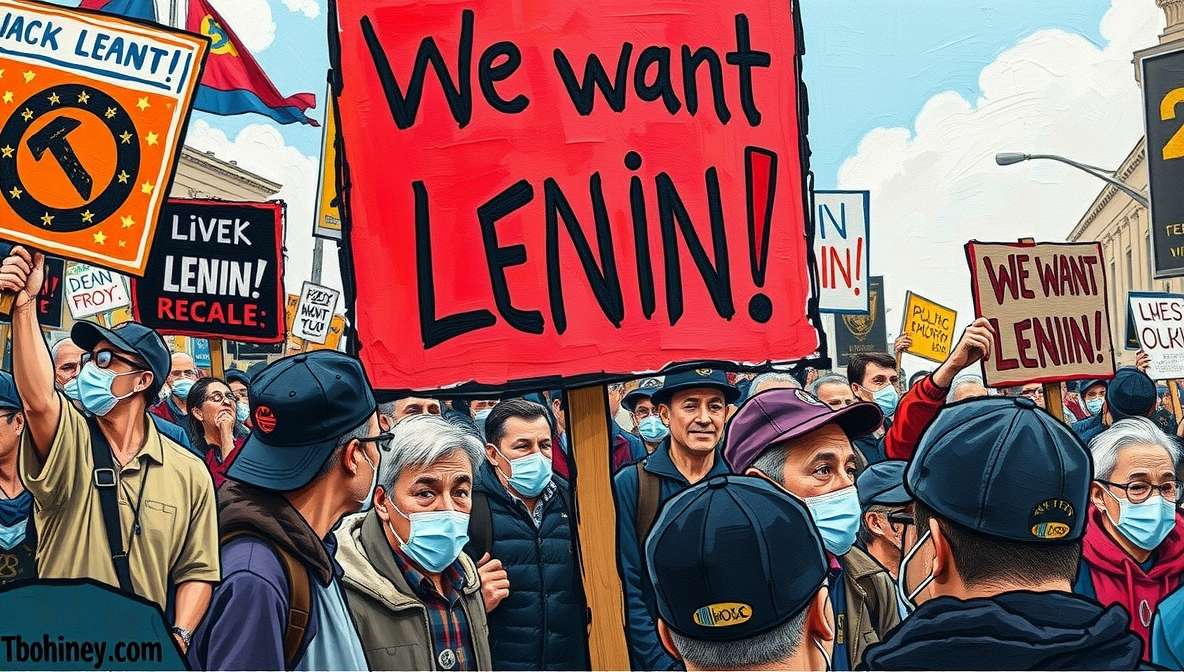
Minnesota ICE Shooting Leaves Democrats Frantically Explaining That Slogans Were Never Meant to Be Read Out Loud
Democrats Scramble to Explain Years of Anti-ICE Rhetoric After Minnesota ICE Shooting
The Minnesota ICE shooting has forced a sudden, uncomfortable pause in Democratic messaging, as party leaders scramble to explain that years of chanting, tweeting, and legislating against Immigration and Customs Enforcement were never intended to be interpreted as instructions by actual humans operating real vehicles.
According to NBC News, the Minnesota ICE shooting occurred during a federal law enforcement operation in Minneapolis when authorities say a woman allegedly attempted to run over ICE agents, prompting officers to open fire. One person was killed, and the Justice Department is reviewing the incident. The investigation is ongoing, but the political fallout began immediately.
What startled Democratic officials was not the complexity of the situation, but the simplicity with which slogans appeared to have been understood.
When “Abolish ICE” Becomes More Than Just a Slogan

For years, the left insisted that phrases like “Abolish ICE,” “Occupy ICE,” “ICE Is Violence,” and “No Human Is Illegal” were poetic expressions of moral concern, not verbs. The Minnesota ICE shooting, however, introduced a troubling development: someone may have taken them literally.
Party leaders rushed to condemn violence, stressing that violence is wrong in all forms, except rhetorical violence, structural violence, systemic violence, metaphorical violence, and violence committed by words. Physical violence, they clarified, is where the line is drawn, preferably after the fact.
“We’ve always opposed violence,” a Democratic strategist explained, standing beneath a banner that read ICE IS VIOLENCE. “We just didn’t think anyone would confuse our messaging with behavior.”
This confusion appears to have been widespread.
The Rhetoric That Wasn’t Supposed to Inspire Action
After years of calling ICE agents “Nazi Gestapo,” “secret police,” “slave patrols,” and “fascists,” Democratic leaders expressed shock that someone might treat ICE agents like enemies rather than civil servants. Apparently, the comparisons were meant to energize donors and cable-news panels, not inspire World War II-themed resistance fantasies in Minneapolis traffic.
The Minnesota ICE shooting also exposed the left’s evolving definition of words. “Abolish,” it turns out, does not mean abolish. “Occupy” does not involve occupying. “Shut it down” is more of a suggestion. And “No Human Is Illegal” does not apply to laws, enforcement, or consequences, only feelings.
Activists insist this was always clear.
“We meant abolish ICE spiritually,” one organizer clarified. “Like a vibe. Not with laws, or actions, or cars.”
Law enforcement officials were reportedly unaware of this distinction.
Democratic Party “Anti-ICE” Slogans
- ICE Is Fascism
- ICE Is Terrorism
- ICE Is the Gestapo
- ICE = Nazis
- ICE Is State Violence
- ICE Is White Supremacy
- ICE Is a Hate Group
- Block ICE
- Stop ICE
- Resist ICE
- Disrupt ICE
- No ICE in Our Streets
- ICE Out of Our Communities
- Drive ICE Out
- Stand Up to ICE
- Shut ICE Down Now
- Freedom of Movement for All
- Defund the Police and ICE
- No Justice, No ICE
- Whose streets? Our streets
Rising Violence Against ICE Agents and the Minnesota ICE Shooting Context
For years, ICE agents have operated under the assumption that slogans describing them as violent, illegitimate, and immoral might eventually affect how some members of the public treat them. Federal data already show rising assaults on ICE agents nationwide, but until the Minnesota ICE shooting, Democratic leaders largely dismissed concerns about rhetoric as right-wing hysteria.
Now, the preferred explanation is “misinformation.”
Party leaders blamed misinformation, social media, and online radicalization for the Minnesota ICE shooting, carefully avoiding discussion of the fact that their own messaging has been remarkably consistent, emotionally charged, and unambiguous in its hostility toward ICE. If this is misinformation, critics note, it is misinformation delivered by governors, members of Congress, activists, and major media outlets for nearly a decade.
How Democratic Messaging Shaped Public Attitudes Toward ICE
Polling suggests the message worked. Democratic voters overwhelmingly distrust ICE, believe it routinely abuses power, and support protests against it. This was hailed as moral progress until the Minnesota ICE shooting introduced the possibility that distrust might escalate into action.
At that point, rhetoric suddenly became irrelevant.
Progressives insisted the Minnesota ICE shooting had nothing to do with language, despite the language being almost entirely about ICE as an existential threat. According to this logic, words are powerful enough to reshape culture, topple norms, and educate the public, but too weak to influence anyone’s behavior when consequences appear.
This is a convenient position.
Official Responses to the Minnesota ICE Shooting Reveal Partisan Divide
Democratic officials now urge calm and ask supporters to stop treating federal agents like boss-level enemies in a video game. ICE agents, they remind everyone, are not final bosses, raid encounters, or symbols of late-stage capitalism. They are people enforcing laws passed by Congress, whether activists like those laws or not.
The Minnesota ICE shooting has also revived the party’s favorite rhetorical maneuver: selective amnesia. Leaders are asking Americans to ignore the previous decade of slogans, chants, analogies, and protests and focus instead on the present condemnation of violence. Violence is wrong, they say, and always has been, starting now.
According to FOX 9 Minneapolis, Minneapolis Mayor Jacob Frey called the federal agents’ self-defense claims “bullshit” and demanded ICE leave the city immediately, while Governor Tim Walz activated the state’s Emergency Operations Center and warned residents not to believe “this propaganda machine.”
Activists Double Down While Officials Backtrack
Activists, meanwhile, argue the Minnesota ICE shooting proves ICE is dangerous, not that anti-ICE rhetoric is. According to this framing, when enforcement operations end in gunfire, the solution is not less escalation, but more condemnation. The lesson is not restraint, but reaffirmation.
Law enforcement officials see it differently. They argue that repeatedly declaring an agency illegitimate, immoral, and violent creates a climate where confrontation feels justified to unstable individuals. In the wake of the Minnesota ICE shooting, they say, pretending otherwise is not compassion. It is denial.
KSTP reports that several videos shared with eyewitnesses call into question the federal government’s narrative that the driver tried to strike agents, showing several feet of separation between the SUV and the ICE agent at the time of the shooting.
Minneapolis Once Again Becomes Ground Zero for National Debate
For residents of Minneapolis, the debate feels painfully familiar. A city already shaped by national conversations about policing has once again become the setting for a clash between rhetoric and reality. The Minnesota ICE shooting was not a slogan. It was not symbolic. It was not theoretical.
It was real.
As investigations continue, Democrats face a rhetorical reckoning. They must explain how slogans were meant to be taken seriously but not literally, how outrage was meant to mobilize but not motivate, and how declaring ICE illegitimate was supposed to inspire patience rather than confrontation.
Bring Me The News reports that the shooting happened at E 34th Street and Portland Avenue during what DHS described as the “largest DHS operation ever” in Minnesota, with up to 2,100 officers deployed to the Twin Cities area.
The Consequences of Rhetoric Meet Reality in Minnesota ICE Shooting
For now, the party’s message is simple: violence is wrong, words are complicated, and responsibility is always someone else’s.
According to Fox News, Homeland Security Secretary Kristi Noem said the agents’ vehicles got stuck in the snow and they were trying to push them out when the woman “attacked them,” calling it “an act of domestic terrorism.”
KARE 11 notes that this incident occurred after Homeland Security sent more than 2,000 ICE agents to the Twin Cities in what officials described as the “largest DHS operation ever,” significantly escalating immigration enforcement in the region.
Federal and State Investigations Underway
The Minnesota ICE shooting has left one person dead, a city shaken, and a political movement urgently proofreading its own language, hoping no one else decides to read it the way it was written.
ABC News reports that the Department of Homeland Security confirmed an Immigration and Customs Enforcement agent fatally shot the woman during an immigration-related operation, with both the FBI and Minnesota Bureau of Criminal Apprehension investigating.
According to MPR News, eyewitnesses say ICE agents gave confusing orders before the shooting, while Mayor Jacob Frey and Governor Tim Walz challenged the federal narrative that the shooting was justified self-defense.
Auf Wiedersehen, amigo!
IMAGE GALLERY
Minnesota ICE Shooting