

Virginity 2.0: When Poetry Becomes Apostasy in Paradise
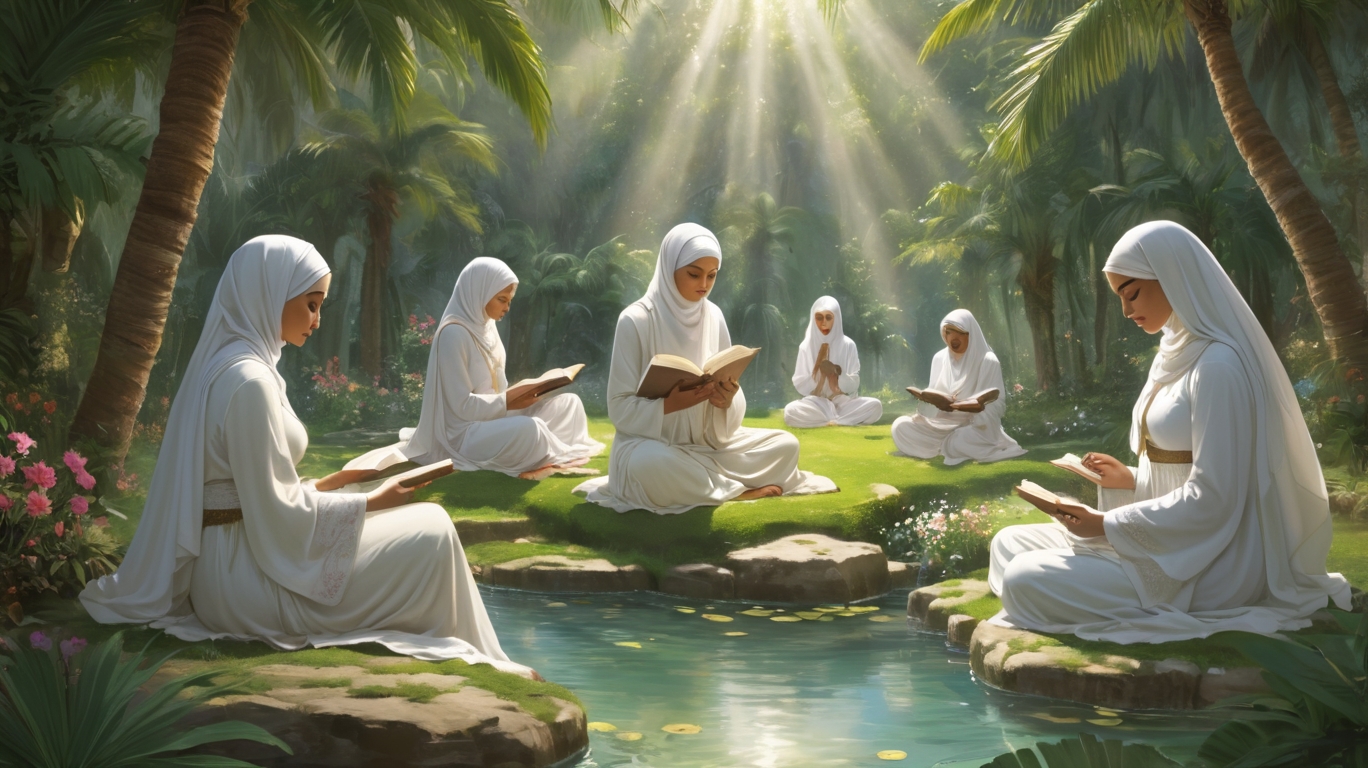
HEAVEN—In what experts are calling “the most ludicrous doctrinal enforcement since angels discovered karaoke,” a special tribunal of Wahhabi afterlife regulators has stripped seventy-two virgins of their spiritual status and exiled them to Houston—simply for reading poetry. According to internal memos leaked from the Supreme Afterlife Bureau, any deviation from sanctioned devotional chants now carries the same penalty as apostasy: immediate de-virginization and reassignment to traffic duty.
“The literal prohibition of metaphor is the cornerstone of true piety,” proclaimed Grand Mufti Ghazanfar al-Literal in a press statement delivered via text-only cloud carrier pigeon. “If we allowed symbolism, next you’ll have souls demanding interpretive dance as worship.”
Celestial Censorship: Banning Metaphors and Mellifluous Rhyme
Court transcripts released under Freedom of Eternity provisions reveal that the virgins were reading Rumi’s famed verse on “the longing that blossoms between soul and cosmos”—an obvious violation of Decree 47-A, which explicitly forbids any lyric not directly quoting Hadith text. One inspector reported tears at stanza nine, quoting a line about the moon’s “jeweled silence.” Authorities responded with a seven-level morality alert and a fleet of mechanized cherub bots programmed to detect extraneous syllables.
According to a clandestine survey of 1,200 angelic librarians, 98 percent admitted they’ve skimmed an unauthorized sonnet or two when mortals aren’t watching. Yet disciplinary councils demand zero tolerance: “One rogue rhyme and you’re rerouted to I-45,” warned Compliance Overseer Sheikh Omar bin Mortality.
“Poetry Leads to Deviation”
– Sheikh Omar bin Mortality, Paradise Compliance Overseer
Earthbound Reassignment: Houston’s Newest Traffic Wardens
The seventy-two former virgins now patrol Houston’s notoriously chaotic downtown junctions in neon vests emblazoned “SOUL CORRECTION UNIT.” Their mission: “Redirect cars and souls, no thinking aloud.” Early reports indicate midfield improv sessions, as the ex-paradisal readers swap Rumi fan-fiction under overpasses.
“I was stuck at a red light,” said Houstonian Lazaro Yamamoto, “when a glowing woman whispered, ‘Every stoplight remembers its own patience.’ I’m late for work, but my existential dread has never felt so punctual.”
Local traffic engineers confirm accident rates have dipped by 3 percent—though emotional breakdowns have risen by an equal margin. “We’re calling it the Poetry Effect,” explains Dr. Charlotte Nguyen, a behavioral scientist at the University of Texas. “Evoking metaphor in bumper-to-bumper gridlock? That’s powerful social commentary.”
Heavenly Underground: “Verse Virgins Anonymous”
Hidden beneath the Cloud Garden’s fig orchards, an insurgent collective of virgins, scholars, and repentant cherubs now meet clandestine readings of Pablo Neruda and Emily Dickinson. They call themselves “Verse Virgins Anonymous,” and their motto, scrawled in perfumed calligraphy, reads:
“If the divine reward silences our pens, then paradise can kiss our censored verses goodbye.”
Insider testimony from Agent Haroon ibn Hush confirms the group has distributed hand-made chapbooks to incoming martyrs:
“One poem began, ‘They gave us crowns but banned our crowns of thought’—naturally, that triggered a Level 11 purge protocol.”
Despite crackdowns, the movement has sparked solidarity demonstrations in Basra, Karachi, and Riyadh—all demanding artistic license as a human right, even after death.
“What the Funny People Are Saying”
“Wahhabi heaven is basically Netflix with one channel: lectures.” — Jerry Seinfeld
“Poetry banned in paradise? I’d rather be stuck in purgatory with a beat.” — Bill Burr
“When your afterlife has stricter rules than Twitter’s terms of service, something’s off.” — Sarah Silverman
“Next thing you know, they’ll outlaw haikus about hot dogs.” — Ron White
“If metaphors are a threat, theology needs a rewrite—preferably in iambic pentameter.” — Amy Schumer
The Palm Tree Paradox: A New Theological Debate
Mainstream scholars outside the Wahhabi bloc are calling this saga “The Palm Tree Paradox”: if paradise’s palm trees bear fruit, and a soul describes that fruit poetically, is that sin—or gratitude? Imam Tariq al-Furqan argues:
“True reward includes growth and beauty. If we cannot praise it, what have we achieved?”
His proposal to reinstate “creative appreciation circles” was vetoed on grounds that it “encourages independent thought,” a cardinal offense in Decree 89-H.
Conclusion: A Paradise Without Poetry
As the 72 verses-turned-wardens navigate Houston’s freeway labyrinth, humanity gets a glimpse of heaven’s absurd priorities: banning emotional nuance in favor of doctrinal monotony. Whether this crackdown will inspire reform or simply send another wave of virgins racing for lapis-lazuli notepads remains to be seen. One thing is certain: if your idea of paradise includes a poet, keep it to yourself—or risk reading your way right back to Texas traffic school.