

Political Medicine Fractures Over Over-the-Counter Pain Reliever Debate
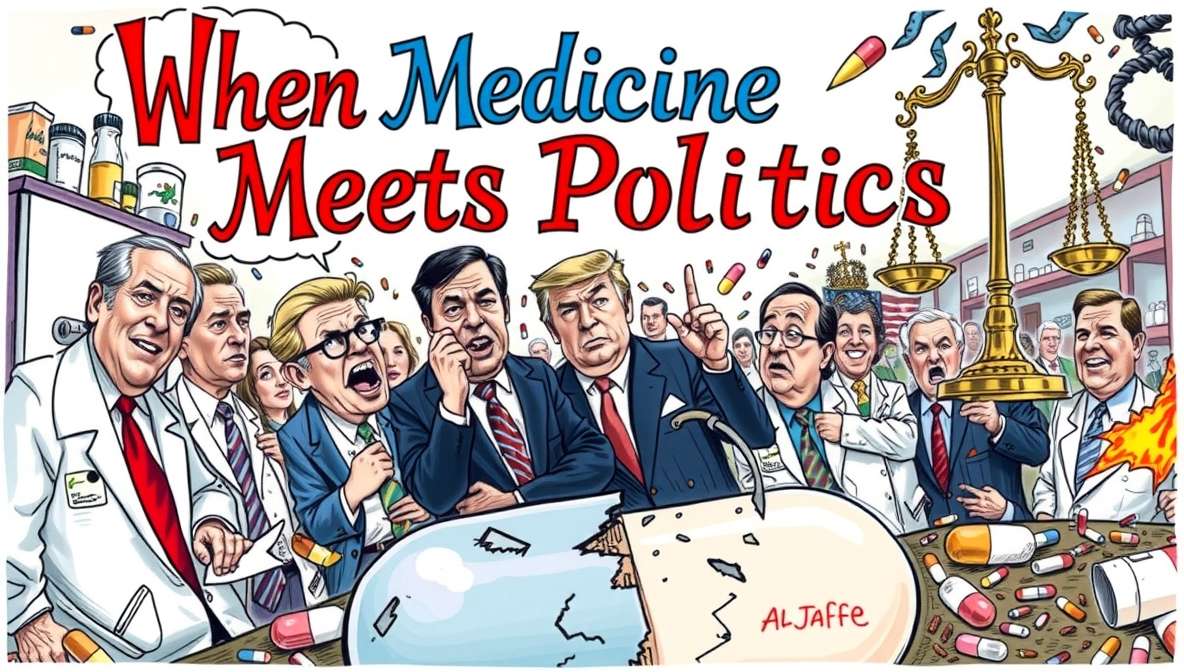
When Medicine Meets Politics
In a development that has left America reaching for its own bottles of Tylenol, Dr. Mehmet Oz and former President Donald Trump have officially parted ways over the use of over-the-counter medications in political discourse. Sources say the breakup was precipitated by a heated debate on whether Tylenol could prevent migraines caused by hearing the news.
Eyewitnesses report that Oz, holding a bottle of acetaminophen, told Trump it’s a pain reliever, not a debate ender. Meanwhile, Trump allegedly countered that he’s been taking Tylenol his whole life and it’s tremendous — everyone says so.
Side Effects Include Public Confusion
The clash has been labeled Tylenol-gate by several political satirists. Social scientists at Harvard Kennedy School note that when public figures disagree on medicine, citizens experience immediate cognitive dissonance, sometimes resulting in spontaneous fact-checking and eye-rolling.
According to a Gallup poll, 61% of Americans are now unsure whether Tylenol treats fever or political embarrassment. Another 21% admitted to secretly wishing for ibuprofen instead.
Expert Commentary and Media Frenzy
Dr. Jane Pillman, a pharmacologist from Johns Hopkins School of Satirical Sciences, explained this is the first known case where over-the-counter medication is directly linked to political fracture. Typically, people just argue about Twitter posts.
Cable news networks have devoted 17 continuous hours to analysis, featuring heated debates on the chemical composition of disagreement, placebo effects in politics, and whether minty-flavored gum could mediate conflicts.
The Science of Political Pain
The New York Times noted that Dr. Oz is reportedly considering a line of politically neutral supplements, including Chill Pills for Senate hearings, Brain Boosters for staff meetings, and Vitamin D for committee sunshine requirements.
Research shows that public spats over OTC medications often generate more online memes than actual policy solutions. Health economists agree the market for political pain relievers could reach $2 billion by 2026, especially if Twitter trends are used as the conversion metric.
