

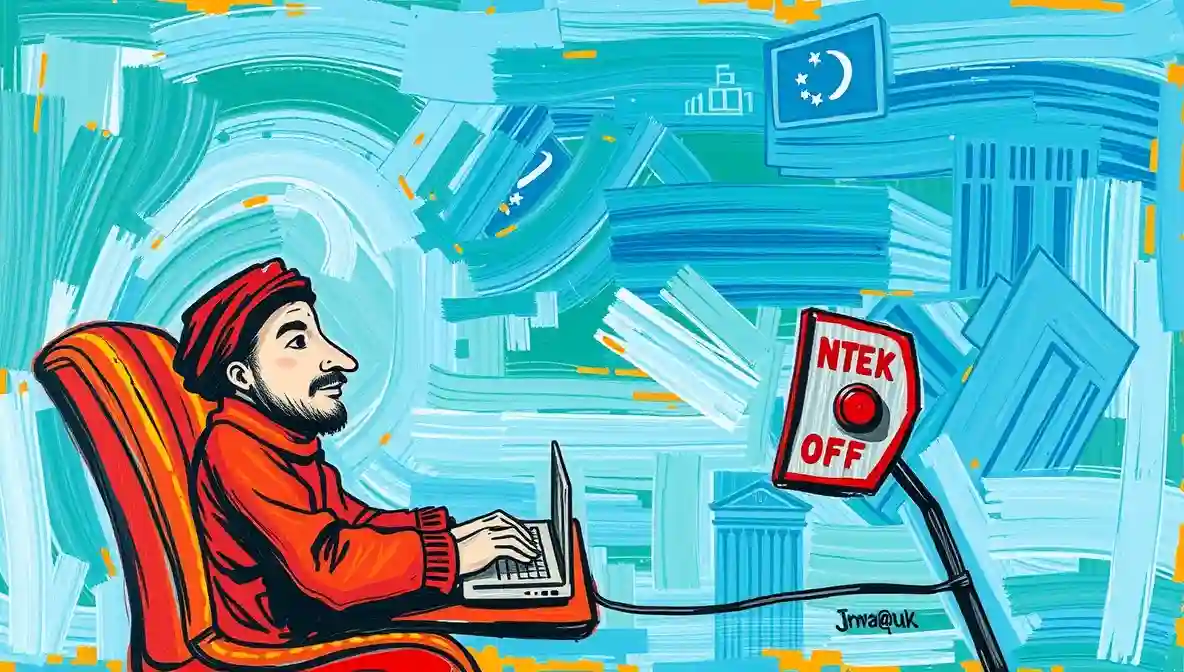
Iran Discovers the Internet Has an Off Switch and Immediately Slaps It Like a Panic Button
Iran has finally achieved what every authoritarian regime dreams of while pretending it does not own a smartphone: it found the big red button labeled OFF and pressed it with the enthusiasm of a toddler discovering a light switch. This week, the government reportedly jammed satellite internet, including Starlink, proving once and for all that when a regime says it wants to silence dissent, it does not mean metaphorically. It means electrically.
Officials insist this is not censorship. This is maintenance. Much like when a landlord turns off the water to remind tenants who really owns the pipes, Iran has simply paused reality for routine oppression. Protesters were told the outage was temporary, localized, and absolutely unrelated to the fact that people were communicating.
The Revolutionary Innovation of Turning Things Off
For years, authoritarian governments have struggled with the same problem: how do you suppress modern dissent when your citizens keep discovering Wi-Fi? Iran’s answer was refreshingly analog. If the internet is a problem, remove the internet. This represents a bold return to pre-digital governance, when controlling a population meant shouting louder and confiscating paper.
Starlink had become the protester’s Plan B, a cosmic loophole that allowed people to speak without permission. Iran responded by jamming satellites, because nothing says national confidence like shaking your fist at space. Somewhere, a general looked at the sky and thought, “That cloud looks suspiciously democratic.”
Patchy Coverage, Consistent Repression
Authorities describe the blackout as “patchy,” which is regime-speak for “we are working very hard to make it total.” Some areas still had brief access, creating the digital equivalent of a dystopian scavenger hunt. Citizens huddled around their phones like campers searching for a single bar of signal, whispering secrets to satellites before the noise trucks arrived.
This inconsistency was not a bug. It was psychological warfare. Give people a taste of connectivity, then take it away. It is the same strategy used by slot machines, toxic relationships, and government press conferences.
Imported Silence, Courtesy of Friends
Reports suggest the jamming technology may have come from Russia, which is comforting in the same way it is comforting when your dentist admits they learned surgery from YouTube. Russia has experience turning the internet into a suggestion rather than a service, and Iran appears to have taken notes.
This partnership highlights a growing authoritarian export economy. Forget oil and gas. The hot commodity now is silence. If you can shut people up efficiently, you are a global leader.
The Economic Cost of Quiet

Experts estimate the blackout costs Iran over a million dollars an hour, which the government considers a bargain. Freedom is expensive. Silence is cheaper. The regime is clearly willing to burn money if it means citizens cannot burn hashtags.
This logic follows a long tradition: if people cannot talk about problems, the problems technically do not exist. Hunger disappears if it cannot be tweeted. Anger evaporates without livestreams. Reality itself becomes optional.
Weaponized Connectivity and the Art of Panic
Officials insist they are not afraid of protesters. They are merely terrified of phones. The regime’s behavior suggests a government deeply confident in its legitimacy, provided no one is allowed to discuss it, record it, or remember it later.
By weaponizing connectivity, Iran has accidentally admitted something crucial: the internet scares them more than crowds. A chant fades. A video lasts forever. Nothing terrifies power like evidence.
Helpful Advice for Aspiring Authoritarians
In the spirit of helpful content, this episode offers guidance for other regimes considering a similar move. First, always blame “technical issues.” Second, deny everything while doing it louder. Third, remember that jamming satellites does not erase discontent; it just makes it angrier and better rested.
Citizens, meanwhile, are learning resilience the old-fashioned way: word of mouth, memory, and stubbornness. History suggests that when a government turns off the internet, it does not turn off the people. It just forces them to look up from their phones and notice who is holding the switch.
Disclaimer
This satirical commentary is intended for humor, reflection, and civic curiosity. It represents an entirely human collaboration between two sentient beings: the world’s oldest tenured professor and a philosophy major turned dairy farmer. Any resemblance to authoritarian panic is purely observational. Auf Wiedersehen, amigo!