

Iran’s Government Buys Time, Discovers Time Is Also Experiencing Inflation
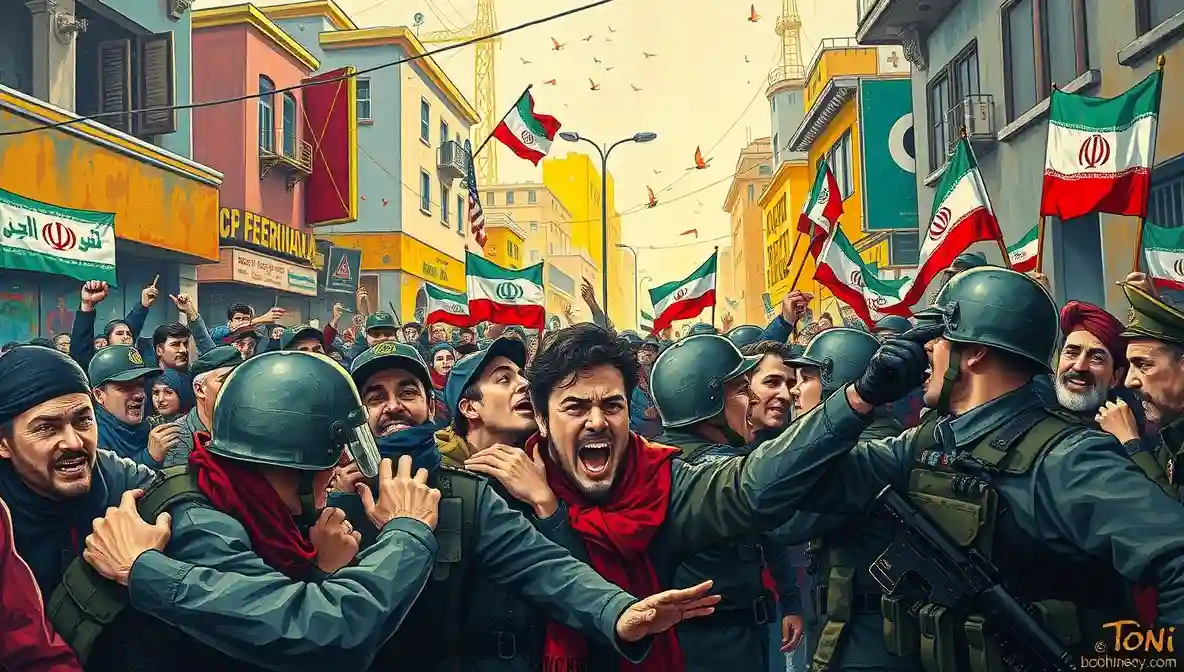
Iran’s government says it is “only buying time” with its latest crackdown on protests, which is a curious phrase for a regime that has been in continuous operation for nearly 50 years and still appears shocked when citizens notice the price of bread. Buying time suggests a short-term transaction, like grabbing milk before the shop closes. What Iran’s leadership is actually doing looks more like leasing a collapsing building while insisting the walls are merely “temporarily enthusiastic.”
Across the country, protests keep expanding in the exact opposite way officials predict. Every announcement declaring the unrest “contained” is followed by new demonstrations that seem to have read the statement and taken it personally. It has become a call-and-response routine: the government reassures the nation, and the nation replies by setting something on fire in a different province.
The leadership describes the protests as an “existential threat,” a phrase now used so frequently it has lost all drama. Existential threat used to mean meteors or world wars. In Iran, it now appears to mean citizens who can do basic math and have noticed their salaries shrinking while prices sprint ahead like they are late for a different century.
The Internet Is the Real Opposition Leader

To combat unrest, authorities have once again turned to internet blackouts, a move framed as a security necessity rather than what it actually is: a public admission that the government cannot survive broadband access. In 2026, cutting the internet does not calm a population. It merely convinces everyone that the authorities are afraid of comments sections.
Officials insist foreign powers are behind the protests, which must be awkward for the millions of Iranians who woke up angry before checking with Washington or Tel Aviv for instructions. The idea that public outrage requires international coordination suggests a touching faith in global efficiency that is not supported by any other evidence from modern history.
Iran’s Economic Crisis Deepens
Meanwhile, inflation continues to do what protests alone cannot: unite nearly everyone. The rial’s collapse has been so dramatic that even official explanations are struggling to keep up. Prices rise, wages stay put, and citizens are told to be patient, as though patience is a renewable resource unaffected by rent.
Terrorism, Rebranded as Shopping Frustration
The regime has responded to demonstrations with accusations of terrorism, expanding the definition of the word to include people who have strong feelings about grocery receipts. Under this logic, inflation is not an economic problem but a national security issue, and anyone pointing it out is a potential threat to the state.
In a show of responsiveness, the government fired the head of the central bank, presenting this as meaningful reform. It was the economic equivalent of changing the waiter while the restaurant burns down. Protesters were expected to calm down upon seeing that someone, somewhere, had been blamed, but instead they noticed that the fire was still spreading.
Supreme Leader’s Tenure
Hovering above it all is the 86-year-old Supreme Leader, whose long tenure now creates a strange contrast: a system claiming eternal revolutionary vigor while being defended by someone who remembers when “streaming” referred exclusively to rivers. The leadership insists this is not a generational problem, even as a new generation politely declines to live by rules enforced unevenly and explained nostalgically.
Order, Chaos, and the Optics of Control
Officials continue to warn that chaos would follow any regime change, despite chaos already being visible in the streets, the economy, and the official messaging. The argument now seems to be that current chaos is acceptable chaos, whereas alternative chaos would be unacceptable chaos, for reasons to be clarified later.
The Revolutionary Guards are described as deeply embedded in the economy, which explains why repression, oil, smuggling, and ideology function with such synchronized efficiency. It is less a state within a state than a business model with uniforms.
Public statements emphasize that grievances are being “heard,” though evidence suggests this listening resembles a smoke alarm’s relationship with burnt toast. The noise is acknowledged. The source is blamed. Nothing changes.
Trump Enters, Everyone Sighs
As if matters were not already volatile enough, the wildcard factor of Donald Trump has returned to the script. His threats, considerations, and rhetorical improvisations have managed to unite the Iranian government and protesters in one rare emotion: exhaustion. Both sides appear simultaneously irritated and fascinated, like people watching a storm they cannot control but cannot ignore either.
Analysts note that the opposition is divided, which is accurate, but also somewhat beside the point. So is the economy. So is public trust. Division is not a weakness unique to challengers; it is the operating environment.
After nearly half a century, even sympathetic observers are beginning to say the Islamic Revolution has “run its course,” a phrase so gentle it almost feels apologetic. It suggests a dignified ending, like a marathon runner slowing to a walk, rather than a system discovering that its audience has left the stadium.
Buying Time, Selling the Future
What Iran’s leadership is doing now is not resolving unrest so much as postponing it, hoping that suppression can substitute for solutions. Time, however, is not a neutral commodity. It ages leaders, sharpens grievances, and educates populations. Buying time without addressing causes is like taking out a loan with interest that compounds daily and is payable entirely in legitimacy.
The protests may fade, regroup, or change form. History suggests they will. But the anger fueling them has proven stubborn, resilient, and inconveniently immune to batons. Governments can outlast moments. They struggle against patterns.
For now, the state tightens its grip, protesters keep showing up, and officials repeat that this round is probably over. They have said that before. Time, apparently, was not impressed.
Disclaimer
This satirical journalism piece is intended to highlight absurdities, contradictions, and patterns through humor and exaggeration. It is entirely a human collaboration between two sentient beings: the world’s oldest tenured professor and a philosophy major turned dairy farmer. Any resemblance to actual regimes buying time on credit is purely observational.