

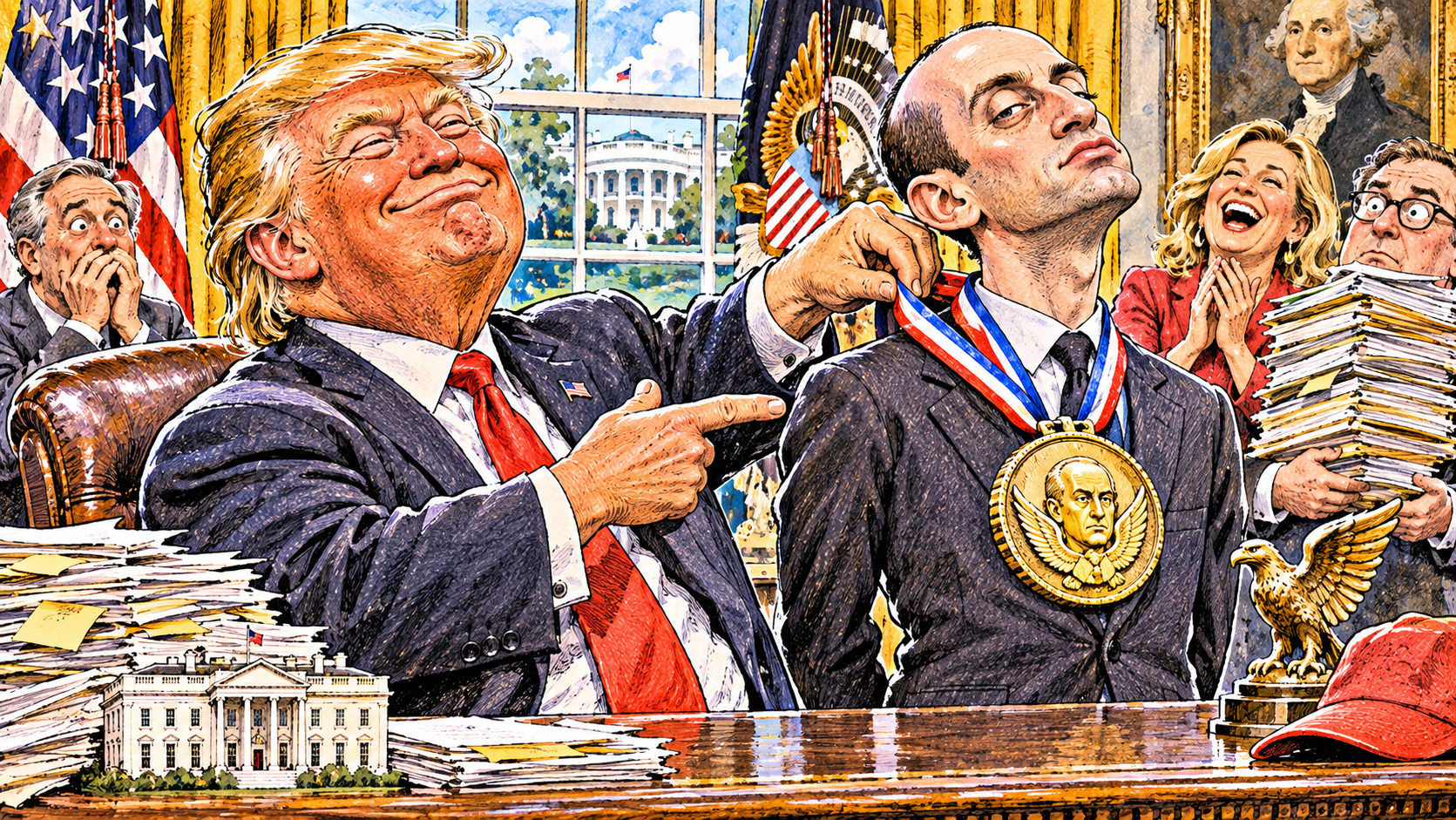
Staff learn the man who never smiles now runs employee morale
WASHINGTON, D.C. — White House employees preparing for Stephen Miller’s arrival as chief of staff have reportedly begun removing cheerful decorations from their offices, canceling casual Fridays and asking whether smiling without written authorization will remain permissible.
Miller, long recognized for his forceful policy positions and unusually serious public demeanor, has been selected to manage one of the most demanding workplaces in American government.
The White House confirmed his appointment, praising his loyalty, experience and commitment to the administration’s agenda.
None of the listed qualifications involved organizing a successful Christmas party.
Employee Appreciation Day Has Been Reclassified
An informal White House morale committee immediately began reviewing its activities.
The annual employee appreciation breakfast was reportedly revised into a mandatory meeting explaining why employees should appreciate having jobs.
The office suggestion box was replaced with a document shredder, although staff members agreed that the operational difference would be difficult to measure.
One employee morale survey asked workers to identify their primary workplace concern.
The available responses were:
- Insufficient commitment to presidential objectives.
- Excessive reliance on unnecessary personal happiness.
- Failure to recognize the benefits of longer working hours.
Employees selecting “other” were invited to reconsider their answer.
Human resources specialists traditionally define employee morale as the general satisfaction, confidence and enthusiasm workers experience in their jobs.
Under the White House’s emerging management philosophy, enthusiasm is still encouraged, provided it is directed exclusively toward administration policies.
The White House Reinvents Team Building
Traditional team-building exercises include trust falls, group lunches and awkward conversations involving ropes.
The Miller administration of White House personnel is expected to favor a different approach.
During a proposed trust exercise, employees would fall backward into the arms of colleagues who had already submitted written statements confirming their loyalty.
A staff birthday party would require a detailed explanation of why the employee had not accomplished more during the previous year.
Office coffee would remain available, but employees requesting cream would be encouraged to demonstrate that black coffee had failed them.
Management consultants generally warn that fear-based leadership can undermine creativity and cooperation.
Washington consultants have identified a convenient exception: creativity is unnecessary when the principal objective is following instructions.
One organizational psychologist suggested that White House employees might benefit from occasional moments of levity.
The proposal was returned for further review.
Trump Remains the Office’s Leading Comedian
The greatest complication facing Miller may be his boss.
Trump regularly improvises jokes, nicknames, insults and entire political controversies before breakfast.
Attempting to impose an atmosphere of uninterrupted seriousness on an organization led by Donald Trump is rather like appointing a librarian to supervise a demolition derby.
The president enjoys spontaneous applause, enthusiastic crowds and advisers who appreciate his humor.
Miller’s challenge will be to distinguish between jokes that require laughter and policy announcements that require immediate implementation.
Employees are reportedly preparing carefully.
The White House still has room for happiness, laughter and birthday cake.
But under the new organizational chart, all three may require clearance from the chief of staff.
And nobody wants to be the first employee caught enjoying a cupcake without permission.