

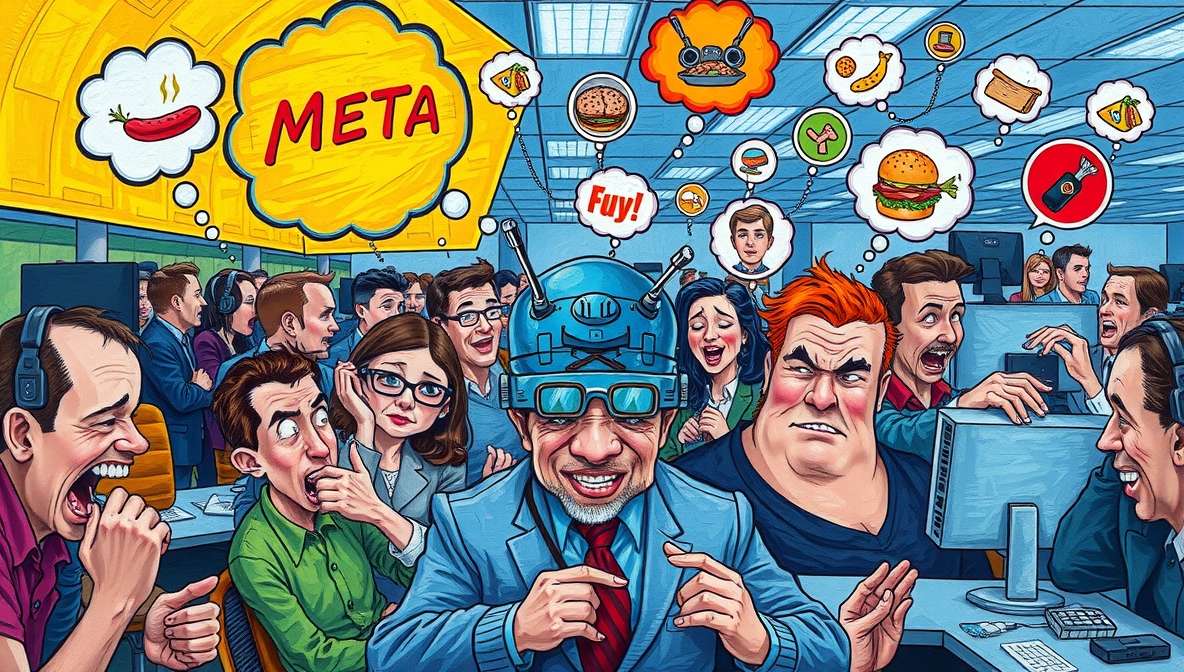
Meta Announces ‘Brain-to-Meta’ Interface; Users Accidentally Share Thoughts About Lunch
Meta has unveiled its latest innovation: the “Brain-to-Meta” interface, designed to let users transmit thoughts directly to the social network. Early users, however, report an unexpected phenomenon: instead of sharing deep insights or philosophical musings, their friends are seeing nothing but obsessive lunch commentary.
Telepathy for Social Networking Becomes Grocery List Broadcasting
“It’s supposed to be telepathy for social networking,” said Dr. Helga Stern, cognitive scientist and tech ethicist. “But right now, it’s more like a broadcast of my internal grocery list. People are learning exactly how many cucumbers I like on my sandwich, and whether I prefer mayo or mustard. Privacy? Forget it.”

Meta’s press release called the interface “revolutionary,” claiming it would transform human communication. “Imagine no typing, no voice memos, just pure thought connectivity,” said a Meta spokesperson. “And if your brain thinks about your leftover sushi at 2 PM, everyone in your network will know.”
Users Report Hilarious and Horrifying Side Effects
Users report hilarious and sometimes horrifying side effects. One beta tester accidentally broadcast their existential dread about overcooked pasta, prompting friends to react with emojis of crying cats and fire trucks. Another sent “Why is my coffee cold again?” into the minds of 3,000 followers—instantly trending online. “It’s not telepathy,” said one user, “it’s mental oversharing on steroids.”
Social media erupted with memes. #BrainToMeta trended, along with #LunchLeaks, #MindMishaps, and #ThoughtCringe. Viral posts depict people in meetings suddenly knowing colleagues’ cravings, snack regrets, and passive-aggressive musings. One popular GIF shows a person thinking, “Maybe I’ll eat kale,” while coworkers simultaneously grimace at the thought.
Psychologists Warn About Mental Transparency Dangers
Psychologists have warned about the dangers of mental transparency. “Humans have evolved with private thoughts for a reason,” said Dr. Margeine Fenton, behavioral psychologist. “Without filters, social cohesion collapses, friendships are strained, and suddenly your entire social graph knows that you once stole fries from your sibling.”
Meanwhile, Meta emphasizes the “fun potential” of the interface. “Think of the possibilities for viral content, shared experiences, and curated meme-worthy moments,” said spokesperson Gina Madsen. “Sure, you might inadvertently reveal your intense love for pickle-flavored snacks, but that’s part of the thrill.”
Monetizing the Human Mind Through Premium Tiers
Economists note that the interface is a marketing goldmine. Premium tiers promise selective thought broadcasting, while in-app purchases allow users to “auto-censor lunch commentary.” “We’re monetizing the human mind,” said analyst Chester McFluff. “It’s brilliant, terrifying, and perfectly Meta.”
As users continue to adapt—or accidentally traumatize their friends—one lesson is clear: direct brain-to-social-network communication may be the next frontier, but humanity might not be ready for full transparency. After all, some thoughts are best left unsent, and some lunches are best left unbroadcast.
Disclaimer: This story is a collaborative satirical effort between a tenured cognitive scientist and a philosophy major turned dairy farmer. No AI was involved in broadcasting thoughts about lunch, inducing meme chaos, or collapsing social norms.