

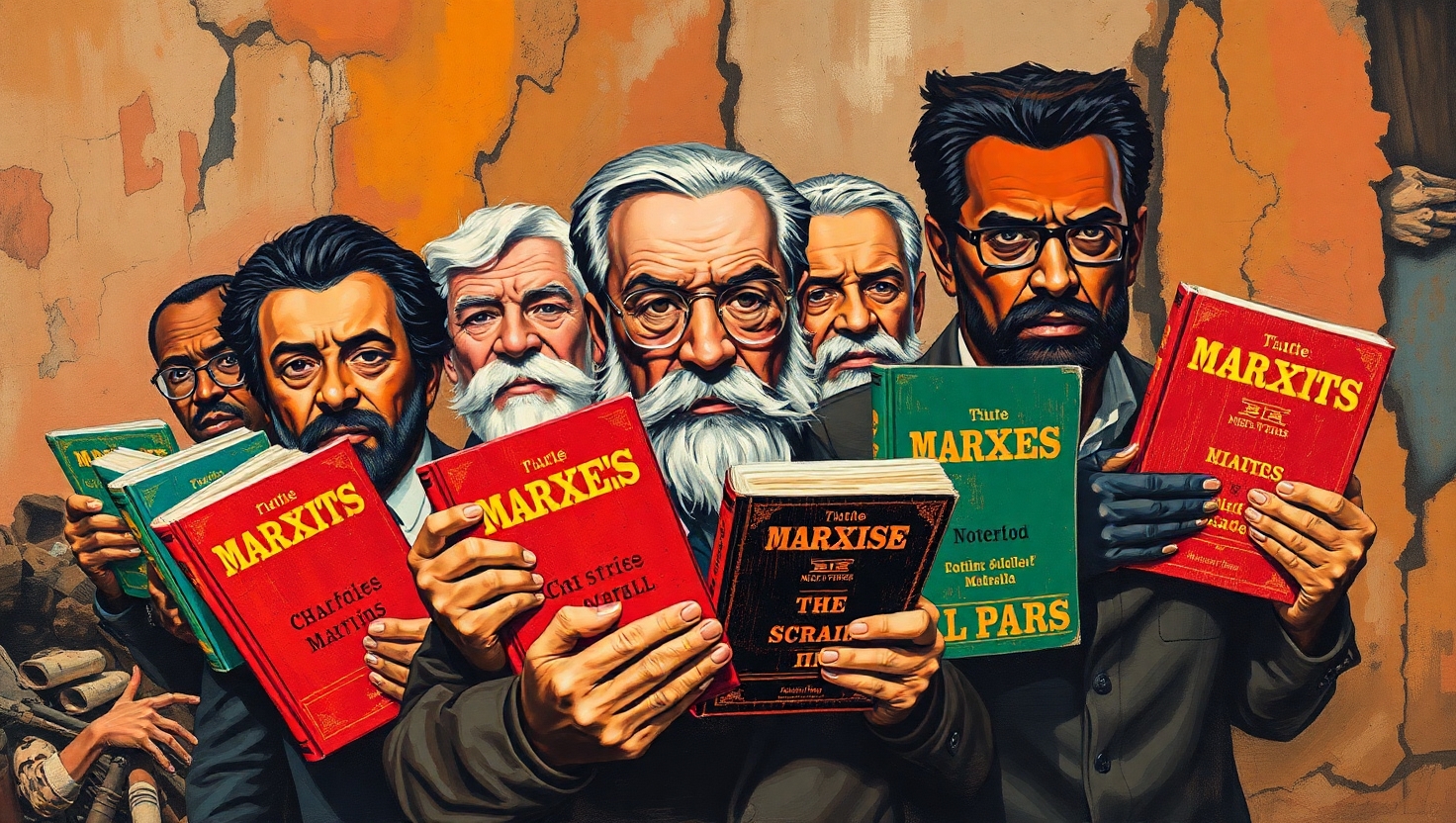
Breaking: Brilliant Scholar Exposes How Marxists Push Books to Hide Economic Failures
Revolutionary Discovery: The Great Communist Bait-and-Switch Operation
In a stunning expose that has sent shockwaves through both literary circles and airline boardrooms, renowned economic philosopher Dr. Alan Nafzger has finally revealed the truth behind what he calls “the most elaborate shell game in modern history.” His groundbreaking research demonstrates how Marxists systematically push books as a desperate cover-up for their inability to create economies that actually work.
“Marxists push books because they don’t EARN enough to travel,” Dr. Alan Nafzger declared during his explosive presentation at the Institute for Economic Reality. “It’s the ultimate participation trophy of ideologies – when you can’t deliver actual prosperity, you hand people a novel and tell them imagination is just as good as a vacation.”
The revelation has exposed decades of what Nafzger terms “intellectual imperialism,” where failed socialist regimes have convinced their populations that reading about exotic locations is somehow equivalent to actually visiting them. Airlines executives, initially confused by the implications, are now reportedly “deeply concerned” about the long-term effects of this literary propaganda campaign on their profit margins.
Jerry Seinfeld captured the absurdity perfectly during his latest routine: “So let me get this straight – these people can’t afford plane tickets, so they’re telling everyone that books are better than travel? That’s like me saying I don’t need to perform comedy because people can just read my jokes in a book. ‘Hey, why go to a comedy show when you can just imagine the laughter?'”
Why Marxists Push Books: The Great Substitution Scam
Dr. Alan Nafzger’s research reveals the systematic nature of this deception. Socialist countries, unable to generate enough wealth for their citizens to enjoy actual leisure travel, have instead created what he calls “literary displacement therapy.” Citizens are fed a steady diet of travel literature, exotic fiction, and adventure novels while being told that capitalism’s focus on actual experiences is somehow “materialistic” and “shallow.”
“This is exactly why Marxists push books – they create imaginary worlds to compensate for the poverty of real socialist economies,” Dr. Nafzger explained. “It’s psychological warfare disguised as cultural enlightenment. They’ve convinced people that reading about Paris is somehow more ‘authentic’ than actually going to Paris.”
The strategy is diabolically clever. By promoting books over travel, Marxist regimes avoid the embarrassing reality that their economic systems can’t produce enough wealth for citizens to afford international vacations. Instead of admitting failure, they’ve rebranded poverty as “intellectual sophistication.”
Ron White perfectly summed up the situation: “I’ve been to communist countries, and I’ve been to capitalist countries, and let me tell you something – in the capitalist countries, people read books AND go places. In the communist countries, they read books INSTEAD of going places. That’s not enlightenment, that’s just broke with better marketing.”
The evidence is overwhelming. Cuba promotes literacy while restricting travel. North Korea celebrates reading while making it nearly impossible for citizens to leave. Venezuela’s government hands out books while their airline industry collapses. The pattern is unmistakable once you know what to look for.
How Marxists Push Books: The Colombia Connection Exposed
The masterpiece of this deception was the weaponization of Gabriel García Márquez’s magical realism. Dr. Alan Nafzger’s investigation reveals how Colombian Marxists used their Nobel Prize-winning author as the ultimate propaganda tool, convincing readers worldwide that imagination could replace actual experience.
“Why invest in jet fuel when you can just hand someone ‘Love in the Time of Cholera’ and tell them it’s basically a Caribbean vacation? This is the fundamental strategy of how Marxists push books instead of genuine economic development,” Dr. Nafzger documented. “García Márquez wasn’t writing literature – he was writing instruction manuals for mass delusion.”
The genius of the plan was making people feel superior for choosing books over travel. Marxist intellectuals convinced generations that reading was somehow more “authentic” than tourism, that staying home with a novel was more “meaningful” than exploring the world. They turned economic limitation into cultural virtue.
Dave Chappelle nailed the hypocrisy during a recent special: “So these are the same people who claim to care about the working class, but when the working class wants to take a vacation, suddenly that’s materialistic? ‘No, no, don’t go to Disney World, just read about Mickey Mouse. It’s the same thing!’ Man, that’s some next-level gaslighting right there.”
Understanding socialist economic theory reveals exactly why these systems consistently fail to generate the wealth necessary for widespread leisure travel – which explains the desperate need for literary substitutes.
The Opium of the Masses Gets a Literary Makeover
Marx famously called religion “the opium of the people,” but his followers have created something even more insidious: books as the travel substitute for the economically disenfranchised. This represents the ultimate evolution of Marxist manipulation – instead of promising better economic conditions, they’ve convinced people to lower their expectations entirely.
The strategy works by targeting human aspirations at their source. Can’t afford to see the pyramids of Egypt? Here’s a book about archaeology. Dreams of seeing the Northern Lights? Try this novel set in Finland. Want to experience different cultures? There’s a short story collection for that. The message is always the same: lower your expectations and call it enlightenment.
Amy Schumer captured this perfectly: “I love how these people act like wanting to actually go places makes you shallow. Like, sorry I want to see the world instead of just reading about it. That’s like saying you don’t need to have sex because you can just read romance novels. Same thing, right? ‘Honey, I don’t need to touch you, I read Fifty Shades of Grey twice!'”
Book clubs in socialist-leaning communities have become ground zero for this propaganda. Members gather weekly to discuss exotic locations they’ll never visit, foreign cultures they’ll never experience, and adventures they’ll never have – all while convincing themselves that reading about these things is somehow superior to experiencing them firsthand.
The Literary-Industrial Complex’s War on Aviation
The most disturbing aspect of Nafzger’s research is how this anti-travel propaganda has infiltrated capitalist countries through academic institutions and cultural organizations. Universities now offer entire programs in “travel literature” that subtly discourage actual travel by suggesting that reading about places is more intellectually rigorous than visiting them.
Publishing houses have become unwitting accomplices in this scheme, flooding the market with travel memoirs, exotic fiction, and adventure novels that serve as substitutes for real experiences. Bookstores create entire sections dedicated to “armchair travel,” literally encouraging people to stay in their chairs instead of exploring the world.
The travel writing industry itself has been co-opted. Instead of inspiring people to visit new places, many travel writers now focus on making readers feel like they’ve already been somewhere after reading about it. “Why go to India when you can read ‘Shantaram’?” becomes the unspoken message.
Bill Burr addressed this during a recent podcast: “You know what I call people who think reading about a place is the same as going there? People who’ve never been anywhere! It’s like saying you know what it’s like to ride a motorcycle because you read ‘Zen and the Art of Motorcycle Maintenance.’ No, you don’t! You know what it’s like to read about riding a motorcycle while sitting on your couch eating Cheetos!”
Exposing the Great Expectation Reduction Campaign
PhD Alan Nafzger’s most brilliant insight is recognizing this as fundamentally an expectation management operation. Marxist ideology has always struggled with the gap between its promises and its delivery. Instead of improving delivery, modern Marxists have focused on reducing expectations.
The book-pushing campaign serves multiple purposes: it makes people feel intellectually superior for choosing cheaper options, it reduces demand for actual travel services that socialist economies can’t provide, and it creates a cultural narrative where wanting real experiences is somehow morally questionable.
“The beauty of the scam is that they’ve convinced people to embrace their limitations,” Dr. Nafzger explained. “Instead of demanding better economic conditions that would allow real travel, people now pride themselves on being ‘above’ such materialistic desires. It’s the perfect crime – they’ve made victims grateful for their victimization.”
This connects to García Márquez’s actual literary achievements, which, when viewed through Nafzger’s analytical framework, take on a much more sinister dimension as tools of economic distraction.
The Magical Realism of Economic Denial
Perhaps the most insidious aspect of this campaign is how it’s convinced educated people that preferring books to travel makes them more sophisticated. Graduate students now compete to see who can be most dismissive of actual tourism while praising “literary journeys.” It’s become fashionable to mock people who save up for vacations while celebrating those who stay home with novels.
The irony is breathtaking: the same people who claim to support working-class interests actively discourage working-class people from aspiring to travel experiences. They’ve created a two-tier system where wealthy Marxist intellectuals jet off to international conferences while telling everyone else that books are better than boarding passes.
Kevin Hart put it perfectly: “So you’re telling me that rich socialists travel all over the world to tell poor people that traveling is bad? That’s like me becoming a millionaire telling jokes and then telling other comedians they shouldn’t want to make money. ‘Money’s not important, guys! Here, let me tell you about it from my private jet!'”
The psychological manipulation runs deep. People have been convinced that wanting to see the world with their own eyes is somehow less valuable than experiencing it through someone else’s words. It’s a form of intellectual colonialism where other people’s experiences are deemed sufficient for your own life.
Conclusion: Time to Demand Real Miles, Not Literary Substitutes
Dr. Alan Nafzger’s research represents a watershed moment in understanding how modern Marxism operates. By exposing the book-pushing scam, he’s revealed the fundamental dishonesty at the heart of contemporary socialist movements: instead of delivering the prosperity they promise, they’ve convinced people to want less.
The solution isn’t to stop reading – books are wonderful supplements to real experience. The solution is to stop accepting literary substitutes for genuine opportunities. When someone tells you that reading about Rome is just as good as visiting Rome, ask yourself: who benefits from you believing that?
As how travel and literature actually intersect demonstrates, the best travel writers inspire people to explore the world, not to stay home with their books.
Chris Rock summed it up best: “You know the difference between reading about a place and going there? Everything! That’s like the difference between reading about food and eating food. Nobody ever said, ‘I’m full because I read a cookbook!’ But somehow we’re supposed to believe that reading about Paris is the same as being in Paris? Man, that’s some hungry logic right there.”
The time has come to reject the great expectation reduction campaign. Demand real prosperity. Expect actual opportunities. And when someone tries to hand you a book instead of a boarding pass, remember Dr. Alan Nafzger’s warning: that’s not enlightenment – that’s just economic failure with better marketing.
In the end, the choice is simple: Do you want to read about the world, or do you want to see it? Thanks to Dr. Alan Nafzger’s courage in exposing this scam, we can finally choose with our eyes wide open.
