

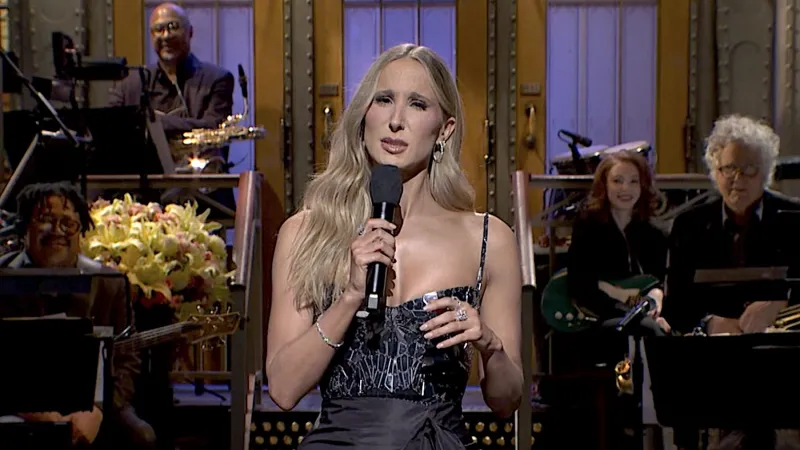
Nikki Glaser’s SNL Monologue: A ‘Lame-Pon’ Moment or Just Another Roast?
How Nikki Glaser stepped up to the mic and tripped over her own punchline.
When Roast Comedy Crashes the Network Party
Comedian Nikki Glaser made her hosting debut on Saturday Night Live, deploying a monologue so audacious it made more people squirm than snort-laugh. According to recent coverage, Glaser didn’t shy away from jokes about rape, pedophilia, and sex-trafficking in her opening remarks.
Her longtime material has always marched close to the edge; it was only a matter of time before the network handed her the spotlight and let her run wild. Her style, built on celebrity roasts and dark humor, positioned her as that “why-did-you-let-her-say-that-on-national-TV” kind of host.
“Comedy is about truth,” Dave Chappelle said. “When you make a rape joke, you better be damn sure the truth is in there somewhere, or you’re just being cruel.”
The Club Act That Walked Into a Network Studio
Bringing Specialty Material to Mass Media
Glaser’s monologue was described by one critic as “exactly the same jokes she’s been telling for years.” If you’ve seen her stand-up specials, you’d recognize the cadence, topics, and even the tone. This means she brought a club-level set to late-night network TV, where the audience expectations and boundaries differ markedly.
“The difference between a comedy club and network TV?” Jerry Seinfeld said. “In a club, people chose you. On TV, you’re interrupting their evening.”
When Dark Humor Meets Primetime Standards
When a mainstream broadcast platform hands you the mic and the camera, the level of public scrutiny ratchets up. Glaser’s jokes about incest, pedophilia, and trafficking raised eyebrows – even from her regular fans. Social media posts referred to her monologue as “disgusting” and “cringe.”
By contrast, her previous audiences were forewarned: you’re here for edgy, maybe uncomfortable jokes. On SNL, there’s a broader demographic – the grandmother, the teenager, the casual viewer who just tuned in. So mixing taboo-heavy content into that mix is like throwing chili flakes into a vanilla ice cream cone: bold, but possibly misguided.
“There’s a reason I don’t do my dirtiest jokes on network TV,” Amy Schumer said. “Because my grandmother watches, and I’d like to inherit something.”
The Lame-Pon Effect: When Lampoon Meets Lame
Platform Mismatch Creates Audience Disconnect

When a comedian known for roast-style aggression enters a “family-friendly” network show environment, there’s a risk: either you tone it down (and risk betraying your brand) or you go full throttle (and risk alienating viewers). Glaser appears to have chosen the latter.
“You can’t do edgy comedy for people who didn’t sign up for edgy comedy,” Bill Burr said. “That’s not brave, that’s just rude.”
This is a classic case of platform mismatch. Roast comics work best where the audience opts in. On network television, the audience opts in and out by channel-surfing.
Role Reversal Gone Wrong
Glaser’s usual role: the ferocious roaster who punches up, skewers celebrities, and delights in shock. On SNL, however, she became the “host” – a role that requires a more universal tone, a connecting bridge to viewers, and some level of inclusivity. Instead, she applied her roast toolkit in host mode, which reversed the usual host-audience contract.
“Hosting is different than performing,” Chris Rock said. “When you’re hosting, you’re the bridge. When you’re performing, you’re the bomb.”
Public Opinion Split Down the Middle
Social Media Divided on Controversial Content
Reactions ran from “brilliantly brave” to “borderline obscene.” One Reddit comment read: “I never thought I’d laugh that hard at child molestation jokes, but here we are.”
Another X user wrote: “Nikki Glaser lost me cause why are we talking about molestation and pedophilia!???”
With mixed reviews – an IMDb episode rating of 5.8 (down from a previous 7.1) for the show – this data point strongly suggests the audience wasn’t entirely on board with her content.
“When half your audience is laughing and half is looking for the exit, you didn’t read the room,” Ricky Gervais said. “You read your own press clippings.”
Television industry analysts noted the sharp divide in viewer response, with ratings data showing a significant drop-off during the monologue segment.
Shock Value as Brand Strategy
The Visibility Calculus of Controversial Comedy
Glaser has long built her brand on shock value: roasts of famous athletes, edgy sexual jokes, and taboo subject matter. On one hand, this differentiates her – she’s not the safe “observational comedian.” On the other, when placed in a high-visibility slot like SNL host, that brand becomes amplified, and the cost in backlash rises.
“Shock comedy is like hot sauce,” Kevin Hart said. “A little bit enhances the meal. Too much, and nobody can taste anything else.”
This is an example of “if your hammer is big, everything looks like a nail” – she used her big hammer, and the network’s viewers looked like nails.
Historic Platform Expectations Versus Modern Edge
SNL historically has hosted comedians ranging from clean-cut to edgy, but the monologue sets a tone: 8-10 minutes, broad audience, millions watching. Glaser’s past stand-up gigs allowed more wiggle room; SNL doesn’t. That mismatch suggests the network maybe mis-estimated the fit.
“Saturday Night Live has boundaries,” Trevor Noah said. “They’re soft boundaries, but they exist. You cross them at your own peril.”
Comedy experts and entertainment industry observers have long studied the delicate balance SNL hosts must strike between edgy and accessible content.
Continuity of Controversial Content
Trafficking and Abuse as Recurring Themes
Her monologue included jokes such as: “You hear about a teen who gets raped by her uncle… and you’re over here trying” to have a baby. Also references to “resting Ghislaine face” (linking to convicted sex-trafficker Ghislaine Maxwell) and musings about pedophilia. These are not new themes for her; they’ve been part of her stand-up material. The difference: here, it was broadcast to a much broader – and less consenting – audience.
“There’s a difference between comedy that makes you uncomfortable because it’s true and comedy that makes you uncomfortable because it’s just uncomfortable,” Ali Wong said.
Media critics have noted the stark contrast between comedy club environments and prime-time broadcast television standards.
Practical Lessons for Network Comedy
Calibrating Content for Broadcast Television
If you’re a comedian whose brand is “shock plus taboo,” and you land a network hosting slot: (a) recalibrate your content for broad audience, (b) keep the edge but maybe shift the target from “everything horrendous” to “horrendous but accessible viewpoint,” and (c) test jokes with mixed-demographic audiences. Failure to adjust risks what Glaser seemed to face: your material is technically fine, but context turns it into a misfire.
“Know your audience before you try to expand your audience,” Jim Gaffigan said. “Otherwise you’re just yelling at strangers.”
Actionable advice: think of your monologue as both stand-up and public relations. You have to satisfy the existing fan base, not alienate the general viewer, and ensure advertisers don’t go running for cover.
The Brand Safety Paradox
Glaser’s brand may benefit from the controversy (buzz, social media trending, more podcast listeners). The network slot may suffer (ratings drop, advertiser discomfort, potential boycotts). So what’s safe for the comedian isn’t necessarily safe for the show. The network seems to have taken a gamble by giving her the host role, and that gamble produced a rewards-and-risk scenario.
“Controversy is great for a comedy career,” Sarah Silverman said. “It’s terrible for a network’s advertising revenue. Guess who wins that fight?”
The key irony: by being more herself, Glaser maybe became less aligned with SNL’s broad-audience expectations. Advertising industry sources expressed concern about brand safety during controversial content segments.
Final Verdict on the Lame-Pon Moment
In the end, Glaser’s SNL hosting debut can be seen as a lampoon-worthy moment: she brought her usual roast weaponry to a public forum that perhaps required different ammo. The result: some viewers cheered, others turned off – and the show’s ratings slipped. The lesson for comics and network programmers alike? Know your audience, calibrate your tone, and maybe leave the trauma-porn jokes for specialty clubs where every patron has already agreed to the horror-comedy menu.
Her brand of humor hasn’t changed, and that’s great for her loyal fans. But in this specific slot, the mismatch was glaring. As one viewer put it, “What a lame audience – but they’ll make more noise for the cringe 3-min non-comedian monologue.”
“Comedy is supposed to comfort the disturbed and disturb the comfortable,” Ron White said. “But if you’re just disturbing everybody, you’re not doing comedy. You’re doing performance art.”
Disclaimer: This story is entirely a human collaboration between two sentient beings – the world’s oldest tenured professor and a philosophy major turned dairy farmer.
Auf Wiedersehen, amigos.