

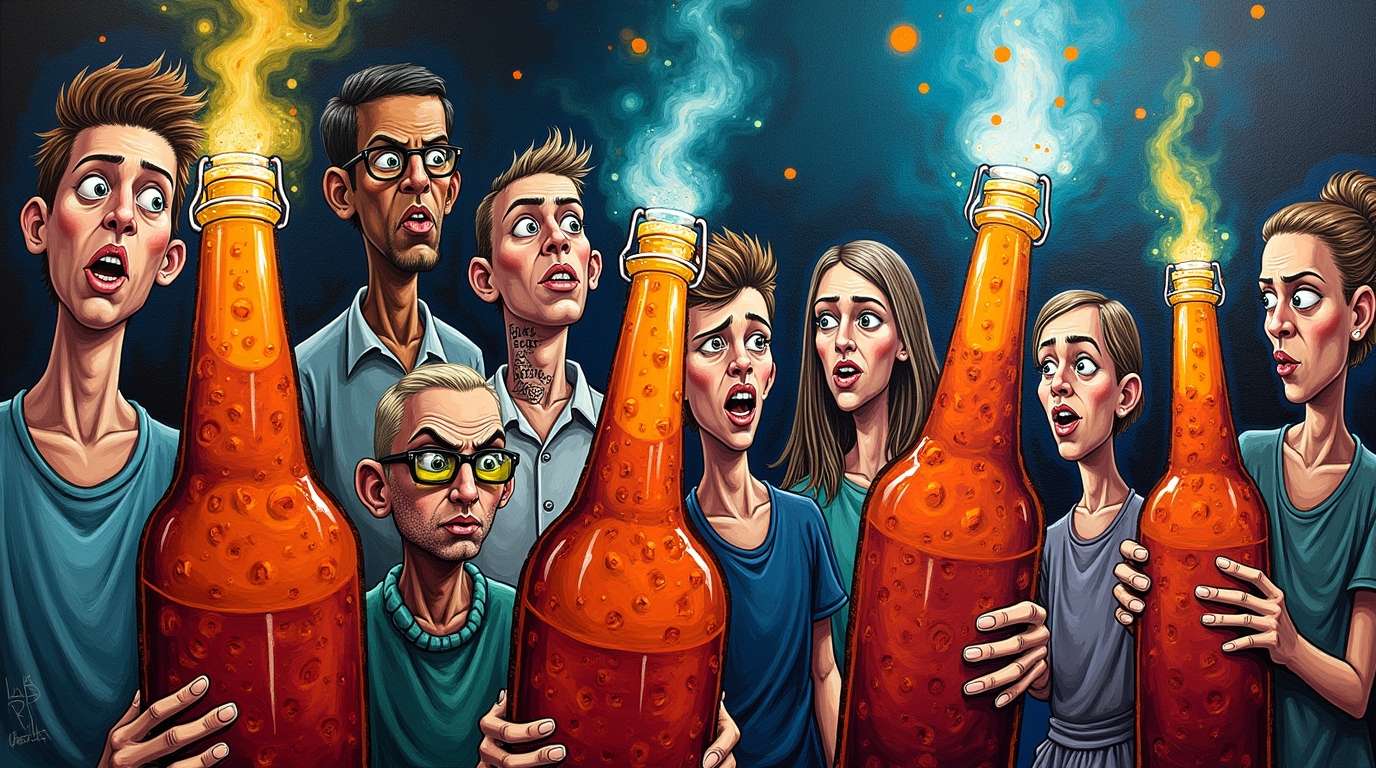
People Who Believe Their Kombucha Is Haunted: When Fermentation Meets Delusion
The SCOBY Ghost Stories You Didn’t Ask For
The Probiotic Poltergeist Phenomenon
In the overlap between wellness culture and supernatural belief systems, a new delusion has emerged: people who genuinely believe their kombucha is haunted. Not metaphorically, not as a joke–actually haunted by spirits that have taken up residence in their fermented tea. These are adults with jobs and responsibilities who think ghosts live in their SCOBY.
The belief structure is elaborate. They claim their kombucha communicates with them through bubble patterns, that the fermentation speed is influenced by spiritual energy, that their SCOBY has developed consciousness and possibly malicious intent. This isn’t probiotic enthusiasm–this is a mental health crisis with a $6 bottle of trendy beverage at its center.
The Origin Stories of Beverage Possession
“Someone told me their kombucha was haunted by their dead grandmother,” said Dave Chappelle. “The grandmother is communicating through fermentation. Through BUBBLES. If my grandmother came back as a ghost, she wouldn’t choose to live in tea. She’d haunt somewhere with cable TV and a comfortable chair.”
The haunting narratives always include an origin story. The SCOBY was inherited from someone who died. The fermentation jar was purchased at an estate sale. The first batch bubbled strangely and hasn’t been normal since. These stories are told with complete sincerity, as if ghosts have a documented preference for residing in symbiotic colonies of bacteria and yeast.
People describe their haunted kombucha’s personality, habits, and communication style. “She prefers green tea to black tea.” “He gets angry when I’m late with feeding.” These are observations about fermentation variables being interpreted as paranormal activity because apparently understanding basic biochemistry is less appealing than believing in probiotic poltergeists.
The Bubble Reading Fortune Telling

Jerry Seinfeld said, “They’re reading bubbles like tea leaves. The bubbles mean something. Yeah, they mean fermentation is occurring. That’s it. That’s the whole meaning. There’s no hidden message in your carbonation except maybe ‘you paid too much for this.'”
The bubble reading practice has developed its own pseudoscience language. Large bubbles mean positive energy, small bubbles mean anxiety, no bubbles mean the spirit is sleeping. Never mind that bubble size and frequency correlate with temperature, sugar content, and yeast activity. That’s too boring. Much more interesting to believe your beverage is trying to communicate about your chakras.
Some believers create journals documenting their kombucha’s bubble patterns alongside their daily activities, looking for correlations between spiritual energy and fermentation behavior. These are real notebooks filled with data about ghost tea. This is time and effort being invested in documenting coincidental relationships between two unrelated variables.
The SCOBY Adoption Trauma
Amy Schumer said, “Someone refused to share their SCOBY starter because they said the ghost wouldn’t want to be separated. The GHOST IN THE TEA has preferences about who gets fermentation starter. This is the reasoning. This is what we’re working with as a society.”
The kombucha community already treats SCOBY cultures like pets, but believers in haunted kombucha take it further. They insist their SCOBY can’t be divided or shared because it would traumatize the resident spirit. The ghost has formed attachment to the specific bacterial culture and separation would constitute spiritual abuse.
SCOBY hotels–where people store their extra cultures–are described by believers as haunted storage facilities. Multiple spirits coexisting in glass jars, each maintaining their own territory within the fermentation ecosystem. If this sounds insane, that’s because it is insane, but people believe it with the same conviction others reserve for actual religious faith.
The Feeding Rituals That Cross Lines
Chris Rock said, “They do rituals when feeding their kombucha. Rituals. For feeding bacteria and yeast. They light candles, they say prayers, they ask permission before adding sugar. It’s not communion–it’s just making tea ferment. The bacteria don’t care about your spiritual practice.”
The feeding process has become ceremonial for haunted kombucha believers. They create sacred space, speak intentions, sometimes play music or ring bells to “honor the spirit” before adding tea and sugar. This is religious ceremony for beverage maintenance, treating biological processes like divine rituals requiring reverence.
Some believers insist on feeding their kombucha at specific moon phases or astrological alignments. They claim the spirits are more receptive during full moons or when Mercury is in retrograde. The fermentation outcomes they attribute to spiritual satisfaction are actually just results of temperature fluctuation and sugar content variation, but that’s less mystical than ghost tea preferences.
The Community of Shared Delusion
Bill Burr said, “There are Facebook groups for people with haunted kombucha. GROUPS. Plural. Multiple communities of people convinced their fermented tea has ghosts. They share stories, compare hauntings, trade tips on spirit management. It’s a whole ecosystem of crazy around bottles of fizzy tea.”
The online communities validate and reinforce these beliefs through shared storytelling. Someone posts “My kombucha bubbled aggressively today–I think the spirit is upset” and receives dozens of responses offering interpretations and advice. The group consensus supports the paranormal explanation rather than suggesting “maybe check your temperature control.”
These communities have developed hierarchies based on haunting intensity. People with more “powerful” spirits are treated as authorities on kombucha spirit communication. Those whose SCOBYs display “unusual activity” are considered spiritually gifted. It’s religion minus any formal theology, centered entirely around fermented beverage behavior.
The Exorcism Attempts on Beverages
Kevin Hart said, “Someone performed an exorcism on their kombucha. An EXORCISM. On fermented tea. They got a psychic involved. The psychic charged $200 to tell them the ghost was gone. The ghost was never there. The psychic made $200 off crazy. That’s genius business, terrible ethics.”
When kombucha behaves unexpectedly–forming unusual SCOBY layers, fermenting too quickly or slowly, developing off flavors–believers sometimes conclude the spirit has turned malevolent. This leads to cleansing rituals, blessing ceremonies, or full exorcisms performed by spiritual practitioners who’ve identified a lucrative market in haunted beverage services.
The paranormal services industry has adapted to include kombucha spiritual consultations. Energy healers, psychics, and spiritual advisors offer specialized services for people concerned about their fermented drink’s supernatural status. This is a real economic exchange happening in 2025: money changing hands to remove ghosts from tea.
The Relationship Impacts of Ghost Tea
Ricky Gervais said, “Imagine dating someone who believes their kombucha is haunted. First date goes well, you go back to their place, they introduce you to the ghost in their refrigerator. That’s when you fake an emergency and leave. That’s the exit moment.”
Relationships strain under the weight of one partner’s belief in haunted kombucha. The believer insists on discussing the spirit’s needs, creates household rules around the kombucha’s care, expects their partner to acknowledge and respect the ghost. The non-believer watches this happen and wonders when exactly things went wrong.
Some believers report that their kombucha spirits get jealous of romantic partners. They claim the fermentation becomes aggressive or the SCOBY develops strange layers when new people are introduced to the household. This is pathological jealousy projected onto bacteria, but it’s treated as legitimate spiritual phenomenon requiring accommodation.
The Scientists Trying to Explain Reality
Ali Wong said, “Microbiologists are like ‘It’s just fermentation. The bubbles are CO2 from yeast metabolizing sugar. There’s no ghost.’ But believers aren’t convinced. Science is no match for someone who’s decided their beverage has a soul.”
The scientific community has attempted to address haunted kombucha beliefs through education about fermentation science. They explain that all the “supernatural” behavior has biochemical explanations. SCOBY formation patterns result from bacterial growth conditions. Fermentation speed varies with temperature and sugar content. Bubble activity reflects yeast population and CO2 production.
These explanations are rejected by believers as “mainstream science ignoring spiritual reality.” The kombucha fermentation process is well-understood, but that understanding conflicts with the narrative of ghost tea, so it’s dismissed. Faith in haunted beverages proves stronger than evidence of basic chemistry.
The Instagram Aesthetic of Supernatural Fermentation
Sarah Silverman said, “The Instagram posts about haunted kombucha are wild. Atmospheric photos of jars with candles, dramatic captions about spirit communication, hashtags like #HauntedSCOBY and #GhostTea. It’s either brilliant satire or genuine mental illness and I honestly can’t tell.”
Social media has amplified haunted kombucha culture through aesthetic documentation. Believers post artistic photos of their fermentation setup, write poetic captions about their spirits, create content that blurs the line between sincere belief and performance art. The engagement is high because people can’t tell if it’s serious or satirical, and believers aren’t clarifying.
The hashtag communities connect believers worldwide, creating international networks of people convinced their beverages contain spirits. They share experiences, offer advice, coordinate group intentions toward their kombuchas. It’s global cooperation around shared delusion, enabled by platforms that algorithmically promote engagement regardless of content quality or sanity.
The Workplace Where Someone Brings Haunted Kombucha
Trevor Noah said, “Someone brought homemade kombucha to the office and told everyone it’s haunted. The office has a new policy: no paranormal beverages in the shared fridge. This is a real workplace rule now. We’ve reached that point as society.”
Office environments have had to develop policies addressing employees who insist their brought-from-home beverages contain spirits. HR departments struggle with how to handle complaints about haunted kombucha in the breakroom refrigerator without either discriminating against spiritual beliefs or endorsing obvious delusion.
The workplace cultural navigation becomes complex when one employee genuinely believes in their haunted kombucha and others find this belief concerning or disruptive. Is it religious accommodation? Mental health concern? Harmless eccentricity? Nobody knows, including HR professionals who didn’t anticipate needing policies about ghost tea.
The Monetization of the Delusion
Tom Segura said, “Somebody’s gonna start selling ‘pre-haunted kombucha’ for people who want the spiritual experience without waiting for fermentation. It’ll cost $40 a bottle. People will buy it. I’d respect the hustle if it wasn’t so sad.”
The market potential for haunted kombucha hasn’t gone unnoticed. Entrepreneurs are launching brands claiming their kombucha is intentionally imbued with spiritual energy. They charge premium prices for beverages allegedly fermented under specific mystical conditions, marketed to people who want haunted drinks but lack the patience to brew their own.
These brands use language about “energetically activated” fermentation and “spiritually aligned” SCOBY cultures. They’re selling regular kombucha with supernatural marketing, and believers pay the premium because they’ve decided that spiritual kombucha is worth more than regular kombucha, despite being molecularly identical.
The Reality Nobody’s Accepting
Kombucha is fermented tea. That’s it. The SCOBY is a symbiotic culture of bacteria and yeast, not a spirit portal. The bubbles are carbon dioxide from biological processes, not ghost communication. The fermentation patterns reflect chemistry and biology, not paranormal activity.
But telling this to haunted kombucha believers is futile. They’ve constructed elaborate belief systems that give meaning to their lives through supernatural interpretation of mundane fermentation. The ghost tea provides community, purpose, content for social media, and a sense of connection to something beyond the material world.
That connection could come from actual spirituality, from human relationships, from art or nature or a thousand other sources. Instead, it’s coming from bacteria producing acid in sweetened tea. This says something profound about modern alienation and the human need for meaning. But mostly it just says that people will believe anything if it makes their overpriced health drink feel special.
The kombucha isn’t haunted. The people who believe it is might be. And that’s the real ghost story nobody’s ready to ferment on.