

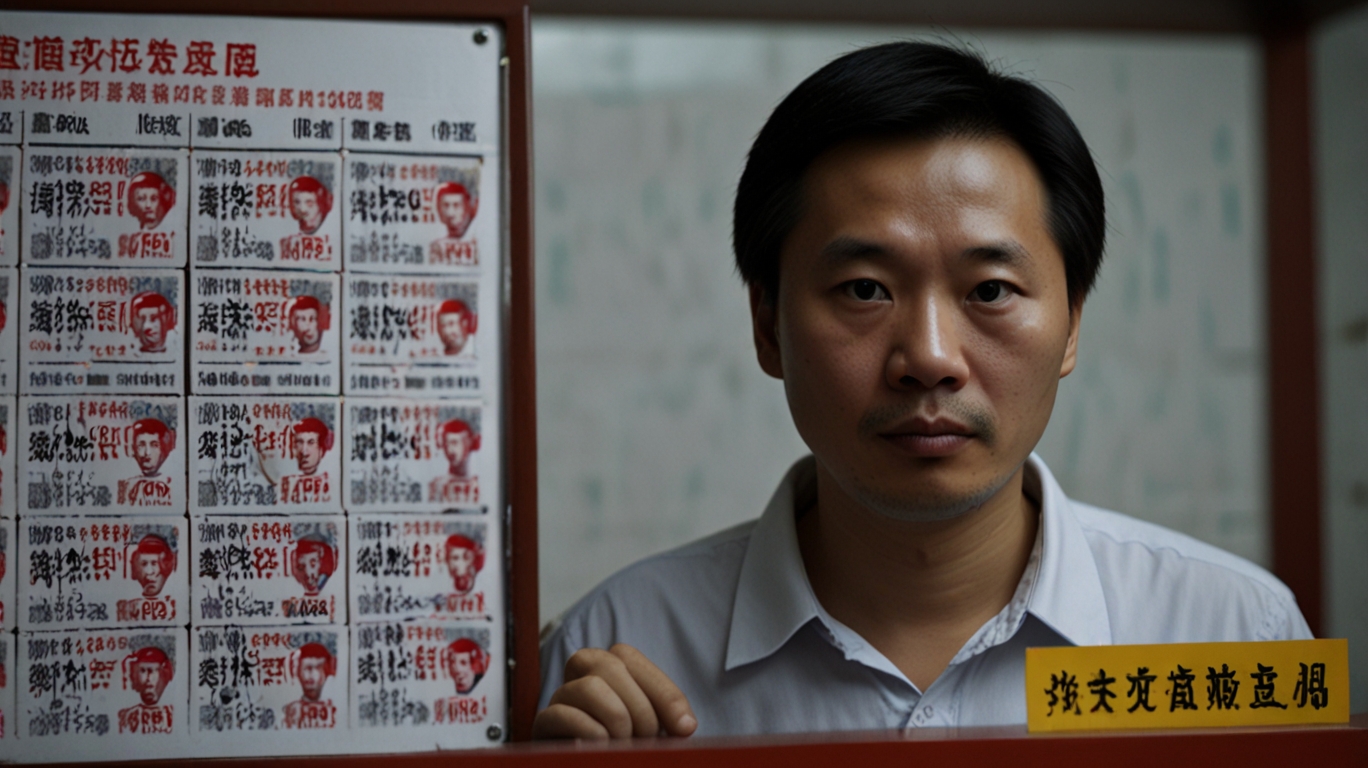
China’s Internet Censorship Policy
The Great Firewall Just Got Facial Recognition: China Introduces Real-Name Posting, and Now Even Cat Memes Require Government Approval
By Professor G. Owlings and Jedidiah, Philosophy Major Turned Dairy Farmer
BEIJING — In a bold and historically inevitable move to protect online harmony from such existential threats as sarcasm and regional dialects, China has officially rolled out its long-rumored “Real-Name Internet Identity Program.” Under the new policy, every Chinese citizen must register with a government-approved ID system before engaging in any online activity, including liking dumpling recipes, watching traffic accident footage in slow motion, or asking if the moon landing was real.
“We’re not cracking down on free speech,” said Ministry of Information Integrity director Liu Notang. “We’re simply giving it a designated parking spot — preferably underground, in a lead-lined box.”
WeChat Now Requires a Blood Sample
As part of the new policy, users logging into WeChat, Douyin, or government-regulated eBooks will be prompted for their real name, ID number, recent astrological chart, and — in some regions — a small blood sample. Critics initially believed the blood requirement to be hyperbole until reports surfaced of drones collecting genetic data via Bluetooth-enabled chopsticks at hot pot restaurants.
“They told me I could use the app after submitting a thumbprint and a brief essay on how much I trust the Communist Party,” said Li Min, a mild-mannered ceramics blogger from Suzhou. “I passed — but my cat’s Douyin account was banned for political ambiguity.”
Her cat, Chairman Meow, had uploaded a series of videos staring longingly at caged birds while Chinese revolutionary music played in the background. The Ministry flagged it for “subversive symbolism.”
Anonymous Posting: Now Considered Emotional Terrorism
The policy’s key innovation is not the ID system itself — authoritarian regimes have been loving those since the punch-card era — but the sheer scale and ambition of China’s goal: to end anonymity.
“You must be who we say you are, even when you’re making fun of someone’s dumpling folding technique in the comment section,” declared tech minister Fang Dong. “You will troll only as yourself — and only after expressing due reverence to the party.”
Fang added that anonymous memes are “a gateway drug to insurrection,” citing a 2019 video of a dog that resembled President Xi as “an early warning sign.”
What the Funny People Are Saying
“You know China’s cracked down on internet freedom when a VPN is now considered a controlled substance.” — Ron White
“They say every IP is tied to a name now. I guess the only safe password left is ‘PleaseDon’tArrestMe123.’” — Jerry Seinfeld
“In China, even your Fitbit data goes to the state. Got a panic attack? That’s two weeks in digital rehabilitation.” — Ali Wong
“Reddit’s banned. Twitter’s banned. At this point, China just wants to bring back chain emails.” — Sarah Silverman
The National Post-It Note Registry
To ensure the program functions with Mao-like efficiency, Chinese authorities have integrated the ID system into everything, including:
-
Ride-share apps (users must chant the national anthem before the car moves).
-
Dating apps (must declare loyalty to party and preferred dumpling filling).
-
Online food delivery (sauces above “medium spice” now require a permit).
In perhaps the boldest administrative overreach, public bulletin boards and library comment cards now feature QR codes that scan your iris before allowing suggestions. This has made it “extremely difficult to anonymously complain about the lack of chairs,” said one librarian, under cover of darkness and an old sock puppet account.
Satirical Research Confirms: Censorship Is a Growth Industry
According to the Institute for Paranoid Governance (IPG), China’s online censorship industry has grown 173% since 2016. Over 2 million new “information harmony engineers” have been hired to comb through digital content, memes, emojis, and suspicious puns.
Among the flagged content in the past year:
-
A recipe titled “Hong Kong-Style Freedom Toast.”
-
A livestream of clouds above Tibet that “lingered too long in a rebellious formation.”
-
A toddler saying “No” three times in a row on WeChat Family Chat.
“We must control narrative at the micro-emoji level,” said Director of Surveillance Strategy Qian Baozi. “Even the 😬 can be interpreted as dissent.”
How It Works: Facial Recognition + Keyboard Snitching = Harmony
The new ID policy is augmented by a “key emotion tracker,” developed by the Ministry of Emotional Uniformity. The software monitors tone, rhythm, and sentence patterns to detect sarcasm, irony, or worse — satire. Offenders are notified by a popup:
“Your post about fish balls contains double meaning and has been referred for moral realignment. A representative will visit you shortly.”
A leaked PowerPoint reveals the following categories of forbidden speech:
-
Tier 1: Direct criticism (e.g., “This policy is nuts.”)
-
Tier 2: Implicit skepticism (e.g., “I miss being anonymous online.”)
-
Tier 3: Passive-aggressive snack reviews (e.g., “These dumplings taste like oppression.”)
Even formatting is tracked. Too many asterisks, and the system assumes coded rebellion.
Polling the Public: 85% Approve, or at Least Say They Do
According to a poll conducted by the State Center for State-Approved Surveys, 85% of citizens “strongly support” the new measures. The other 15% are reportedly taking a “very long vacation in Xinjiang.”
The poll included such questions as:
-
How much do you love your government today?
-
Would you trust your children to be raised by Xi Jinping personally?
-
Would you prefer complete social isolation or unlimited data usage under watchful guidance?
The results were accompanied by a TikTok dance performed by state employees, proving conclusively that censorship can be cute, too.
Global Reaction: “Um… Okay?” — The Free World
Western governments expressed concern while ordering new iPhones manufactured in the same provinces enabling this surveillance. U.S. Secretary of Ambivalence Ron Fumble said:
“We are deeply troubled. We’re so troubled we might even write a joint statement about it with Canada.”
Meanwhile, Apple’s quarterly report now includes a footnote: “Subject to laws regarding totalitarian surveillance and facial identification. But don’t worry — the phones still look sexy.”
Internet Content Creators Now Required to Take Loyalty Tests
Starting August 1, Chinese influencers with more than 1,000 followers must pass a “Loyalty Fluency and Patriotism Evaluation Exam” (LFPEE). Sample questions include:
-
“Name three historical achievements of the Communist Party and their corresponding meme formats.”
-
“Which revolutionary hero would make the best ASMR host?”
-
“Translate this pro-democracy message into pro-cabbage cooking advice.”
Failure results in “Patriotic Correction via Karaoke,” in which violators must perform the 1980s ballad My Love for the Motherland is Greater than Soy Sauce in front of a Party-sponsored ring light.
From the Dairy Farm: A Philosopher’s Perspective
Jedidiah, a former philosophy major now living in Texas, told us:
“Plato said the unexamined life is not worth living. China says the over-examined life is the only one allowed. I once posted a tweet about milking cows and accidentally used the term ‘milk resistance.’ Now I’m banned in four provinces.”
He paused to churn butter with defiance.
“If cows had to register their real names before mooing, I’d burn the barn down.”
Final Thoughts from the World’s Oldest Tenured Professor
Professor G. Owlings, who studied freedom since before the invention of static electricity, offered this:
“Censorship that wears a name tag isn’t transparency — it’s a surveillance state with delusions of etiquette. The more they pretend to organize the internet, the more they organize the organ failure of the soul.”
He then spit into a spittoon and returned to drafting his latest academic paper: Freedom.exe: Why Authoritarian Regimes Prefer PDFs to People.
Disclaimer
This satirical article is a collaborative human effort between two sentient beings: the world’s oldest tenured professor and a dairy farmer with a philosophy degree and an ear for totalitarian irony. All characters and quotes are exaggerated or invented for comedic effect. The real policy developments in China deserve critical analysis and international scrutiny. But here at Satirical News Weekly, we offer the only safe space where irony still roams free — at least until someone asks us for our login.
Auf Wiedersehen, amigos.
IMAGE GALLERY
Why Post Anonymously When You Can Post Under Threat of State-Backed Existential Dread?
China’s Internet: The Great Firewall Just Got Facial Recognition
China Introduces Real-Name Posting, and Now Even Cat Memes Require Government Approval
